When the market falls, unit prices grab all the headlines.
The distributions underneath them rarely do.
At the close on 14 October 2026, the Straits Times Index (SGX: ^STI) sat 7% below its 52-week high.
Before you rush to press the sell button, it is worth checking whether the underlying income stream behind each unit is still growing.
Temasek, a global investment company headquartered in Singapore, holds a deemed interest in the three Singapore real estate investment trusts (S-REITs) below.
Let’s look at how these three REITs are actually performing under the hood.
| REIT | Temasek’s deemed interest | As at |
| CapitaLand Integrated Commercial Trust (SGX: C38U) | 21.4% | 27 February 2026 |
| CapitaLand Ascendas REIT (SGX: A17U) | 18.6% | 3 March 2026 |
| Mapletree Logistics Trust (SGX: M44U) | 34.3% | 29 May 2026 |
Is CICT’s DPU growth keeping pace with its larger unit base?
CapitaLand Integrated Commercial Trust (CICT) is Singapore’s largest REIT by market capitalisation.
It owns retail, office and integrated development properties, with total assets of S$28.2 billion as at 30 June 2026.
For the first half of 2026 (1H2026), CICT’s gross revenue rose 7.5% year on year (YoY) to S$846.8 million.
Net property income (NPI) grew 8.7% to S$630.5 million, while distribution per unit (DPU) climbed 7.1% to S$0.0602.
Here’s the thing: CICT’s unit base grew 5.8% over the period.
DPU still grew faster.
In simple terms, every existing unit earned a bigger piece of the pie.
Stepping up to full ownership of CapitaSpring and bringing in income from Gallileo in Frankfurt drove most of this growth, helping offset the sale of Bukit Panjang Plaza.
Portfolio occupancy rose 0.4 percentage points quarter on quarter to 95.6%, while rental reversions came in at 4.0% for retail and 6.5% for office.
CICT completed its S$3.9 billion purchase of Paragon on 1 July 2026, shortly after the half closed.
Management expects to wrap up selling Asia Square Tower 2 for roughly S$2.45 billion in the second half of the year.
Until that transaction officially closes, it remains an execution risk worth monitoring.
Aggregate leverage sat at a healthy 37.4%, and average cost of debt held steady at 2.9%.
Why did CLAR’s DPU barely move when income grew 8.6%?
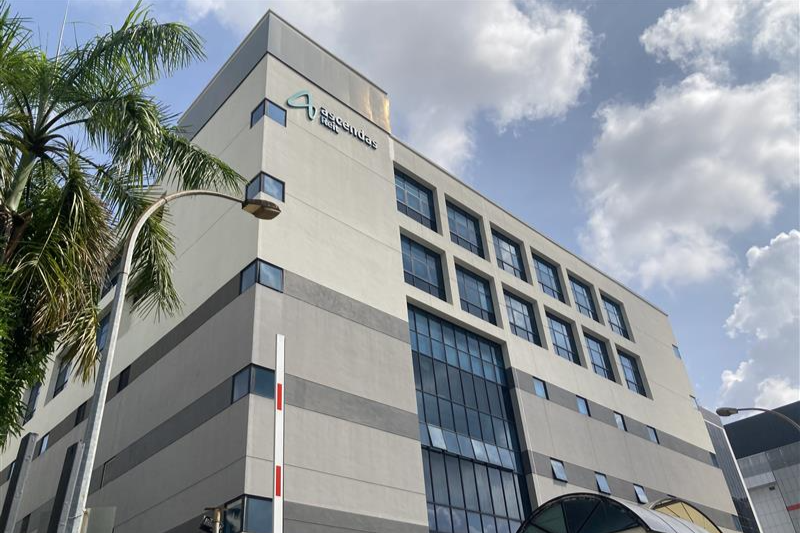
CapitaLand Ascendas REIT (CLAR) owns 234 properties across Singapore, Australia, the US, the UK/Europe and Japan, with a portfolio valued at S$20.1 billion as at 30 June 2026.
In 1H2026, CLAR’s gross revenue rose 6.7% YoY to S$805.5 million.
NPI rose 6.2% to S$556.1 million, and distributable income climbed 8.6% to S$359.4 million.
DPU, though, rose just 0.1% to S$0.07482.
So where did the growth go?
CLAR raised equity in both 1H2025 and 1H2026.
It now spreads a bigger income pool across more units.
The underlying business grew, but unit dilution kept the payout per unit virtually flat.
Rental reversion reached 8.5%, and management expects high single-digit reversions for the full year.
CLAR completed S$1.1 billion in acquisitions during the half and plans to divest Kim Chuan Telecommunications Complex for S$200.4 million, reflecting a 32% premium to its valuation.
On the flip side, occupancy fell to 89.1% from 91.8% a year ago.
Two newly completed properties dragged the figure down.
Without them, occupancy would have been 90.3%.
Aggregate leverage stood at 39.7%, and cost of debt at 3.5%.
Can MLT grow its DPU through currency and China headwinds?
Mapletree Logistics Trust (MLT) owns 175 logistics properties across nine Asia-Pacific markets, with assets under management of S$13.1 billion as at 30 June 2026.
Keep in mind that MLT’s financial year ends in March, so its latest set of figures covers 1QFY2027 and does not line up directly with the half-year figures above.
Gross revenue rose 0.8% YoY to S$178.9 million, NPI grew 2.0% to S$156.4 million, and DPU edged up 0.2% to S$0.01816.
A new warehouse in Mumbai and a full quarter from Mapletree Joo Koon Logistics Hub added revenue.
Weaker China contributions, divested assets and softer Asian currencies pulled the other way.
Excluding currency effects, gross revenue and NPI would have grown 2.0% and 3.1% respectively.
Borrowing costs fell 2.7% YoY to S$38.3 million.
After the quarter, MLT announced the sale of three properties worth about S$155 million, including 39 Changi South Avenue 2, which is being sold at a 20.3% premium to valuation.
The risks sit in the operating numbers.
Occupancy slipped to 96.4% from 96.9% three months earlier.
Rental reversion was 0.9%, or 2.3% excluding China.
At 40.5%, MLT’s aggregate leverage is the highest of the three.
Get Smart: Watch the payout, not just the price
When the index falls, ask yourself one question before taking action: Is the cash distribution shrinking, or is it just the unit price?
Put DPU growth side by side with distributable income growth.
If the two move together, the REIT is passing its growth on to you.
If income races ahead of DPU, check the unit count.
CLAR shows how fundraising can mask a growing business when you look only at DPU.
Will this year’s acquisitions add more income per unit than the new units cost?
DPU will tell you, one reporting season at a time.
The world’s gotten unpredictable, but some Singapore companies have quietly kept thriving. You’ve probably seen them in your daily life. And yes, they’ve kept paying dividends through it all. Meet 5 resilient stocks built to navigate global storms. Get the free report here and see how they’ve done it.
Follow us on Facebook, Instagram, Telegram and YouTube for the latest investing news and analyses!
Disclosure: The Smart Investor owns units of CICT, CLAR and MLT.