Singapore’s stock market has lost some of its shine recently.
As at 16 October 2026, the Straits Times Index (SGX: ^STI) sat more than 7% below its all-time high.
For income investors, a market pullback brings a familiar temptation.
As share prices fall, headline dividend yields naturally rise.
However, a high yield only pays off if the underlying business can actually sustain its payouts.
For each of the three stocks below, we’ll ask one question: what pays for the dividend?
| Company | Ticker | Share price | Dividend yield |
| Valuetronics Holdings Limited | SGX: BN2 | S$0.95 | 6.5% |
| HRnetGroup Limited | SGX: CHZ | S$0.68 | 6.5% |
| United Hampshire US REIT | SGX: ODBU | US$0.42 | 10.5% |
Share prices and yields as at 16 October 2026.
Can Valuetronics afford to pay out more as profit falls?
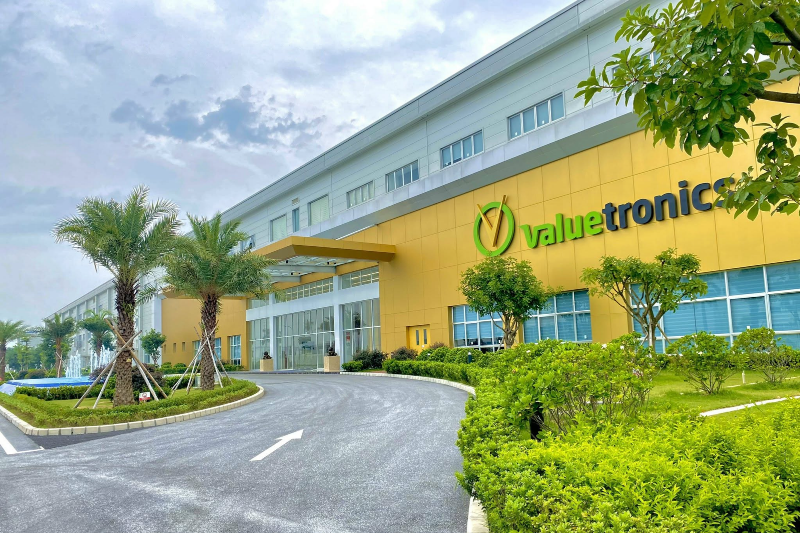
Valuetronics is an electronics manufacturing services provider with factories in China and Vietnam.
For its financial year ended 31 March 2026 (FY2026), revenue slipped 4.0% year on year (YoY) to HK$1.66 billion.
The Industrial and Commercial Electronics division expanded 6.2% to HK$1.45 billion, but Consumer Electronics revenue dropped 41.7% as management actively phased out low-margin legacy products.
Net profit took a bigger hit, falling 33.1% to HK$111.4 million.
This was primarily driven by a HK$48.4 million net loss tied to its Trio AI investment alongside a higher tax bill.
Strip out the Trio AI impact, and underlying net profit came in at HK$159.9 million.
So why did the dividend go up?
Valuetronics changed its policy.
It now aims to pay out 50% to 70% of net profit, up from 30% to 50%.
It also lifted its total dividend by 41% to HK$0.38 per share, including a HK$0.16 special dividend.
Cash flow backs this up.
Free cash flow swung to HK$178.4 million from negative HK$20.1 million a year earlier, as capital expenditure fell to HK$47 million from HK$228 million following heavy prior investments in GPUs and AI hardware.
Cash rose to HK$1.21 billion, and the company has no bank borrowings.
Management also plans to return about HK$300 million in surplus cash over FY2027 and FY2028 through special dividends and share buybacks.
On the flip side, a higher payout ratio means future dividends will move more closely with profit.
Management expects to stay profitable in FY2027, but it has flagged a fluid environment amid US tariffs and supply-chain uncertainty.
If you buy, value the stock on its ordinary payout, not the specials.
What keeps HRnetGroup’s dividend rising when hiring slows?
HRnetGroup is a pan-Asian recruitment and staffing firm, specialising in permanent placement and contract staffing.
Revenue for the first half of 2026 (1H2026) dipped 1.1% YoY to S$292.2 million, though it was flat on a constant-currency basis, while contractor headcount rose 6.9% to 17,253.
HRnet squeezed more profit out of its revenue.
Gross margin widened to 21.3% from 20.7%, and operating expenses fell 1.9%.
Operating profit rose 9.4% to S$20.1 million.
The picture gets weaker below the operating line.
Other income fell 65.5% to S$5.4 million on lower government subsidies, a fair-value loss on investments and reduced interest income.
The decline weighed on net profit.
Free cash flow fell to S$17.4 million from S$26.5 million a year earlier.
The good news is that HRnet has no bank borrowings.
As at 30 June 2026, it held S$332.1 million in cash, treasury bills and gold.
This strong capital cushion allowed management to raise the interim dividend by 10% to S$0.022 per share, even as listed peers reported losses and underwent restructuring.
Here’s the thing: HRnet’s balance sheet gives the dividend a cushion, but free cash flow shrank by about a third.
Management says the industry remains under cyclical pressure.
If you own it, watch whether cash flow recovers.
Is UHREIT’s 10.5% yield a bargain or a warning?
United Hampshire US REIT (UHREIT) owns 21 grocery-anchored and necessity-based retail properties in the US, plus two self-storage properties.
The portfolio is valued at US$798.5 million.
In 1H2026, net property income (NPI) grew 6.4% YoY to US$25.5 million, while total distributable income expanded 5.8% to US$13.7 million.
Distribution per unit (DPU) rose by a smaller 3.4% to US$0.0216.
Why the gap?
UHREIT issued new units under its distribution reinvestment plan and as payment of the manager’s performance fee, increasing the total unit count to 608.2 million from 596.9 million.
Occupancy held firm.
Committed occupancy at the grocery and necessity properties stood at 97.6%, and self-storage occupancy improved by 430 basis points to 93.5%.
Acquisitions helped too.
Dover Marketplace and Wallingford Fair made their first contributions.
UHREIT bought Wallingford Fair for US$21.4 million, 8.2% below its independent valuation.
So what’s behind a 10.5% yield?
A yield this high suggests the market has doubts.
For a REIT, those doubts often sit on the balance sheet.
The manager also did not disclose rental reversion.
Before you buy, check UHREIT’s gearing and interest coverage ratio.
Get Smart: Find what pays for the yield
A declining share price makes headline yields look bigger.
It doesn’t change the cash behind it.
So before you buy any dividend stock, ask where the payout comes from.
A dividend funded by cash reserves can hold up for a while.
A dividend funded by growing cash flow can keep rising.
The yield on your screen won’t tell you which.
While your friends debate which tech stock to buy next, money is quietly flowing into these 5 Singapore companies you see every day. They are proven to have steady dividends and strong balance sheets. Our FREE report shows you exactly which ones and why they’re safer than flashy darlings everyone’s chasing. Download your free report now.
Follow us on Facebook, Instagram, Telegram and YouTube for the latest investing news and analyses!
Disclosure: Calvina L. does not own any stocks mentioned. Chin Hui Leong contributed to this article and owns shares in HRnetGroup.