Three SGX-listed companies are distributing higher interim dividends in the week starting 7 September 2026.
Hong Leong Asia (SGX: H22) pays out on 9 September, while First Resources (SGX: EB5) and Food Empire (SGX: F03) both distribute their cheques on 10 September.
The payout increases range from 33.3% to a generous 77.8%.
While larger dividend cheques are always welcome, long-term investors should look past the immediate yield and examine the underlying cash generation funding these increases.
Can Hong Leong Asia sustain its 50% higher dividend?
Hong Leong Asia declared an interim dividend of S$0.03 per share, up 50% from S$0.02 a year ago.
The diversified group reported revenue of S$3.1 billion for the first half of 2026 (1H2026), up 17.6% year on year (YoY), while net profit attributable to owners surged 64.1% to S$91.9 million.
Top-line expansion was anchored by its powertrain unit, Yuchai, which grew revenue by 16.8% as heavy-duty truck engine unit sales jumped 47.3% – substantially outperforming the 13.1% growth seen across China’s broader heavy-duty truck market.
Meanwhile, the Building Materials Unit expanded revenue by 24.1% on higher ready-mix and precast concrete volumes.
Across the group, gross margin rose to 19.1% from 16.1%.
Cash flow metrics saw some working capital absorption: free cash flow fell 35.7% YoY to S$217.1 million as working capital shifted from a prior-period inflow to an outflow.
Even with that dip, free cash flow comfortably covers the interim dividend commitment.
Combined with a robust net cash position of over S$1 billion as of 30 June 2026, the payout remains well-supported.
Management projects a satisfactory full-year outlook, citing expanding Chinese engine demand – particularly from data centre applications – and active construction pipelines in Singapore and Malaysia.
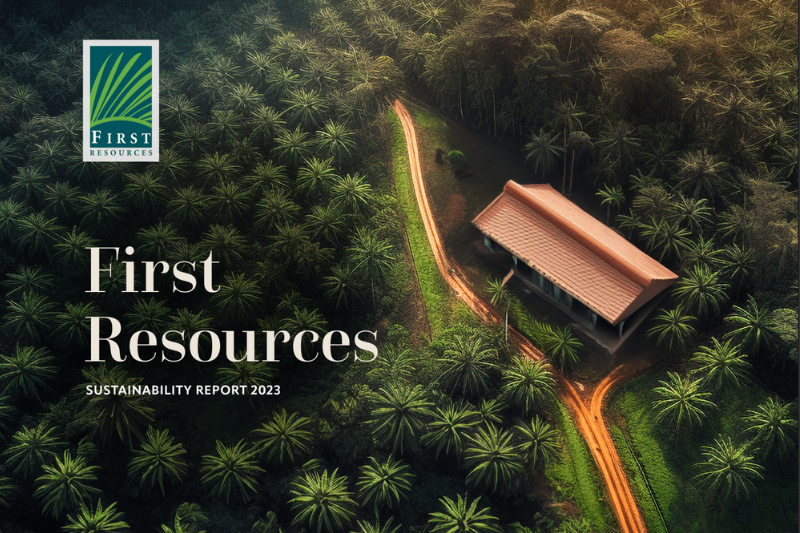
What’s behind First Resources’ 77.8% dividend increase?
First Resources led the pack in headline dividend growth, declaring an interim dividend of S$0.08 per share – a 77.8% jump from S$0.045 a year ago.
The integrated palm oil producer generated US$973.6 million in revenue for 1H2026, up 44.5% YoY.
Stripping out distortions from biological asset fair value movements, underlying net profit expanded 42.2% to US$216.2 million.
Performance was buoyed by stronger sales volumes, firmer processing margins, and a full six-month contribution from PT Austindo Nusantara Jaya (acquired in May 2025) versus just two months in the prior-year period.
Crucially, cash generation rebounded significantly.
Free cash flow recovered to US$100.6 million, swinging from a negative US$84.7 million a year prior, driven by an operating cash flow surge to US$210.7 million.
Last year’s dividend lacked a solid cash foundation; today’s higher payout has clear operational backing.
The balance sheet reflects a net gearing ratio of 0.40x with US$658.3 million in net borrowings.
Out of its US$229.2 million cash balance, US$115.4 million remains restricted under Indonesia’s revised export proceeds framework.
Key variables to track include Middle East geopolitical tension, crude oil volatility, El Niño weather developments, and the pace of implementation of Indonesia’s B50 biodiesel mandate, which could lift domestic palm oil demand.
Is Food Empire’s dividend increase backed by cash flow?
Food Empire declared an interim dividend of S$0.04 per share, up 33.3% from S$0.03 a year ago.
The instant beverage manufacturer reported US$315.1 million in 1H2026 revenue, a 15.0% YoY increase across all six operating regions.
Net profit attributable to shareholders reached US$35.4 million, reversing a US$1.5 million loss from the prior year that was distorted by a US$32.6 million non-cash fair value adjustment on exchangeable notes.
On an adjusted basis, underlying profit grew 13.6%.
Growth was led by Russia (revenue up 24.6% to US$103.2 million on higher volumes and a stronger Ruble) and Central Asia (revenue up 33.6% to US$60.5 million).
However, cash flows were squeezed by capital deployment.
Free cash flow swung to a negative US$4.1 million from a positive US$20.5 million last year as capital expenditures more than doubled to US$30.1 million.
The company is actively building capacity, with its Khorgos coffee-mix facility in Kazakhstan now online, a spray-dried coffee plant in India scheduled for late 2027, and a freeze-dried facility in Vietnam targeted for 2028.
Food Empire ended the period with net cash of US$50.7 million, providing the balance sheet capacity to fund the higher dividend today.
However, because current payouts are running ahead of organic free cash flow, investors are relying on management’s expansion programme to generate the required cash flows over the medium term.
Get Smart: How do you assess a dividend increase?
A dividend increase shows what a company is returning to shareholders today, but free cash flow determines whether those payouts can continue tomorrow.
The next time you spot a dividend increase, look past the percentage.
First, verify whether free cash flow remained positive during the same reporting window.
Second, examine the strength of the balance sheet.
A dividend funded by free cash flow and backed by net cash is on firmer ground than one that runs ahead of what the business generates.
Some companies cut dividends in a downturn. These 5 didn’t.
Find out which Singapore blue chips have weathered past chaos…and why they could be your portfolio’s anchors in the next wave of downturn. Download the report free.
Follow us on Facebook, Instagram, Telegram and YouTube for the latest investing news and analyses!
Disclosure: The Smart Investor does not own shares of any company mentioned.