
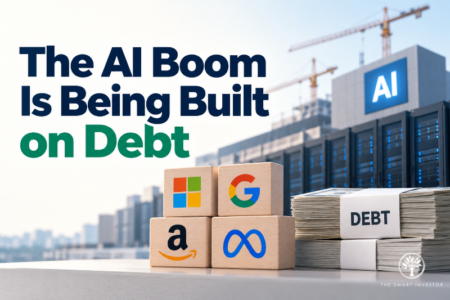
Big Tech is turning to debt to fund massive AI infrastructure spending, raising concerns about leverage, financial risk and the sustainability of the AI boom.
Big Tech is turning to debt to fund massive AI infrastructure spending, raising concerns about leverage, financial risk and the sustainability of the AI boom.

Three US stocks have doubled in a year, but investors must weigh their fundamentals, valuations and growth prospects before deciding whether to buy, hold or sell.

Trust isn’t earned by the name on the door — it’s earned by what the family will give up to protect it.

The SaaSpocalypse rattled software stocks as investors questioned whether AI could replace traditional software. But as the sector stabilises, three software companies could be worth watching for signs of a stronger recovery.

Costco and Sheng Siong operate in different markets but share a powerful advantage: customers return frequently for everyday essentials. We compare their business models, competitive moats, financial strength and long-term growth prospects.
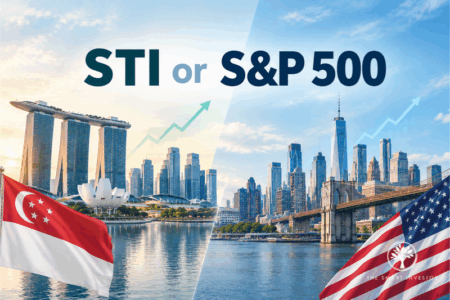
Singapore investors can choose between the STI’s dividend-rich blue chips and the S&P 500’s global growth companies. Which market offers the better opportunity for your next investment dollar?
Short-term volatility does not undermine the long-term case for US stocks – here’s why Singapore investors may still want exposure.

We look at Apple’s shift to a split iPhone launch strategy, a major AI chip partnership, and two corporate developments from Singapore-listed companies.
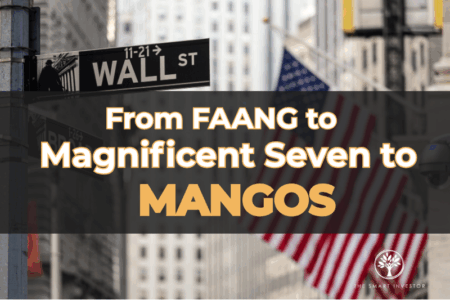
Wall Street’s hottest stock groups keep getting new names, from FAANG to the Magnificent Seven and now MANGOS. But does chasing the latest winning basket actually lead to better long-term returns?

These three US stocks have beaten the S&P 500, but investors must assess whether their strong rallies can continue without overpaying for growth.
The Magnificent Seven may have defined the AI boom, but MANGOS stocks could represent the next wave of Wall Street growth leaders.
Think of dividend stocks like Pokémon: catching more quality names across different sectors can help build a diversified portfolio and steadier income.

The market told itself a story about GenAI killing SaaS. Then it acted on it even when the idea was flawed.
Investors can build a diversified AI portfolio with ETFs, gaining exposure to multiple sectors driving artificial intelligence without relying on a single stock.
Singapore dividend stocks can provide attractive income, but relying on them alone may leave a portfolio short on growth.
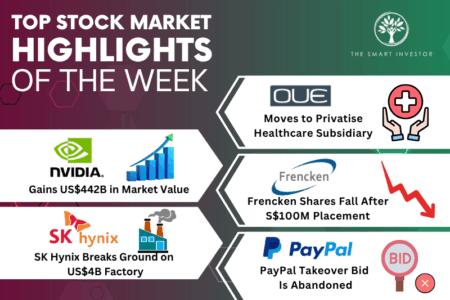
We look at a privatisation bid for a regional healthcare group, a near-record single-day market cap surge by an AI chipmaker, and key developments across the semiconductor and fintech spaces.
Some companies reward investors through rising dividends, while others prefer aggressive share buybacks. Here’s how Alphabet and Singtel demonstrate two very different approaches to creating shareholder value.
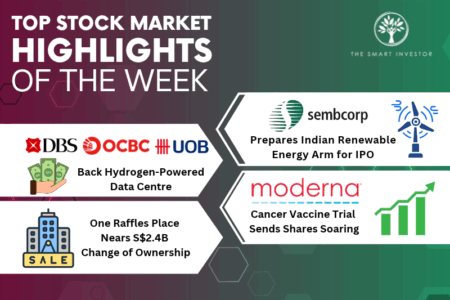
From major green infrastructure moves in Asia to breakthrough clinical trial results in the US, significant corporate developments are reshaping investor sentiment across key sectors.

The first AI winners may have already surged, but new opportunities remain for investors who know where to look next.
One is an AI-powered technology giant, while the other is a leading Singapore bank. Despite operating in very different industries, both generate substantial value that supports long-term shareholder returns.