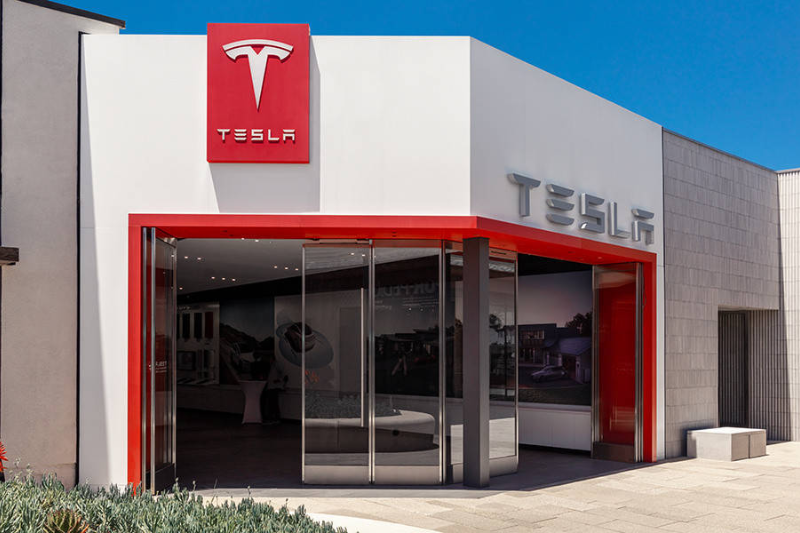
In recent weeks, Tesla (NASDAQ: TSLA) made it into the spotlight – not for another groundbreaking technology announcement, but for a political feud between its CEO Elon Musk and President Donald Trump over the One Big Beautiful Bill Act.
This bill was meant to cut tax rates, increase defence funding and raise the national debt ceiling.
However, this came at a cost of slashing federal social programs and cutting clean energy incentives.
On 3 June, Musk took to social media site X, harshly criticising Trump’s “Big Beautiful Bill”.
The Tesla CEO pointed out that the bill will exacerbate the US’s budget deficit to a whopping US$2.5 trillion.
Musk also highlighted his unhappiness towards the unfair Electric Vehicle (EV) incentive cuts while oil and gas sectors went unscathed.
After a flurry of back and forth threats between the former allies, investors are left wondering “what’s next?” for Tesla.
Here are some points to take note for current and future investors of Tesla stock.
Impact of the EV subsidy rollbacks
The bill will end the US$7,500 Clean Vehicle Tax Credit, which poses a critical threat to Tesla’s sales.
This is worsened by an intelligence report by J.D Power in November 2024 which stated that 64% of premium brand EV owners owed tax credits and incentives to their decision to purchase or lease their EV.
The report also outlined Tesla as one of the companies most heavily affected by Federal Tax Incentives.
With the elimination of this tax credit, Tesla vehicles will see their prices increase by a few thousand dollars.
This higher price will make Tesla more expensive for US consumers, especially entry-level buyers.
Higher prices will also dampen domestic demand for EVs.
To stay competitive, Tesla may lower the prices of their vehicles, a move which will result in margin compression.
The lower margins, coupled with increased competition from Chinese EV players, will lead to flat or declining earnings for Tesla.
EV competitors smell the opportunity
The cut in EV tax credits and bad blood with the US government will give Tesla’s competitors an opening to gain market share.
Legacy automakers such as Ford (NYSE: F) may take a hit from the bill but they will not be impacted as badly due to its revenue mix.
Such automakers’ EV lines (e.g. Ford’s Model E line) are still in their nascent stages with its Ford Blue and Ford Pro vehicles driving revenue.
Hence, these automakers will have their Internal Combustion Engine (ICE) vehicle pipelines to offset the losses and pivot according to market demand.
In addition, BYD’s (SGX: HYDD) low-cost advantage will be more pronounced following the EV incentive cut.
The pool of EV buyers who consider upfront costs as a deal-breaker will turn their sights to Tesla’s largest competitor instead.
This will give BYD an edge over Tesla as BYD will have a larger addressable market and more opportunities to carve out a dominant share of the global EV market.
Moreover, Tesla’s setback will also allow competitors to get ahead in research and development (R&D) efforts.
This is especially likely for foreign companies who receive government support for their EV R&D work.
For instance, China’s NIO (SGX: NIO) has developed battery-swap technology which takes only three minutes to fully recharge an EV as compared to Tesla’s superchargers which take 15 minutes.
Therefore, this Big Beautiful Bill fiasco gives competitors more bandwidth to innovate and roll out disruptive technologies.
Tesla’s increased execution risk
Tesla’s stock does not primarily rise or fall because of fundamental reasons, but also reacts to Musk’s vision.
A key driver of such reactions includes its ability for Tesla to fulfill its promises such as its Full Self Driving (FSD) technology.
Tesla has already faced multiple failures to fulfill its FSD technology goal since 2015.
In the first quarter of 2025 (1Q 2025) earnings call, Musk mentioned that he is confident that the FSD technology will be available in multiple cities in the US by 2025.
However, Tesla’s dispute with the government and high production costs pose challenges.
These challenges will delay their promise to deliver FSD technology once again.
If Tesla falls short on its promise, it will risk triggering a multiple compression.
A multiple compression would mean investors will place a lower value on Tesla’s future earnings.
This will cause the stock price to fall, all things being equal.
This is because the market will reassess if Musk’s frequent promises can still outweigh its business fundamentals to justify its premium valuation.
Get Smart: What does this mean for the stock?
Tesla’s shares could face short-term volatility as the market reacts to earnings pressure and the ongoing political drama.
If Tesla is able to deliver on its FSD promise, it will be a huge benefit for the business.
It would mean that the automotive giant will be able to maintain market confidence and reap higher margins from FSD subscriptions.
Investors with a large position and are risk-averse could consider trimming their holdings to reduce their exposure.
However, Tesla investors could consider holding if the stock still fits their risk-reward appetite and are confident that Tesla will emerge as a long-term winner in the EV industry.
Generative AI is reshaping the stock market, but not in the way most investors think. It’s not just about which companies are using AI. It’s about how they’re using it to unlock new revenue, dominate their markets, and quietly reshape the business world. Our latest FREE report “How GenAI is Reshaping the Stock Market” breaks the hype down, so you can invest with greater clarity and confidence. Click here to download your copy today.
Follow us on Facebook, Instagram and Telegram for the latest investing news and analyses!
Disclosure: Gabriel Lim does not own shares of any of the companies mentioned.