Singapore’s blue chips tend to hog the headlines.
One tier down, the iEdge Singapore Next 50 Index has produced three standout performers in 2026.
As at 30 September 2026, AEM Holdings Limited (SGX: AWX) had delivered a year-to-date total return of 462.7%, dividends included.
PC Partner Group Limited (SGX: PCT) came in second at 274.9%, and UMS Integration Limited (SGX: 558) third at 131.2%.
All three sell into the semiconductor and AI hardware supply chain, and each grew profit far faster than revenue.
The real question is where that extra profit came from and whether it can last.
What turned AEM’s sales growth into a tenfold rise in profit?
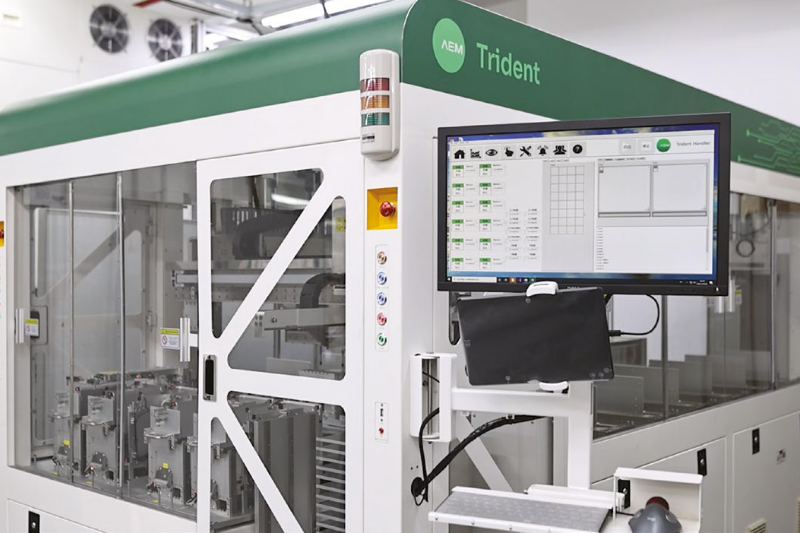
AEM makes semiconductor test equipment and provides contract manufacturing.
For the six months ended 30 June 2026 (1H2026), revenue rose 29.9% year on year (YoY) to S$247.2 million, while profit attributable to owners climbed roughly tenfold to S$31.0 million, up from S$3.1 million.
The Test Cell Solutions (TCS) segment drove that growth.
Its revenue rose 52.5% YoY to S$180.9 million as AEM deployed test solutions for AI and high-performance computing (HPC) applications.
A fabless AI/HPC customer also became AEM’s largest revenue contributor, and a more favourable segment mix lifted gross margin from 25.4% to 33.1%.
Management raised FY2026 revenue guidance to S$630 million–S$680 million, up from S$550 million–S$600 million.
Investors appear to be pricing in a bigger second half.
Here’s the thing: free cash flow tells a different story.
It fell 94.7% YoY to S$2 million because AEM built up inventory for the second half and booked higher receivables.
Since free cash flow is the lifeblood of dividends, that number deserves watching.
AEM held net cash of S$56.6 million as at 30 June 2026 and declared an interim dividend of S$0.024 per share after paying none a year ago.
How did PC Partner double its profit on almost flat sales?
PC Partner makes PC parts, and video graphics cards (VGA Cards) bring in 92% of its revenue.
In 1H2026, revenue rose just 1.5% YoY to HK$6.5 billion, but profit attributable to owners grew 117.9% to HK$545.5 million.
Pricing made the difference.
Average selling prices for VGA Cards rose sharply, and gross margin widened from 10.5% to 16.5%.
ODM/OEM card sales climbed 73.9% on high-end orders, while own-brand card sales fell 9.2% as graphics processing unit (GPU) and graphics memory shortages cut volumes by 18.4%.
Free cash flow rose even faster, reaching HK$2.5 billion compared with HK$648.7 million a year earlier, and the group held net cash of about HK$1.6 billion as at 30 June 2026.
The board declared an interim dividend of S$0.10 per share (about HK$0.61), which comes to HK$235.2 million in total.
On the flip side, management expects a tougher second half.
Graphics memory costs are rising further, and fewer VGA cards are available.
New GPU server and AI-related shipments begin in the second half, though, and management remains confident of full-year revenue growth.
Where is UMS’s growth coming from?
UMS makes precision components and equipment modules for semiconductor equipment makers.
For context, these figures cover only the three months to 30 June 2026 (2Q2026).
Revenue rose 29% YoY to S$87.1 million, and net profit attributable to shareholders climbed 89% to S$19.4 million.
UMS ramped up component production for a new major customer, and revenue from Malaysia and Korea grew 50% and 347% YoY, respectively.
Gross material margin held flat at 54.2%.
Other charges fell 90% on a much smaller foreign exchange loss, which helped profit outpace revenue.
Free cash flow swung to S$30.7 million from negative S$8.3 million.
UMS also repaid an S$8.3 million short-term loan and ended June with S$38.6 million in cash and no bank borrowings.
The board kept its second interim dividend at S$0.010 per share, payable on 30 October 2026.
After January’s issue of 177.6 million bonus shares, the same rate now applies to more shares.
Management expects more growth, as new manufacturing services still in customer qualification have yet to contribute fully.
SEMI projects global semiconductor equipment sales to rise 23.2% to a record US$165.9 billion in 2026.
Investors appear to be betting on that ramp-up, though one quarter is a short track record.
Get Smart: Ask where the margin came from
Where profit growth comes from matters more than how big it is.
AEM and UMS both point to new customers, and AEM also gained from a richer segment mix.
PC Partner’s extra profit came from shortage pricing, and its management already expects a harder second half.
Gains built on shortages tend to fade once supply catches up.
Before you buy into this year’s winners, ask which kind of gain you’re paying for.
Then check whether profits are turning into free cash flow, because that’s what pays your dividends.
For AEM, the second half will show whether that inventory turns into cash.
The headlines feel worse than the market itself.
So what are experienced investors actually doing right now? Our FREE report reveals how to position your portfolio amid volatility. Download it for free here.
Follow us on Facebook, Instagram, Telegram and YouTube for the latest investing news and analyses!
Disclosure: The Smart Investor owns shares of AEM.