Share buybacks on the Singapore Exchange (SGX) are having a record year.
In the first nine months of 2026 (9M2026), 80 primary-listed companies bought back S$2.38 billion of their shares on the open market.
That figure has already surpassed the S$2.23 billion recorded for all of 2025, which was previously the highest figure in SGX’s 10-year tracking history.
Naturally, the big market names drove most of the volume.
Singapore Telecommunications Limited (SGX: Z74), Keppel Ltd (SGX: BN4), and United Overseas Bank Ltd (SGX: U11) accounted for 72% of the overall total.
Three members of the iEdge Singapore Next 50 Index have been buying too.
Food Empire Holdings Limited (SGX: F03), Raffles Medical Group Ltd (SGX: BSL), and UltraGreen.ai Limited (SGX: ULG) spent a combined S$27.1 million on 16.9 million shares.
Food Empire spent almost twice as much as the other two combined.
Share buybacks by three iEdge Singapore Next 50 stocks in 9M26
| Company | Total shares repurchased | Total buyback value | Average buyback price |
| Food Empire Holdings(SGX: F03) | 7,645,100 | S$17,915,500 | S$2.34 |
| Raffles Medical Group(SGX: BSL) | 5,450,000 | S$4,816,868 | S$0.88 |
| UltraGreen.ai*(SGX: ULG) | 3,821,100 | S$4,391,374 | S$1.15 |
| Total | 16,916,200 | S$27,123,742 |
Source: SGX, data as at 30 September 2026. Buyback value includes stamp duties and clearing charges.
*SGX converted UltraGreen.ai’s buybacks to an SGD equivalent value.
The size of a buyback only tells you so much.
As a dividend investor, you also want to know where the money comes from.
Free cash flow is the engine that keeps both dividend payouts and share buyback programmes running sustainably over time.
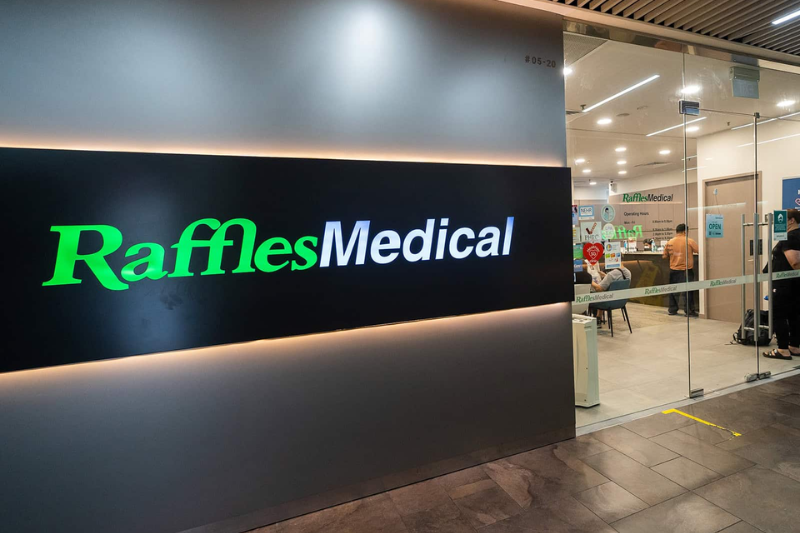
Can Raffles Medical keep buying back shares while its profit falls?
On paper, Raffles Medical Group (RMG) had a soft first half of 2026 (1H2026).
Revenue fell 6.7% year on year (YoY) to S$353.2 million, while profit attributable to shareholders slid 9.6% YoY to S$29 million as finance income dropped 52.3%.
Cash flow moved the other way.
The healthcare operator generated S$61.3 million in free cash flow, representing a 17.9% year-on-year increase.
The business also repaid S$51.1 million in bank borrowings during the half.
As at 30 June 2026, the group held S$262.3 million in cash with no bank debt on its balance sheet.
Next to those numbers, RMG’s S$4.8 million of buybacks over 9M26 looks modest, with no on-market buybacks in September.
Don’t be put off by the missing interim dividend.
RMG has paid one core dividend a year since FY2021.
Its final dividend for FY2025 rose to S$0.030 per share, up from S$0.025 a year earlier.
What is UltraGreen.ai funding its buybacks with?
UltraGreen.ai Limited, the newest listing among the trio, debuted on the SGX Mainboard in December 2025.
The company specialises in producing indocyanine green (ICG), a medical dye used widely in fluorescence-guided surgery.
In 1H2026, revenue rose 24.3% YoY to US$87.2 million, driven by a 29.6% increase in ICG sales.
Net profit attributable to owners grew at an even faster pace, leaping 53% YoY to US$39.2 million.
Free cash flow slipped 5% YoY to US$23.8 million.
As at 30 June 2026, the group held US$65.5 million in cash alongside US$132.1 million in short-term treasury investments.
Its only borrowings are US$5 million in lease liabilities, leaving the company with a robust net cash position.
Over 9M2026, UltraGreen.ai bought back 3.82 million shares worth the equivalent of S$4.4 million while also declaring an interim dividend of US$0.01 per share.
Management remains confident in its outlook and expects FY2026 revenue of US$175 million to US$185 million, with the second half expected to be stronger than the first.
Is Food Empire buying back more than its cash flow covers?
You may know Food Empire through MacCoffee, its 3-in-1 instant coffee brand.
For 1H2026, revenue rose 15% YoY to US$315.1 million, with positive growth across all six operating segments.
Attributable net profit came in at US$35.4 million, turning around from a net loss of US$1.5 million a year earlier.
That previous loss was largely caused by a one-off, non-cash fair value adjustment of US$32.6 million; adjusting for that item, underlying net profit was up 13.6% YoY.
Cash flow is where it gets tricky.
Capital expenditure more than doubled to US$30.1 million during the period, dragging free cash flow down from a positive US$20.5 million a year ago into a negative US$4.1 million.
Fortunately, the company retains a comfortable buffer.
As at 30 June 2026, it held US$151.3 million in cash against US$100.7 million in total debt, giving it a net cash balance of US$50.7 million.
Negative free cash flow has not stopped the buybacks.
Food Empire was the biggest buyer of the three, spending S$17.9 million on buybacks over 9M2026 – with 38% of it in September alone.
Management also raised its interim dividend payout to S$0.04 per share, up from S$0.03 a year ago.
The spending on new plants isn’t over yet.
Food Empire’s coffee-mix plant in Khorgos, Kazakhstan, began contributing from 2H2026.
The spray-dried coffee expansion in India is due by end-2027, with a freeze-dried facility in Vietnam to follow in 2028.
Get Smart: Follow the Cash
Whenever a company buys back shares, ask where the money is coming from.
Free cash flow can pay for buybacks year after year.
Cash in the bank can only be spent once.
That question matters most for Food Empire.
Its expansion runs until 2028, so watch how management splits its cash between new plants and shareholder returns.
Its free cash flow over the next few halves will tell you more than the size of any buyback.
What if every stock trade in Singapore puts money in your pocket? One company earns whenever the market moves. Its free cash flow has grown close to 10% a year, and dividends are set to rise 40% over the next three years. Our free 2026 Dividend Playbook reveals this legal monopoly. Download it for free now.
Follow us on Facebook, Instagram, Telegram and YouTube for the latest investing news and analyses!
Disclosure: The Smart Investor owns shares of RMG.