It’s been a fast and furious market meltdown. That’s an understatement.
Even for seasoned investors, the ferocity of the sell-down has left many stunned.
For many investors, bank shares represent stability as they form the pillars of Singapore’s economy.
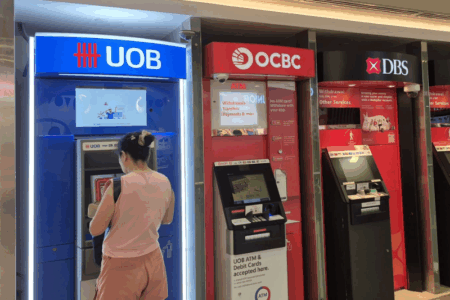
After all, DBS Group Holdings Ltd (SGX: D05), United Overseas Bank Ltd (SGX: U11) and OCBC Limited (SGX: O39) have formed the bedrock of Singapore’s success over the past three decades and more.
Now, this assumption is being threatened as stock prices of banks plunge.
With the Covid-19 virus raging worldwide, many businesses have come under stress.
This pressure will naturally flow back to our banks who are the principal lenders to these companies.
So, the question in many investor’s minds are — should you sell your bank shares?
Will Singapore banks go belly up?
Will the three banks collapse due to this Covid-19 crisis?
That would be the first, most basic question.
We can never say “NO” with absolute certainty, but it would be fair to say that such an event is highly unlikely.
Firstly, Singapore banks are all well-capitalised and have significant reserves to tide over an extended crisis.
In addition, banks form the bedrock of the Singapore economy, and it is unlikely that the Singapore government will not stand idly by and let the country’s financial system collapse.
Our Central Bank, the Monetary Authority of Singapore (MAS), will step in should it detect any systemic risks to the financial system that may throw the country into disarray.
Rate cuts will hurt
While it is unlikely that Singapore banks will collapse, recent events can still hurt them.
With the US Fed Reserve cutting rates to near-zero, banks’ net interest margins will be negatively impacted.
As banks make the bulk of their profits through loans, a reduction in net interest income will mean lower profitability for the foreseeable future.
Meanwhile, the economic stress from Covid-19 could see many companies facing lower demand for their goods and services. That, in turn, will affect a company’s ability to service their loans, which will trickle down to more bad loans for all three banks.
However, investors should remember that banks have other methods of earning revenue too, such as non-interest income.
These include fees, commissions and insurance products sold through their wealth management and insurance arms.
So, it is a buy, sell or hold?
For investors who already own shares in banks, there are two logical options you can consider.
The first is to hold on to those shares and wait for a recovery in the global economy.
The good thing is that all three banks pay a dividend yield of between 5% to 6%, so you are getting paid while you wait.
The other option is to buy even more shares at attractive valuations to lower your overall average cost of acquisition.
But remember, you should only do this if you have spare cash that you do not need for the next four to five years.
And should you sell? I don’t think so.
By selling, you would be giving in to the current pessimism and locking in your losses.
This deprives you, the investor, of the chance at a rebound when economic conditions finally recover.
Get Smart: Dividends may get cut
To be sure, investors have to brace themselves for a potential dividend cut.
Should revenue and profits fall sharply at the banks, banks may need to conserve resources to be able to cope better with the headwinds.
We may still be early days for this crisis.
For investors who have faith that banks will continue to form the foundation for Singapore’s economy, selling your shares is the last thing you would want to do.
FREE special report: The Bear Market Survival Guide. If you’d like to learn how to survive this bear market, CLICK HERE to download our special free report.
Get more stock updates on our Facebook page or Telegram. Click here to like and follow us on Facebook and here for our Telegram group.
Disclaimer: Chin Hui Leong owns shares in DBS Group Holdings Ltd, United Overseas Bank Limited and OCBC Limited.