As a mother of three, I’ve learned that life is rarely a straight line.
Between managing schedules and the inevitable chaos of a busy household, I have come to appreciate the value of stability and a predictable routine.
When I look at my investment portfolio, I seek that same sense of calm.
Market corrections can be unsettling, often arriving with sharp share price declines that make even seasoned investors feel a bit of a sting.
For dividend-investors, the primary concern isn’t just the red numbers on the screen; it’s whether the regular dividends we rely on to build our family’s future will remain intact.
Singapore blue-chip stocks have long been the darlings of the local market because of their reputation for reliable payouts, but a falling market naturally raises the question of how well these dividends actually hold up when the tide goes out.
What Happens to Dividends During Market Corrections
When a correction hits, share prices usually fall much faster than the underlying business fundamentals deteriorate.
This disconnect creates a mathematical quirk where dividend yields actually rise as prices decline, which can be a silver lining for those looking to reinvest.
Most companies with strong fundamentals will do their best to maintain or gradually adjust their dividends because they understand that their shareholder base – many of whom are retail investors like us – prizes consistency.
That said, we have to stay grounded in reality; severe downturns that eat into cash reserves can still force even the most prestigious companies to trim their payouts to protect the business.
Why Some Blue Chips Maintain Dividends Better Than Others
The secret to a resilient dividend usually lies in strong free cash flow generation.
It is a common misconception that dividends are paid out of accounting profits, but in truth, they are paid out of cold, hard cash.
Companies like Singapore Exchange Ltd (SGX: S68) are often better positioned because they generate consistent cash flow that isn’t immediately swallowed up by massive capital expenditures.
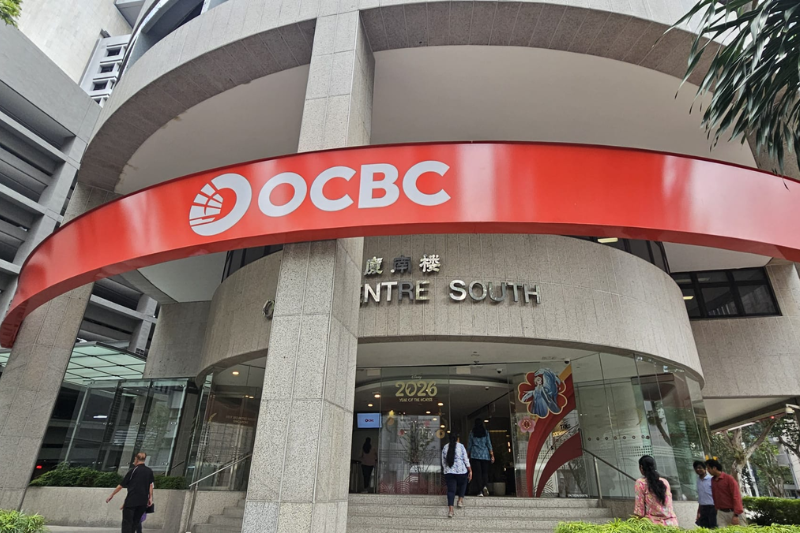
Our local banking giants – DBS Group Holdings Ltd (SGX: D05), Oversea-Chinese Banking Corporation Limited (SGX: O39), and United Overseas Bank Ltd (SGX: U11) – serve as the bedrock of many dividend portfolios.
These “Big Three” have historically shown incredible resilience, bolstered by healthy capital ratios and a disciplined approach to lending.
During market corrections, their ability to maintain payouts often stems from their diversified income streams and robust balance sheets.
Similarly, Keppel Ltd (SGX: BN4) has undergone a significant transformation into a global asset manager, focusing on recurring fee-based income which provides a more predictable foundation for dividends compared to its legacy offshore and marine days.
A healthy balance sheet is the second line of defence.
Lower debt levels provide a company with the flexibility to navigate uncertain periods without having to choose between paying the bank or paying the shareholders.
Take Singapore Technologies Engineering Ltd (SGX: S63) as an example; its diversified engineering business and massive order book allow it to maintain a steady quarterly payout, even when specific sectors face headwinds.
Furthermore, defensive business models with recurring revenue streams provide a natural buffer.
This is why many investors flock to essential services, infrastructure, and high-quality real estate investment trusts (REITs), where the rent collected provides a predictable stream of income regardless of the broader market mood.
Historical Behaviour of Singapore Blue-Chip Dividends
Looking back at history, we can see that dividends from many Singapore blue chips tend to be far more stable than their share prices.
During past market wobbles, several of our local heavyweights either maintained their payouts or made only minor adjustments.
However, it is important to remember that stability is relative and never guaranteed.
Extreme global events can still lead to dividend cuts across the board, reminding us that no stock is entirely “recession-proof.”
Risks Investors Should Not Ignore
While we lean on blue chips for stability, we shouldn’t ignore the risks that come with prolonged economic downturns.
A weak economy eventually eats into earnings across every sector.
Furthermore, rising interest rates can be a double-edged sword; while they might help banks’ margins, they increase borrowing costs for REITs, which can directly impact their distribution per unit.
We also cannot ignore the current macro environment.
The recent escalation in the Middle East has sent Brent crude surging past the US$100 mark, with some analysts warning of even higher peaks if supply routes like the Strait of Hormuz remain under pressure.
For a small, open economy like Singapore, sustained high oil prices act as a tax on growth, fuelling inflation and increasing operating costs for many businesses.
If these geopolitical tensions persist, the resulting higher-for-longer inflation could complicate the path for interest rate cuts, adding another layer of stress to yield-sensitive stocks.
Investors should also be wary of “yield traps,” where an unusually high yield isn’t a bargain but rather a signal that the market expects a dividend cut is imminent due to underlying business stress.
How Investors Can Build a Resilient Dividend Portfolio
Building a portfolio that can weather a storm requires a disciplined approach to diversification.
Rather than loading up on a single sector, it is wiser to spread your bets across banking, asset management, engineering, and various REIT sub-sectors.
The focus should always remain on companies with robust fundamentals and a proven track record of cash flow management.
It is often better to accept a slightly lower, sustainable yield from a quality company than to chase a high yield that is built on shaky ground.
Regularly reviewing the payout ratios and debt levels of your holdings is the best way to ensure your income stream remains healthy for the long run.
Get Smart: Focus on Quality Over Noise
Singapore blue-chip dividends can provide a significant degree of stability during market corrections, acting as an anchor when prices get volatile.
However, they are not entirely immune to broader economic pressures.
Investors who prioritise cash flow strength, balance sheet resilience, and business quality will find themselves much better positioned to build a reliable, long-term income stream that survives the inevitable ups and downs of the market.
Many Singapore stocks fall behind inflation, which means your money quietly loses strength over time. Dividend stocks have a very different track record. Some continued delivering 6% to 13% every year across the toughest market conditions.
In this FREE report, discover 5 crisis-tested dividend stocks that kept rewarding investors while the market struggled. Download your dividend investing guide now.
Follow us on Facebook, Instagram and Telegram for the latest investing news and analyses!
Disclosure: Calvina L. owns shares of SGX and DBS.