When I first started buying Singapore stocks in 2012, one thing shocked me.
You needed a lot of money just to get started.
Back then, a standard SGX board lot was 1,000 shares.
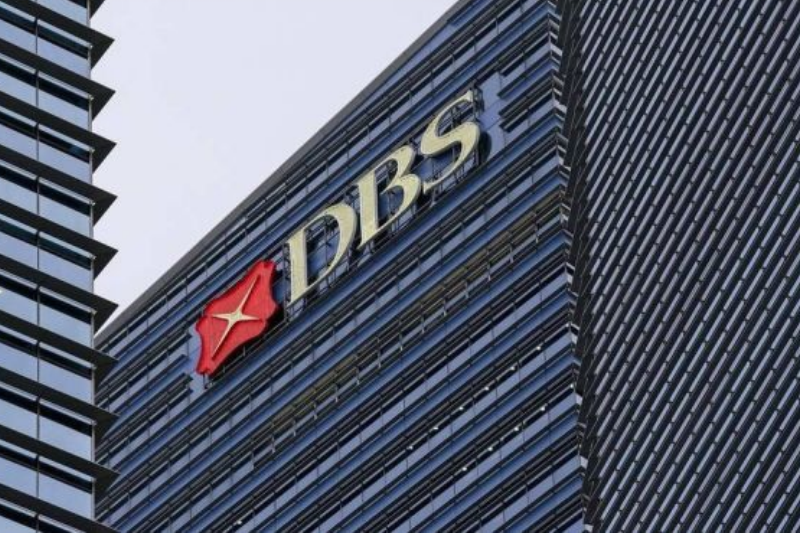
DBS Group Holdings (SGX: D05) traded at an average of about S$13.98 in 2012. That meant buying just one lot could cost nearly S$14,000.
And Jardine Cycle & Carriage Ltd (SGX: C07)? Its shares traded above S$40 during 2012. At those prices, a single 1,000-share lot would have required more than S$40,000.
I remember looking at stocks like DBS, Singapore Exchange Ltd (SGX: S68), and Jardine Cycle & Carriage and thinking: gosh, that is a lot of money just to buy one company.
What was worse was that it was not always the amount I actually wanted to invest.
Sometimes, it was simply the minimum I was allowed to buy.
More than a decade ago, David Kuo was already making the same point.
In 2014, he argued that Singapore’s 1,000-share board lots were unnecessarily restrictive and that smaller lots would make higher-priced shares more accessible to ordinary investors.
A year later, SGX reduced the standard board lot from 1,000 shares to 100.
Now, more than a decade on, we have taken another step.
When the board lot decides your portfolio for you
Imagine you had S$20,000 to invest back then.
You liked DBS. You did your homework.
But if one lot cost close to S$14,000, buying it would have put roughly 70% of your portfolio into a single company.
Not because you wanted 70% in DBS.
Simply because that was how shares were packaged.
Ideally, investing should start with:
How much of my portfolio do I want to put into this company?
But under the old system, the question could easily become:
Can I afford one lot?
Those are very different questions.
From 1,000 shares to 100, and now 10
From 5 October 2026, SGX cut board lots further for higher-priced securities.
For stocks priced above S$10 and up to $100, the board lot can now be 10 shares. Securities above S$100 can trade in single-share lots.
The first batch covered 11 counters, including DBS, United Overseas Bank Ltd (SGX: U11), Oversea-Chinese Banking Corporation Limited (SGX: O39), SGX and Keppel Ltd (SGX: BN4) .
And investors have already embraced the change.
The Business Times reported that on the first day of the revised framework, DBS recorded about 5,000 trades in 10-share lots.
Across the 11 counters, more than 20,000 trades were executed in 10-share lots, compared with more than 13,000 in 100-share lots.
In fact, 55% of all trades across the 11 counters were below the previous 100-share board lot.
A good company can still be too big a position
We spend a lot of time asking whether a stock is good.
Is the company growing? Is its balance sheet strong? Can it grow dividends? Is the valuation reasonable?
But another question matters too:
Even if I like this stock, how much should I own?
Take a stock trading at S$50.
With a 100-share board lot, the minimum investment is S$5,000.
With a 10-share board lot, it is S$500.
The business has not changed.
What has changed is your ability to control the size of your investment.
That matters, especially if you are starting with $10,000 or $20,000.
A minimum purchase of several thousand dollars can dominate a portfolio very quickly.
Smaller lots make it easier to spread your money across several companies, keep cash aside, or simply take a smaller initial position.
You do not have to make one big decision
There is another benefit.
Investing often feels binary: buy or do not buy.
But it does not have to work that way.
You might like a company but think the valuation is only fair.
Instead of committing several thousand dollars immediately, you can start smaller and add later if the business performs or the price becomes more attractive.
If your original thesis turns out to be wrong, you have committed less capital.
The smaller board lot does not remove risk.
It gives you more room to manage it.
One catch: trading costs still matter
Smaller lots do not mean investors should make tiny trades all the time.
If your broker charges a minimum commission, repeatedly buying $200 or $300 worth of shares can make transaction costs disproportionately high.
So the lesson is not: Buy as little as possible.
It is: Invest the amount that makes sense for your portfolio.
Get Smart: Start small, think about the whole portfolio
Looking back, I am slightly envious of someone starting to invest today.
Not because investing itself has become easier.
You still need to find good businesses, avoid overpaying, and sit through uncomfortable market declines.
But one unnecessary hurdle has become much smaller.
When I started investing, one lot of DBS could mean committing nearly S$14,000.
Today, investors have much more flexibility.
So instead of asking:
How much do I need to buy this stock?
Try asking:
How much of this stock do I actually want to own?
Because the real benefit of smaller board lots is not that we can buy more stocks.
It is that we can be more deliberate about how much of each stock we own.
Wish you could overhear how experienced investors think? That’s what Get Smart feels like. Reading calm, thoughtful commentary from people who study the markets closely and care about growing wealth sensibly. Click here to subscribe to our weekly newsletter for free now!
Follow us on Facebook, Instagram, Telegram and YouTube for the latest investing news and analyses!
Disclosure: Joanna Sng owns shares of DBS, UOB, OCBC, and SGX.