There are thirty stocks in the Straits Times Index (SGX: STI).
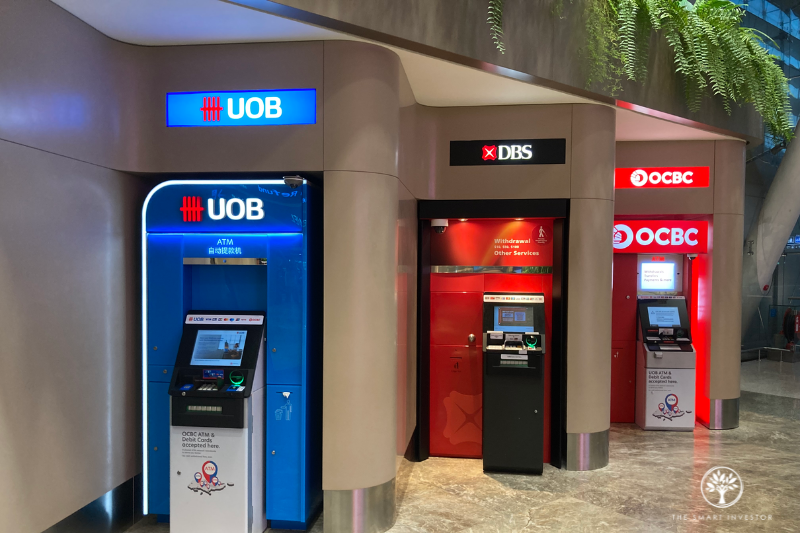
Yet, the banking trio, DBS Group Holdings (SGX: D05), OCBC Ltd (SGX: O39), and UOB Ltd (SGX: U11), together with the Singapore Exchange (SGX: S68), reportedly contributed 95% of the STI’s advance this year – exerting an outsized influence on how the STI performs.
The three blue-chip darlings recently reported their latest first half of 2026 (1H2026) financial results, giving investors a fresh set of numbers to evaluate.
As we celebrate Singapore’s National Day, we check out how the country’s largest banking stocks are enriching investors in their own unique ways.
Profitability: Which Bank Uses Capital Most Efficiently?
In 1H2026, DBS’s total income surged 3% year on year (YoY) to S$12.0 billion, driving net profit up 5% to a record S$6.01 billion.
Its wealth management segment was key, with assets under management (AUM) breaching S$500 billion.
This puts its Return on Equity (ROE) at 17.5%, well ahead of its peers.
However, OCBC isn’t standing still.
Its 1H2026 total income climbed 11% YoY to S$8.00 billion, with net profit rising 13% to S$4.19 billion.
This represents the highest net profit growth among peers, with a respectable annualised ROE of 13.7%.
The driver?
OCBC’s “Next Frontier strategy” which leveraged its diversified franchise to deliver broad-based growth across its banking, wealth management and insurance businesses, with non-interest income surging 36% to a record S$3.51 billion, lifting its share of total income to nearly 44% from 36% a year ago.
For UOB, 1H2026 total income declined 1% to S$7.0 billion, while net profit was up 3% to S$2.9 billion – translating to an ROE of 11.6%, the lowest of the three.
The reason?
Dwindling interest income, similar to its peers.
However, unlike DBS or OCBC, UOB’s non-interest earnings weren’t enough to offset the slump in interest income, despite favourable growth in wealth management.
Dividend Showdown: Show Me the Money
One retail investor at the previous OCBC annual general meeting highlighted the bank’s dividend improvement compared to what he viewed as paltry past payouts, underscoring retail investors’ appetite for higher returns.
Which bank will satisfy investors’ desires?
In 1H2026, DBS declared S$1.62 per share, up 8% year on year.
That figure includes S$0.30 of capital return dividend – a time-limited programme distinct from the ordinary payout of S$1.32.
At S$76.33 as of 7 August 2026, the total translates to an annualised yield of 4.2%, or about 3.5% on the ordinary dividend alone.
UOB declared an interim dividend of S$0.88 per share in 1H2026, a 3.5% increase from the previous year, maintaining its consistent payout ratio of 50%.
That’s an annualised yield of 4.1% at the share price of S$43.30 (7 August 2026).
OCBC’s interim dividend surged 15% YoY to S$0.47 per share in 1H2026, matching UOB’s payout of 50% and posting the highest half-yearly growth.
At S$30.30 per share as of 7 August 2026, its yield is 3.1% on an annualised basis.
The verdict?
DBS and UOB present the greatest bang for your buck compared to OCBC with their superior yields.
However, OCBC is not far behind if it can sustain its aggressive dividend growth.
Fortress Banks: How Secure Are Their Balance Sheets?
Overall, the balance sheets of all three banks are rock-solid.
Their asset quality is strong, as observed from their subdued non-performing loans (NPL) ratio.
OCBC stands out with the lowest NPL ratio at 0.9%.
At just 1.0%, DBS’s NPL is close behind OCBC’s.
UOB’s NPL ratio was slightly higher, at 1.6%, but the rise was manageable, with credit costs still within guided expectations.
UOB’s balance sheet is set for a further capital boost following the agreed sale of UOB Asset Management to Allianz Global Investors for S$555 million, expected to be completed in 2027.
The deal is expected to yield an estimated S$330 million pre-tax gain and lift its CET1 ratio by approximately 14 basis points.
Moreover, their capital adequacy ratios are characteristic of “fortress” banks.
The Common Equity Tier 1 (CET1) ratio is a key measure of financial strength, and the three local banks comfortably beat the 6.5% regulatory requirement.
When fully phased in, UOB, DBS, and OCBC would have CET1 ratios of 15%, 14.6%, and 14.0% respectively.
Growth Drivers: Who Could Be Next on the Podium?
How are the three banks arming themselves for future growth?
With global wealth shifting to Asia, DBS isn’t letting this opportunity slip by as it doubles down on its leading end-to-end digital asset ecosystem and well-entrenched wealth continuum.
OCBC’s diversified franchise delivered across the board in 1H2026, with its insurance arm, Great Eastern Holdings (SGX: G07), growing fastest.
The bank looks set to lean on wealth management and insurance to keep growth going.
UOB’s growth is underpinned by its ASEAN strategy, anchored by the acquisition and integration of Citigroup’s regional consumer businesses since 2022.
Get Smart: The Best Bank Depends on What You Value
Beauty is in the eye of the beholder – so is the “best bank”.
DBS shines with its leading ROE and the ability to scale its digital ecosystem.
OCBC? It offers strong dividend growth even while aggressively growing its insurance and investment arms.
UOB is the regional specialist, built around its ASEAN footprint.
Given their unique strengths, picking a single winner is a challenge.
The good news is you don’t have to, as the podium is likely spacious enough for all three players that already dominate Singapore’s banking scene.
Imagine owning businesses that continued paying shareholders even when markets were falling. That’s the appeal of dividend investing done well. Our FREE report reveals 6 SGX companies that paid dividends every single year for two decades, through the Global Financial Crisis, COVID-19, and 2022’s rate shock. Start building the kind of income stream that could fund a more comfortable retirement. Get your free report here.
Follow us on Facebook, Instagram and Telegram for the latest investing news and analyses!
Disclosure: Larry L. owns shares of DBS, UOB, and OCBC.