Singapore’s stock market had a quiet first half.
The SPDR STI ETF (SGX: ES3), which tracks the Straits Times Index (SGX: ^STI), returned 1.8% over the six months to end-June 2026.
A flat market throws up a puzzle.
If the index barely moved, some stocks pulled it up and others dragged it down.
Three names sat at the back.
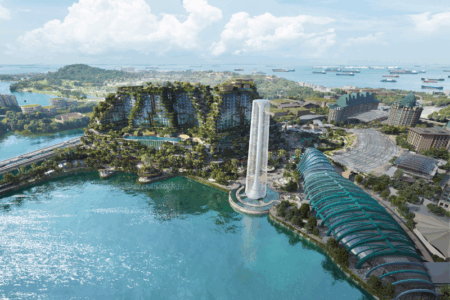
City Developments Limited (SGX: C09) returned negative 7.9%.
Singapore Technologies Engineering Ltd (SGX: S63) came in at negative 6.9%.
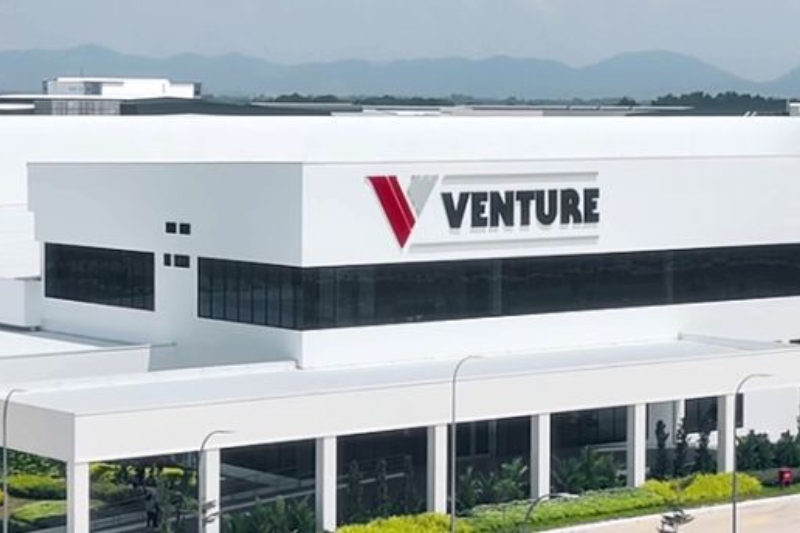
Venture Corporation (SGX: V03) returned negative 6.8%.
Each trailed the index by 8.6% or more.
The odd part is that all three reported decent results.
So why did their shares hold the rear among the 30 STI stocks?
ST Engineering: Why did a record order book not lift the shares?
Start with the strongest business of the three.
ST Engineering posted its 1Q2026 update on 18 May 2026.
Group revenue rose 11% year on year (YoY) to S$3.3 billion.
Strip out LeeBoy, sold in September 2025, and rebased revenue grew 15% YoY.
Net profit growth beat that rebased figure.
Every segment pulled its weight: Defence & Public Security rose 13% on a rebased basis to S$1.4 billion, Commercial Aerospace jumped 15% to S$1.3 billion, and Urban Solutions & Satcom surged 18% to S$525 million (Satcom alone grew more than 30%).
The order book backs the story.
New contracts of S$4.8 billion in the quarter lifted the book to S$34.5 billion as at 31 March 2026.
Of that, S$8 billion is due for delivery this year.
So why the weak share showing?
The results hint at it.
A stock that has already run hard needs fresh reasons to climb.
Growth the market expected may have met the bar, not cleared it.
Management also flagged the Middle East conflict, while judging the direct financial impact as not material for now.
That kind of overhang weighs on sentiment even when the numbers hold.
Venture Corporation: Was the turnaround too slow for the market?
Venture handed investors a turnaround quarter.
The question is whether it turned fast enough.
Revenue edged up 1.9% YoY to S$628.5 million for 1Q2026.
Earnings per share rose 0.9% to S$0.195.
Net profit reached S$56.3 million on a net margin of 9.0%.
On a constant currency basis, revenue would have risen 8.2%.
The mix did the talking.
Portfolio B grew S$42 million YoY on demand for AI-related infrastructure, spanning Test & Measurement, Networking & Communications, and Semiconductor Related Equipment.
Portfolio A went the other way – it fell S$30 million as Lifestyle Consumer volumes dropped after reliability fixes to a customer’s key product.
The balance sheet held firm.
Venture sat on a net cash position above S$1.0 billion as at 31 March 2026, even after higher dividends and share buybacks in 2025.
No dividend was declared for the quarter, which fits the group’s half-year and full-year pattern.
Why the lag, then?
A 1.9% rise is modest.
Management likened the quarter to new shoots in early spring, and shoots take time.
The market may have wanted more than early signs, with one portfolio still cancelling out gains in the other.
City Developments: Can profit that tripled sit beside negative cash flow?
City Developments (CDL) is the most nuanced case.
The headline looked strong, but the cash flow read differently.
Revenue rose 9.7% YoY to S$3.6 billion for FY2025.
Singapore projects such as The Myst, Norwood Grand and Union Square Residences helped, as did the sale of the Ransome’s Wharf site in London.
Profit attributable to owners tripled to S$629.7 million.
Much of that came from capital recycling, chiefly a S$473.1 million gain on the sale of its 50.1% stake in South Beach.
Now the other side.
Free cash flow came in at negative S$2.0 billion, on land payments for the Shanghai Xintiandi site and three Government Land Sales sites.
Strip those out and operating cash flow would have been around S$0.9 billion.
As at 31 December 2025, CDL held S$2.1 billion in cash against total interest-bearing borrowings of S$13.4 billion.
The group declared a total ordinary dividend of S$0.280 per share for FY2025.
That split into a special interim dividend of S$0.030 and a proposed final dividend of S$0.250, a 40% payout ratio.
Here, the share weakness starts to make sense.
Profit that leans on one-off divestment gains is hard to repeat.
Negative free cash flow and borrowings well above the cash pile add to the caution.
When free cash flow turns negative, even for sound expansionary reasons, investors ask harder questions.
Get Smart: A lagging share price is not the same as a failing business
One thread ties the three together.
A falling share price and a weak business are not the same thing.
ST Engineering is growing across every segment with a record order book.
Venture has turned the corner, slowly, and holds more than S$1.0 billion in net cash.
CDL grew profit and revenue, though its cash flow needs watching.
None of the three looks broken.
What lagged was the price, not the operations.
That gap between a sound business and a soft price is what a patient investor studies rather than fears.
Sometimes the market is early; sometimes it just wants proof.
Do the homework, and separate the business from the price.
Then judge whether the market’s caution is an opportunity or a warning.
If the market falls further, will you be ready… or fully invested?
This is where most investors get it wrong. Our FREE report shows how to stay prepared for what comes next. Get it free here.
Follow us on Facebook, Instagram and Telegram for the latest investing news and analyses!
Disclosure: The Smart Investor does not own any stocks mentioned.