Singapore’s biggest companies have been busy buying back their own shares.
Over the first four months of 2026, more than 50 primary-listed companies repurchased S$911 million worth of shares on the open market, up sharply from around S$750 million a year earlier and S$343 million two years ago.
Three blue-chip names led the way: Singapore Telecommunications Limited (SGX: Z74), Oversea-Chinese Banking Corporation Limited (SGX: O39) and Keppel Ltd (SGX: BN4) jointly accounted for S$636 million of that consideration.
The headline is loud.
But for dividend investors, the quieter and more useful question is: what is funding all this generosity, and can the same engine keep the dividends flowing?
Singtel: A Buyback Explicitly Separate from the Dividend Engine
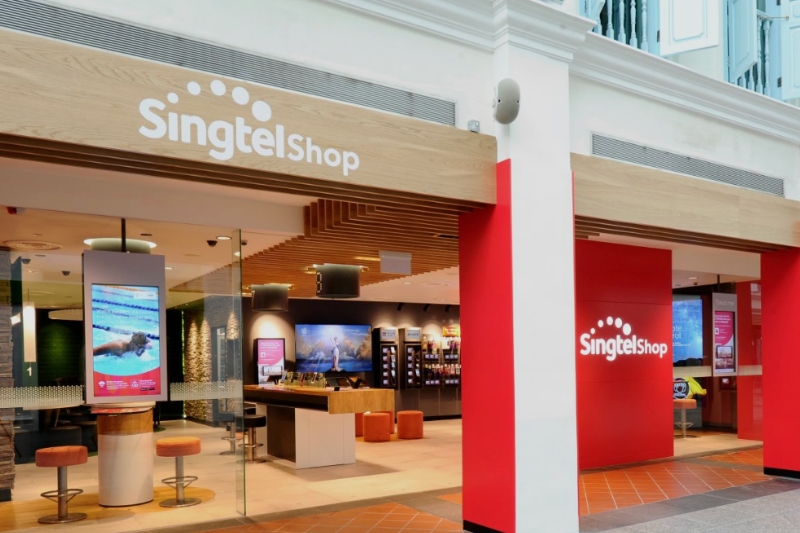
Singtel topped the local tally with 61.2 million shares repurchased for around S$300 million.
The buyback sits within Singtel’s S$2 billion value realisation programme – and crucially, it is not funded by current earnings.
The programme is underpinned by excess capital from asset recycling proceeds.
Why does this matter for dividend investors?
Singtel’s payout structure already separates the two streams.
For 1HFY2026, the telco declared an interim dividend of S$0.082 per share, comprising a core dividend of S$0.064 and a value realisation dividend of S$0.018, up 17.1% year on year (YoY).
The core sits on operating performance; the value realisation component rides on the capital recycling pipeline.
Both engines are running.
Underlying net profit rose 9.5% to S$744 million for 3QFY2026, lifted by a 15.4% jump in regional associates’ post-tax contribution led by Airtel and AIS.
NCS and Optus grew operating profit by 32% and 27% respectively.
During the quarter, Singtel sold a 0.8% direct stake in Airtel for S$1.5 billion in net proceeds – fresh fuel for the recycling tank.
The caution: Singtel Singapore’s mobile service revenue fell 11% on price competition and softer roaming.
OCBC: A Record Top Line under a Policy-Anchored Payout
OCBC came in second with 9.6 million shares repurchased for around S$209.9 million.
Behind that buyback sits a S$2.5 billion capital return plan that management confirmed remains on track for FY2026 completion.
The dividend signal is policy-anchored: OCBC reaffirmed its FY2026 guidance of a 50% ordinary dividend payout.
What’s feeding that policy? A record.
Total income rose 5% YoY to S$3.8 billion in 1Q2026, with net profit attributable to shareholders also up 5% to S$1.97 billion. The composition matters.
Net interest income fell 5% to S$2.2 billion as net interest margin compressed 28 basis points to 1.76%, weighed by lower benchmark rates.
That squeeze was cushioned by customer loans growing 9% on a constant-currency basis to S$347 billion.
Asset quality held steady, with the non-performing loan ratio at 0.9% for the eighth consecutive quarter.
Non-interest income surged 23% to S$1.6 billion and now contributes over 40% of total income.
The mix matters: wealth management fees climbed 34% – AUM-linked and broadly recurring – while trading income rose 10% in what is by nature a more cyclical line.
Both helped this quarter; only one is predictable.
Do note that OCBC does not declare a dividend at 1Q.
Keppel: A Transition Story with a Delayed Dividend Signal
Keppel rounded out the trio with 10.5 million shares bought back for around S$126.5 million.
The dividend question here comes with a caveat: 1Q2026 was a voluntary update, and Keppel did not disclose specific revenue, profit, total FUM or free cash flow figures.
Investors have to read the engine through other signals.
The signals are mixed but tilting positive.
The New Keppel’s net profit was slightly lower YoY, as higher Infrastructure and Connectivity earnings were offset by weaker Real Estate contributions that had benefitted from valuation and divestment gains a year earlier.
Recurring income inched up.
The brighter line: Keppel turned to a free cash inflow position in 1Q2026, compared to an outflow a year ago.
Distributions and divestment proceeds from sponsor stakes already reached almost three-quarters of the total received in FY2025.
Asset management fees rose 13% to S$108 million, with growth across all three segments.
Year-to-date asset monetisation reached S$385 million against the S$2–3 billion target for 2026.
Keppel also does not declare a 1Q dividend, consistent with its half- and full-year cadence.
The dividend signal for investors comes later.
Get Smart: Three Buybacks, Three Engines, Three Dividend Timelines
The buyback is the loud bit.
It grabs headlines, lifts earnings per share, and signals management confidence.
But it also draws from the same well that funds the dividend.
For Singtel, that well is asset recycling – visible, structured, and explicitly tied to a separate value realisation dividend.
For OCBC, it is diversified earnings sitting beneath a clear 50% ordinary payout policy.
For Keppel, it is an asset-light transition still finding its rhythm, with a free cash inflow inflection that’s encouraging and a disclosure gap that asks investors to wait.
Three buybacks, three engines, three timelines for the dividend story to play out.
One Singapore bank has quietly become one of the strongest income engines in the market. Its dividends have grown at 16.6% a year while others were pulling back. That level of consistency can change a retirement plan entirely. Our FREE 2026 Dividend Game Plan explains why this bank keeps lifting payouts and why many long-term investors rely on it for stable income. Download your free copy today.
Follow us on Facebook, Instagram and Telegram for the latest investing news and analyses!
Disclosure: The Smart Investor owns shares of OCBC.