It’s been a busy start to the year for the Singapore market.
While many eyes are glued to the heavyweights of the Straits Times Index (SGX: ^STI), some of the most compelling stories for dividend seekers happen just slightly off the beaten path.
This March, we’re seeing a fascinating mix of recovery plays and structural shifts that could provide some welcome diversification for your income portfolio.
Whether it’s a local semiconductor star reinstating dividends after a dramatic cash flow turnaround or a UK-focused REIT opening a brand-new SGD trading counter, there is plenty to chew on.
Here are three stocks on the radar this month that remind us why looking beyond the blue chips can be so rewarding.
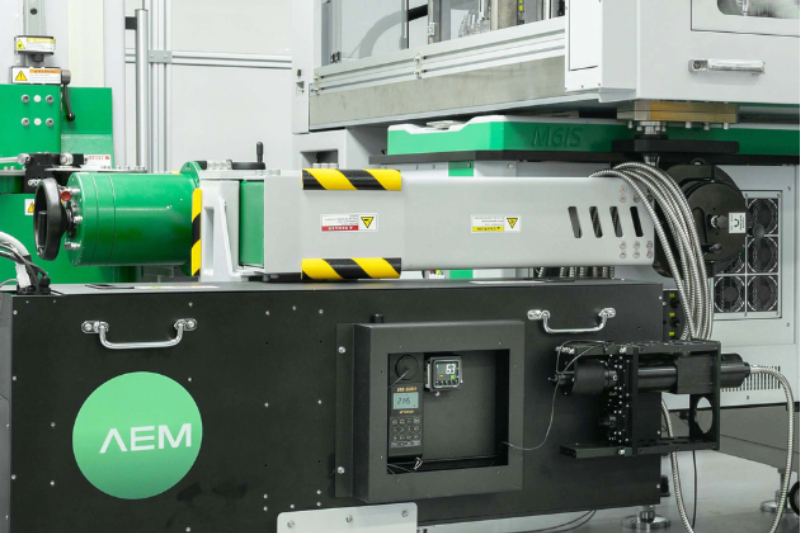
AEM Holdings (SGX: AWX) – From Cash Flow Drought to Dividend Restart
If you’ve followed AEM over the last couple of years, you know it’s been a bit of a rollercoaster.
As a key player in the semiconductor testing space, AEM is deeply entwined with the giants of artificial intelligence (AI) and high-performance computing (HPC).
But as any seasoned tech investor will tell you, being in a high-growth sector doesn’t always translate to a smooth ride for the balance sheet.
The headline news for FY2025 wasn’t just the 48% jump in attributable profit to S$17 million; it was the sheer grit shown in their cash flow management.
We saw a massive turnaround from a negative free cash flow of S$41.7 million in 2024 to a very healthy S$111.5 million in 2025.
By the end of December, AEM had swung from a net debt position to a net cash position of over S$60 million.
Because the house is back in order, the board has finally felt comfortable enough to restart dividends, declaring a final payout of S$0.013 per share.
With a trailing yield of about 0.4% at recent prices, this isn’t going to fund your retirement tomorrow.
However, it signals that the “drought” is over.
With management guiding for double-digit revenue growth in 2026, AEM is positioning itself as a recovery story.
Just keep an eye on their customer concentration – when you deal with the biggest titans in AI, their hiccups become your headaches.
Elite UK REIT (SGX: MXNU) – New SGD Counter Opens the Door
Elite UK REIT has always been a bit of an outlier on the SGX.
It offers a unique proposition – a portfolio of 148 properties largely leased to the UK’s Department for Work and Pensions.
Essentially, you’re collecting rent backed by the British government.
For the Singapore retail investor, this REIT has always had an unusual quirk – its units trade in British pounds on the SGX, not Singapore dollars.
That is about to change.
As of 16 March 2026, a new SGD trading counter will be opened, allowing Singapore-based investors to buy and sell units in Singapore dollars alongside the GBP counter.
This move, coupled with the REIT’s re-inclusion into the FTSE Global Micro-Cap and Total Cap indices, is a clear bid to improve liquidity and invite more retail investors to the party.
On the operational front, FY2025 revenue edged up 1.3% year on year (YoY) to £38.0 million, driven by positive rental reversions and newly acquired assets.
While net property income (NPI) saw a slight dip due to asset repositioning costs, the distribution per unit (DPU) actually rose by 5.6% to £0.0303.
At current prices, that’s a trailing yield of roughly 8.7%.
The real “win” here, though, was the massive lease regear with the DWP.
Elite UK REIT extended its weighted average lease expiry (WALE) from a precarious 2.4 years to over 7 years, providing a level of visibility that dividend lovers crave.
Just bear in mind that the current DPU growth owes quite a bit to tax benefits and interest savings rather than organic rent hikes, so we’ll want to see those properties work harder in the years to come.
United Hampshire US REIT (SGX: ODBU) – Quiet Compounder, Loud Results
There’s something to be said for the “boring” businesses.
United Hampshire US REIT, or UHREIT, focuses on grocery-anchored and necessity-based retail in the States.
Think of the shops people visit whether the economy is booming or bruising.
It’s a simple model, and it’s one that management is executing with impressive discipline.
For FY2025, gross revenue dipped 1.7% YoY to US$72.0 million, while NPI fell 1.7% in tandem to US$49.0 million.
Both declines were due to the absence of rental contributions from properties divested in August 2024 and January 2025 – not a deterioration in business quality.
The more important metric – distributable income – actually rose by nearly 6% thanks to smart acquisitions like Dover Marketplace and a little help from falling interest rates.
This led to an 8.1% increase in DPU, marking three straight periods of growth.
With a trailing yield of approximately 8.2% and a high tenant retention rate of 90%, UHREIT is acting like a classic compounder.
They are recycling capital effectively – selling off assets and buying into higher-yielding ones in new territories like Connecticut.
The one thing to watch is their organic growth; “same-store” revenue growth was a modest 0.8%.
This tells us that while the REIT is great at growing through acquisitions, it doesn’t have massive pricing power to jack up rents on existing tenants.
It’s a steady play for those who value consistency.
Get Smart: Follow the Cash, Not Just the Headlines
Dividends are a declaration of a company’s health.
What links these three very different businesses is the underlying movement of cash.
AEM’s dividend returned because the cash flow turned positive.
Elite UK REIT’s payout grew because of clever capital management and lease security, while UHREIT’s DPU rose because they moved money into better-performing assets.
For dividend investors, the lesson is simple: don’t get blinded by a high headline yield or a flashy revenue growth figure.
Look at the free cash flow and how management chooses to spend it.
The most sustainable dividends come from companies that respect their balance sheets as much as their shareholders.
S$5 billion in government backing. S$1.1 billion already deployed. Singapore’s small-cap market is about to explode, and most people are completely clueless. Our FREE report gives you the inside track on 5 companies positioned to benefit. Download now before the crowd catches on.
Follow us on Facebook, Instagram and Telegram for the latest investing news and analyses!
Disclosure: Calvina Lee does not own any of the stocks mentioned. Chin Hui Leong contributed to the article and owns shares of AEM.