The Central Provident Fund (CPF) provides a stable and secure option for those who are less inclined to actively manage investments.
But for those with a longer time horizon and higher risk tolerance, investing in dividend-paying stocks could grow wealth faster than CPF.
However, the real focus here is not on higher returns — but whether those returns are sustainable.
CPF vs Stocks: Understanding the Trade-Off
The CPF Ordinary Account (OA) offers a 2.5% interest rate guaranteed by the government, regardless of market fluctuations.
Stocks, on the other hand, can earn you more, but their value swings with the market.
To really compare these two, you need to look at both risk and reward.
Higher returns come with greater uncertainty: understanding these risks is essential for investors seeking higher potential returns.
Why Some Stocks Can Pay More Than CPF
Businesses turn a profit when they bring in more money than they spend, and many share these profits with shareholders through dividends.
This distribution rewards investors, particularly in mature, stable companies.
The dividend yield – a ratio that shows how much a company pays out relative to its stock price – reflects both the business performance and market pricing.
In short, dividend income comes from business strength, not guarantees.
What Makes a High-Yield Stock Worth Considering
When sizing up a company, dig into its earnings, payout ratio, debt, and track record.
That’s how you figure out if the dividend holds up over time.
Reliable dividend-payers usually have sturdy balance sheets and healthy operating cash flow so they can ride out rough markets.
Watch payout ratios closely too.
If a company pours too much of its profits into dividends, it can’t easily reinvest in the business, trim its debt, or manage unexpected challenges.
Stocks with high dividend yields may look appealing at first glance, but not all are created equal.
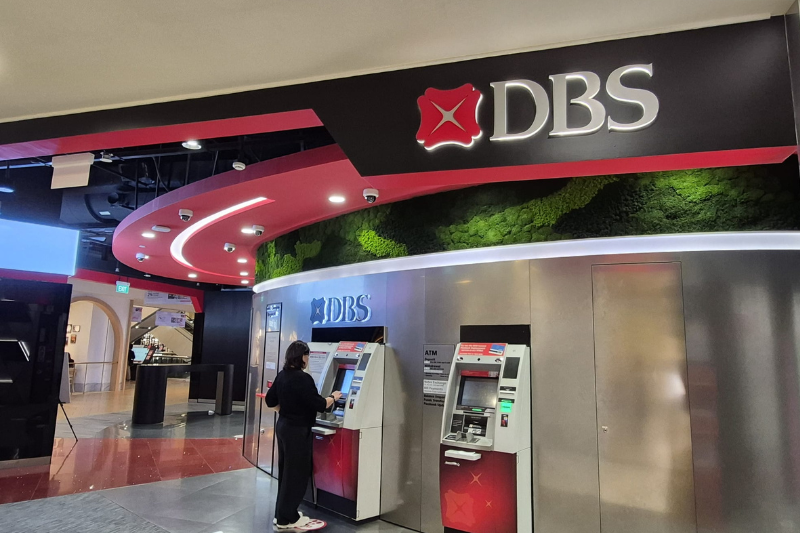
DBS Group Holdings (SGX: D05) — The Cash Flow Generator
DBS stands out due to its ability to generate high, consistent returns, even as the interest rate cycle shifts.
Its balance sheet remained strong for the first quarter of 2026 (1Q2026), with net profit rising to S$2.93 billion while total income hit a record S$5.95 billion.
DBS declared a quarterly payout of S$0.81 per share, comprising an ordinary dividend of S$0.66 and capital return dividend of S$0.15.
Based on this payout, and its latest share price of S$58.87, the bank offers a trailing dividend yield of roughly 5.3%.
This stands comfortably above the CPF OA interest rate of 2.5% and Special Account (SA) rate of 4.0%.
In short, DBS proves that genuine, sustainable dividends come from the underlying strength of the business – not just an attractive headline yield.
CapitaLand Integrated Commercial Trust (SGX: C38U), or CICT — The Dividend Growth Blue Chip
REITs like CICT have long been popular as they can generate relatively stable distributions backed by recurring rental income from commercial properties.
Based on its trailing 12-month distribution of S$0.1158 per unit and unit price of around S$2.29, CICT offers a current distribution yield of roughly 5.1%.
The REIT has demonstrated steady growth, with distributions rising from S$0.1075 in 2023 to S$0.1088 in 2024.
On top of that, CICT’s results in its first quarter ended 31 March 2026 (1Q2026) show its balance sheet is in solid shape.
Aggregate leverage sits at 38.5% and the interest coverage ratio is 3.8 times.
CICT shows how quality REITs can combine stable distributions with gradual income growth over time.
Singapore Technologies Engineering Ltd (SGX: S63) or STE — The Defensive Income Play
STE is a defensive heavyweight with diversified businesses across aerospace, defence, and smart city solutions.
Based on its total FY2025 dividend of S$0.23 per share and share price of around S$10.63, ST Engineering offers a dividend yield of roughly 2.2%.
While below the CPF OA rate, STE provides potential for capital appreciation and long-term growth.
From 2026 onwards, the group has also implemented a progressive dividend policy, declaring an incremental dividend equivalent to one-third of the year-on-year increase in net profit.
STE delivered a strong underlying performance in FY2025.
Revenue climbed 9% to S$12.35 billion, and base operating net profit rose 21% to S$851 million.
ST Engineering also generated a healthy S$1.7 billion in operating cash flow during the year, supporting reinvestment, debt reduction, and shareholder returns.
What Investors Should Be Careful About
Not all dividend stocks are built the same.
High yields can sometimes signal weakening earnings, rising debt, or unsustainable payouts.
Unlike CPF, stock dividends are never guaranteed, and share price dips can occur – often simply due to dividend adjustments on ex-dividend dates.
For income investors, sustainable business growth matters far more than a headline yield alone.
Get Smart: Higher Returns Require Smarter Decisions
Dividend stocks should complement CPF, not necessarily replace it.
The aim isn’t just chasing bigger numbers; it’s about earning steadily year after year.
Investors who stick with solid businesses and stay disciplined can build a robust income portfolio for the long haul.
Some companies cut dividends in a downturn. These 5 didn’t.
Find out which Singapore blue chips have weathered past chaos…and why they could be your portfolio’s anchors in the next wave of downturn. Download the report free.
Follow us on Facebook, Instagram and Telegram for the latest investing news and analyses!
Disclosure: Joseph G. does not own shares in any of the companies mentioned.