Inflation is the phenomenon that quietly weakens your purchasing power over time.
Other than receiving yearly pay increments that match or outpace inflation, one of the few foolproof ways to preserve your purchasing power is to invest profitably.
What if I told you that you can further protect your purchasing power by investing in companies that can reliably raise their prices over time?
Interested?
Today, we will spotlight five stocks with pricing power and how they can help you soften the impact of inflation on your wallet.
Why Pricing Power Is the Ultimate Inflation Hedge
Companies with pricing power protect their margins by passing rising costs to customers, limiting the inflation’s effect on their earnings.
But not every business can raise prices.
Pricing power comes from a dominant brand or the company’s market position that allows for price increases without losing sales volume.
Competitive moats, such as efficient scale, high switching costs, or limited competition, are what ultimately drive this resilience.
DFI Retail Group Holdings Limited (SGX: D01), or DFI — The Consumer Brand Leader
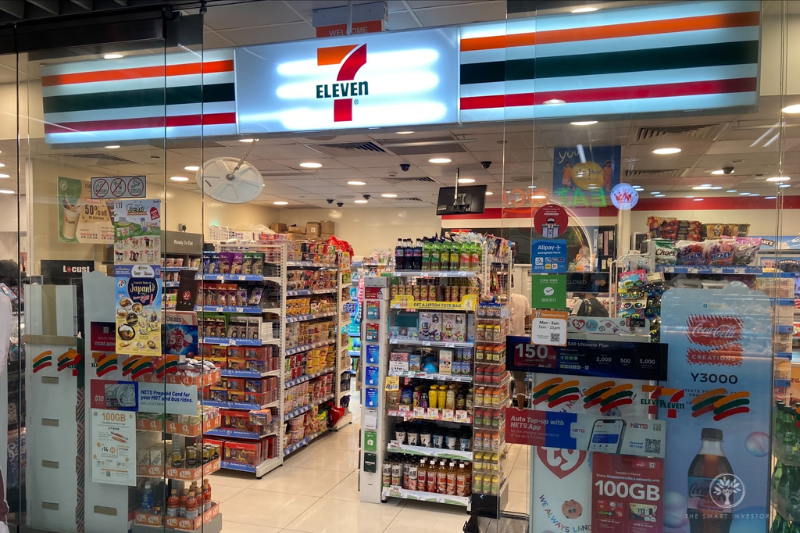
DFI, being the operator of recognisable brands such as IKEA, Guardian, and 7-Eleven across multiple Asian markets, best exemplifies what it means to have pricing power.
These iconic brands enjoy strong loyalty and market positioning.
Think about it: when you’re looking for new furniture, IKEA is one of the first names to pop up in your head.
Having brand loyalty and strong market positioning allows for steady price increases without fear that customers will pull back on their purchases.
DFI’s pricing power is best seen in its operating margin, which improved from 2% in December 2020 to 4.1% as of December 2025.
The key takeaway is that strong brands can pass on rising costs to their customers.
Sembcorp Industries Limited (SGX: U96), or Sembcorp — The Essential Services Provider
Being an essential services provider that customers rely on for daily living also grants pricing power to a certain extent.
Very often, these companies have contracts with pricing adjustments (tied to the consumer price index) to ensure that their costs of providing such essential services can be met.
Take Sembcorp, for example; this local energy provider has long-term contracts, spanning decades.
Typically, these contracts come with in-built price escalations tied to the rate of inflation.
These factors provide support for the group’s earnings over time.
The key takeaway here is that companies that provide essential services can have pricing power.
ParkwayLife REIT (SGX: C2PU) — The REIT with Built-In Escalations
ParkwayLife REIT owns healthcare properties, mainly hospitals and nursing homes, primarily in Singapore and Japan.
This REIT stands out with its lease arrangements, which provide for steady annual price increments.
Thanks to its triple net lease arrangements for its core Singapore hospitals, ParkwayLife REIT is also not liable for escalating property expenses!
These factors have allowed this healthcare REIT to grow its income and distribution per unit (DPU) steadily over time.
In fact, core DPU, since the REIT’s listing in 2007, has been on a consistent uptrend.
The key takeaway is that some REITs possess the ability to pass increasing costs to their tenants, while retaining income upside through steady escalations built into their lease agreements.
ST Engineering Limited (SGX: S63), or STE — The Market Leader with High Switching Costs
STE’s strong market leadership in the maintenance, repair, and overhaul (MRO) market (ranked number two globally by Spherical Insights) for commercial aerospace makes it difficult for customers to switch providers.
Once a customer commits its fleet of aircraft to STE for MRO activities, it is unlikely to swap to a different MRO supplier given the prohibitive costs, regulatory hurdles, and even extended downtime.
This structural dependency allows STE to increase prices steadily over time, without losing customers.
The key takeaway is that switching costs can create durable pricing power for a company.
Seatrium Limited (SGX: 5E2), or Seatrium — The Commodity or Asset-Linked Player
Finally, Seatrium, being in the business of constructing offshore vessels, may see strong earnings growth during periods of high oil prices (high oil prices generally lead to an escalation in inflation).
Higher oil prices incentivise the construction of new offshore vessels for oil and gas exploration, directly benefiting Seatrium’s top-line profile.
Furthermore, Seatrium may also benefit from improved earnings leverage during such times.
The key takeaway is that some businesses can directly benefit from the source of inflation.
What Investors Should Be Careful About
Do be mindful of companies that are unable to pass their increased costs onto customers.
Particularly, stay away from businesses with razor-thin margins or those companies that provide an attractive yield without having any pricing power.
The key takeaway is that not all income-paying stocks can protect you against inflation.
How to Use This Playbook in a Portfolio
So, how do you best utilise this playbook for your portfolio?
Well, combining companies with pricing power and proven dividend growers can support a rising stream of dividends, which can help alleviate inflationary pressures on your wallet.
Do avoid stocks with little to no pricing power and earnings growth.
Focus on high-quality businesses with the earnings potential to outpace inflation.
Get Smart: Let Your Investments Do the Heavy Lifting
In sum, while rising prices are inevitable, you can protect your wallet by owning companies with pricing power, those that can raise prices and grow profits faster than inflation.
This way, you can worry less about higher inflation as your portfolio companies are working overtime to safeguard your purchasing power!
The world’s gotten unpredictable, but some Singapore companies have quietly kept thriving. You’ve probably seen them in your daily life. And yes, they’ve kept paying dividends through it all. Meet 5 resilient stocks built to navigate global storms. Get the free report here and see how they’ve done it.
Follow us on Facebook, Instagram and Telegram for the latest investing news and analyses!
Disclosure: Wilson H. does not own shares in any of the companies mentioned.