

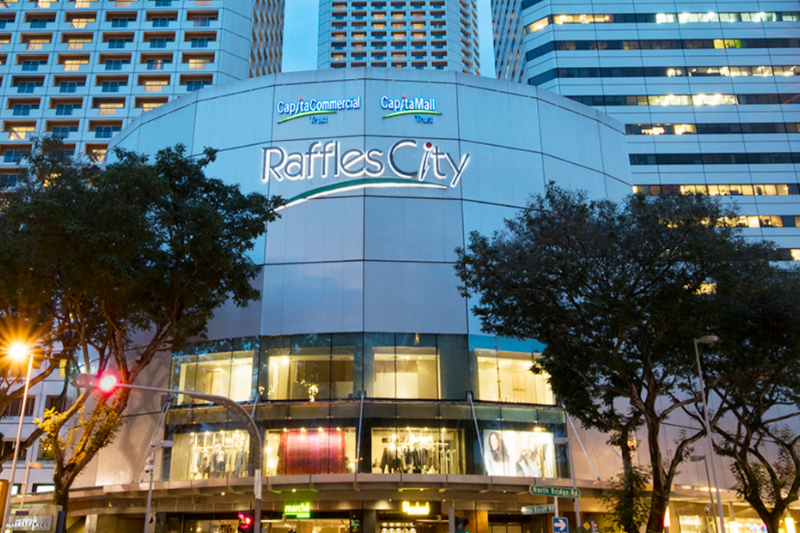
Temasek, a global investment company headquartered in Singapore, holds large stakes in several Singapore-listed real estate investment trusts (REITs).
Three of them raised their payouts in their latest results.
| REIT | Ticker | Temasek Stake | 1H2026 / 1QFY2026/2027 DPU | DPU YoY Growth |
| CapitaLand Integrated Commercial Trust(CICT) | SGX: C38U | 21.4% | S$0.0602 | +7.1% |
| CapitaLand Ascendas REIT(CLAR) | SGX: A17U | 18.6% | S$0.07482 | +0.1% |
| Mapletree Logistics Trust(MLT) | SGX: M44U | 34.3% | S$0.01816 | +0.2% |
As at 27 February 2026, Temasek held a 21.4% deemed interest in CapitaLand Integrated Commercial Trust (SGX: C38U).
It also held an 18.6% deemed interest in CapitaLand Ascendas REIT (SGX: A17U) as at 3 March 2026.
Its largest position among the trio is in Mapletree Logistics Trust (SGX: M44U) with a 34.3% deemed interest as at 29 May 2026.
While all three boosted their distribution per unit (DPU) by anywhere from 0.1% to 7.1%, the underlying drivers behind these increases tell very different stories.
Can CICT keep its DPU growing through a year of big deals?
CICT is Singapore’s largest REIT by market capitalisation, with S$28.2 billion in total assets across retail, office and integrated development properties as at 30 June 2026.
For the first half of 2026 (1H2026), CICT turned in a solid performance.
Gross revenue rose 7.5% year on year (YoY) to S$846.8 million, while net property income (NPI) grew 8.7% to S$630.5 million.
Most impressively, DPU climbed 7.1% to S$0.0602 – even with its total unit base expanding by 5.8%.
Two deals made the difference.
CICT took full ownership of CapitaSpring and began collecting income from Gallileo in Frankfurt.
Meanwhile, the divestment of Bukit Panjang Plaza offset a portion of those gains.
Operational metrics remained healthy across the board.
Portfolio occupancy rose 0.4 percentage points quarter on quarter to 95.6%, while rental reversions stayed positive at 4.0% for retail and 6.5% for office.
CICT isn’t done dealing.
It completed its major S$3.9 billion acquisition of Paragon on 1 July 2026 and expects to wrap up the sale of AsiaSquare Tower 2 in the second half of the year for net proceeds of about S$2.45 billion.
As at 30 June, aggregate leverage stood at 37.4% with an average cost of debt at 2.9%.
Given that both numbers predate the Paragon transaction, investors should keep a close eye on where gearing settles once both big deals are fully reflected on the balance sheet.
| Related articles: Unlocking CICT’s Growth Engine: From AEIs to a S$1.1B Hougang Expansion CICT, FCT or Mapletree Industrial Trust: Which REIT Is the Best Buy Today? |
Why did CLAR’s DPU barely move when its income grew 8.6%?
CLAR owns a massive portfolio of 234 industrial properties spanning Singapore, Australia, the US, the UK/Europe and Japan, with S$20.1 billion in assets under management (AUM) as at 30 June 2026.
In 1H2026, gross revenue rose 6.7% YoY to S$805.5 million, pushing NPI up 6.2% to S$556.1 million.
Distributable income surged even faster, leaping 8.6% to S$359.4 million.
Yet despite that headline growth, DPU edged up just 0.1% to S$0.07482.
Where did all that extra cash go?
Equity dilution was the culprit.
CLAR raised fresh equity in both 1H2026 and 1H2025, meaning that higher income had to stretch across a larger unit base.
CLAR kept buying, too.
CLAR completed S$1.1 billion worth of purchases across nine properties, with another S$638.1 million in acquisitions announced.
On the capital-recycling front, it agreed to sell the Kim Chuan Telecommunications Complex for S$200.4 million – a 32% premium over its valuation.
Rental reversion was robust at 8.5%, with management guiding for positive high single-digit reversions for the full year.
Occupancy, however, proved to be a soft spot.
Overall portfolio occupancy fell to 89.1% from 91.8% a year earlier.
Part of that drop came from two newly completed properties; even excluding them, underlying occupancy would have landed at 90.3%, still trailing last year’s level.
Aggregate leverage stood at 39.7%, with an average cost of debt of 3.5%.
| Related articles: CICT vs CapitaLand Ascendas REIT: Which CapitaLand Giant is the Better Buy? Singapore REITs Report Earnings: What Investors Should Know About CLAR, CLAS, MPACT and MIT |
What is holding back MLT?
MLT holds 175 logistics properties across nine Asia-Pacific markets, with S$13.1 billion in AUM as at 30 June 2026.
Its latest results cover the first quarter of the financial year (1QFY2026/2027), the three months ended 30 June 2026.
It was a relatively muted quarter for the logistics REIT.
Gross revenue grew 0.8% YoY to S$178.9 million, while NPI rose 2.0% to S$156.4 million.
DPU scraped higher by 0.2% to S$0.01816, up slightly from S$0.01812 a year earlier.
Growth from a newly acquired warehouse in Mumbai and a full-quarter contribution from Mapletree Joo Koon Logistics Hub helped offset the drag elsewhere.
The drag included ongoing headwinds in China, lost rental income from divested properties and weaker regional currencies.
Excluding currency fluctuations, gross revenue and NPI would have increased by a healthier 2.0% and 3.1% respectively.
Borrowing costs fell 2.7% to S$38.3 million, offering some relief.
Occupancy slipped to 96.4% from 96.9% three months earlier, and rental reversion came in at 0.9%, or 2.3% excluding China.
China, again, is the drag.
Post-quarter, MLT announced three additional divestments totalling roughly S$155 million to recycle capital.
Aggregate leverage remained the highest of the three trusts at 40.5%, though its average cost of debt remained competitive at 2.6%.
| Related articles: The Logistics Boom: Why Mapletree Logistics Trust is a Global Powerhouse CLI, MLT, FLCT and PLife REIT Earnings: What Investors Should Know Now |
Get Smart: Look at the units, not just the payout
At the end of the day, a higher DPU is what lands directly in your bank account, but looking at unit base expansion reveals how management actually got you there.
CLAR grew distributable income by 8.6%, yet almost none of it reached unitholders on a per-unit basis.
In contrast, CICT expanded its unit base by 5.8% and still managed to generate a 7.1% jump in DPU, demonstrating that its acquisitions added net value faster than they created new units.
The next time a REIT announces a payout increase, line up its distributable income growth alongside its DPU growth.
The spread between those two numbers gives you a good sense of how much equity dilution cost you along the way.
If you own CLAR, watch whether its S$1.1 billion of acquisitions lift DPU once they contribute for a full period.
It almost feels like the government is paying companies to make you wealthier. Singapore’s new S$5 billion market boost could send fresh money into local stocks. We identified 5 companies positioned to benefit, including familiar names with surprising wealth potential. Our free report reveals these hidden opportunities before the money flows in. Download it now before it’s too late.
Follow us on Facebook, Instagram, Telegram and YouTube for the latest investing news and analyses!
Disclosure: The Smart Investor owns units of CICT, CLAR and MLT.


