It was a good quarter to own Singapore blue chips.
The SPDR STI ETF (SGX: ES3), which tracks the Straits Times Index (SGX: ^STI), delivered a total return of 11.6% in 3Q2026.
Four stocks did better.
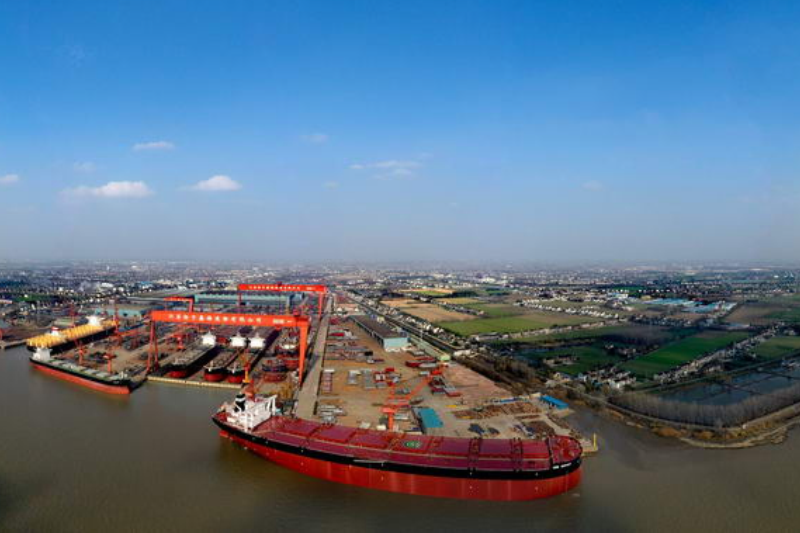
Yangzijiang Shipbuilding (Holdings) Ltd. (SGX: BS6), or YZJ, led the pack with a 50.3% return.
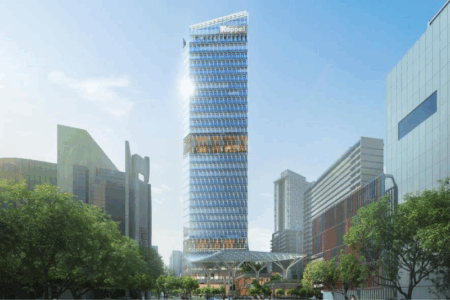
Oversea-Chinese Banking Corporation Limited (SGX: O39), or OCBC, followed with 31%, DBS Group Holdings (SGX: D05) hit 20.2% and Hongkong Land Holdings Limited (SGX: H78) generated 13.7%.
All four figures are total returns, which means they include dividends.
Their latest results give us a few clues about what caught investors’ eyes.
Can YZJ keep its shipyards full?
YZJ’s revenue rose 36% year on year (YoY) to RMB17.5 billion in the first half of 2026 (1H2026).
Its shipbuilding gross margin widened to 37% from 35%, while profit attributable to shareholders climbed 28% to RMB5.4 billion.
The driver here is execution on higher-value contracts.
YZJ is now building ships it won at better prices, such as ultra-large containerships and very large ethane carriers.
Its new Hongyuan yard also began contributing, chipping in RMB545 million of revenue in the second quarter.
Is the cash keeping pace with the profit? Not quite yet.
Free cash flow rose 82% to RMB675.4 million, which is only an eighth of attributable profit.
Since free cash flow ultimately funds dividends, this gap is worth keeping an eye on.
That said, YZJ has plenty of runway.
It held RMB15.9 billion in cash against RMB4.1 billion of borrowings as at 30 June 2026.
The group pays dividends annually, with its FY2025 final dividend of S$0.20 per share paid out in May 2026.
YZJ’s order book stood at US$22.4 billion.
By July 2026, it had secured about US$1.96 billion in new orders, putting it 43.6% of the way towards its FY2026 target of US$4.5 billion.
How did OCBC post a record half on thinner margins?
OCBC earned less on each dollar it lent, as its net interest margin (NIM) narrowed to 1.73% in 1H2026 from 1.98% a year ago.
That pushed net interest income down 3% YoY to S$4.5 billion, though 12% loan growth helped cushion the impact.
The bank made up the shortfall through non-interest income, which surged 36% to S$3.5 billion.
A pickup in wealth management activity boosted fees and commissions by 26%, while trading income climbed 46% and insurance income rose 49%.
Together, these drivers pushed net profit up 13% to a record S$4.2 billion.
The board raised the interim dividend 14.6% to S$0.47 per share, maintaining a 50% payout ratio.
On 7 August 2026, management upgraded its FY2026 guidance and now expects net interest income to decline only slightly.
What pushed DBS past S$6 billion in quarterly income?
Reporting on a quarterly schedule, DBS delivered total income of S$6.1 billion for 2Q2026, up 6% YoY.
It marks the first time the bank has crossed the S$6 billion threshold in a single quarter.
DBS felt the same margin pressure as OCBC.
Its NIM narrowed to 1.87% from 2.05%, causing net interest income to slip 2% to S$3.6 billion.
Wealth management stepped up here as well.
Wealth fees jumped 42% to S$919 million, pushing net fee and commission income up 25% to S$1.5 billion.
Net profit rose 9% to S$3.1 billion, yielding a return on equity (ROE) of 17.9%.
DBS declared two payouts for the quarter:
- Ordinary interim dividend: S$0.66 per share
- Capital return dividend: S$0.15 per share
Like OCBC, DBS raised its full-year guidance and now expects total income for 2026 to top its 2025 performance.
How does Hongkong Land earn more when operating profit stays flat?
Hongkong Land‘s operating profit barely moved in 1H2026, coming in at US$318.9 million.
Underlying profit still rose 11% YoY to US$259.1 million.
The group recycled capital through asset sales, helping cut net financing charges by 36% to US$56.2 million.
A lower share count provided an extra boost, driving underlying earnings per share (EPS) up 14% to US$0.1207.
Shareholders received a higher payout as the interim dividend rose 33% to US$0.08 per share, representing about 66% of underlying EPS.
Free cash flow went in the opposite direction, dropping 26% to US$153.2 million as renovation spending nearly doubled.
Net gearing remained manageable at 11%.
Investors should look past the headline profit figure of US$1.3 billion.
More than half of that stems from a US$725.1 million revaluation gain, which is a paper adjustment rather than an actual cash inflow.
What do the four outperformers share?
At OCBC, DBS and Hongkong Land, the main earnings engine stalled, but profits grew anyway.
The banks leaned on wealth management fees as their margins shrank, while Hongkong Land trimmed its interest bill.
YZJ is the odd one out, simply earning better margins across its shipyards.
All four gave the market clear reason for confidence.
OCBC, DBS and Hongkong Land raised their dividends or upgraded guidance, while YZJ reaffirmed its order target.
Get Smart: Find the engine
A strong quarter tells you a stock has run, but it cannot tell you whether the run will last.
To answer that, look at which engine produced the profit, and assess whether it can keep running.
For OCBC and DBS, watch whether wealth fees keep growing when markets turn quiet.
Hongkong Land has already completed 93% of its capital recycling target, meaning room for further interest savings is limited.
YZJ still needs another US$2.54 billion in contract wins to hit its FY2026 goal.
Run that test on every stock in your portfolio, not just this quarter’s winners.
2008. 2020. 2022. Three of the toughest stretches for Singapore markets in a generation. We found 6 SGX companies that paid a dividend every single year through all three. Our free report reveals the six companies and what allowed them to keep paying when others couldn’t. Click here to download now.
Follow us on Facebook, Instagram, Telegram and YouTube for the latest investing news and analyses!
Disclosure: The Smart Investor owns shares of DBS and OCBC.