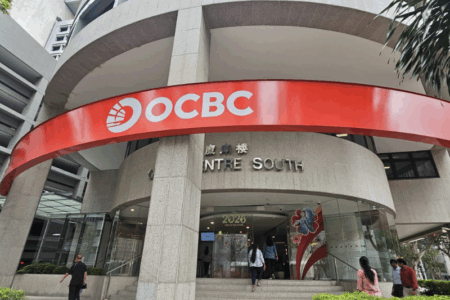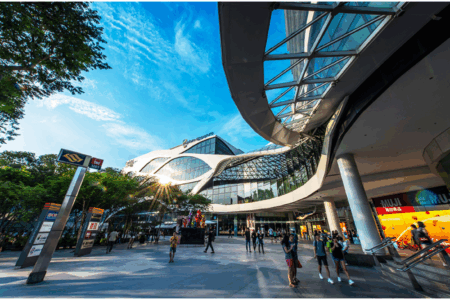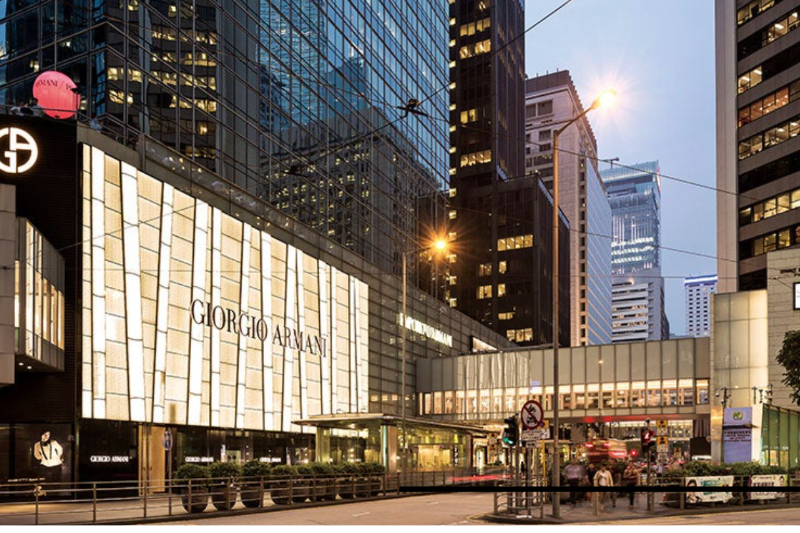
If you are in Hong Kong, take a trip to Central MTR station and look around.
The office towers and shopping malls in front of you belong, for the most part, to Hongkong Land Holdings (SGX: H78) or HKLand.
The property developer and owner sits in the Straits Times Index (SGX: ^STI) alongside DBS Group (SGX: D05) and Singapore Telecommunications (SGX: Z74).
Yet HKLand is also one of the index members most investors ignore.
Recently, it gave income investors a reason to look again.
Hongkong Land increased its interim dividend by an eye-catching 33% year on year (YoY).
Did the dividend really rise by a third?
To be sure, this is the interim dividend and not the full-year dividend.
HKLand has long paid a smaller dividend in the middle of the year and a much bigger one at the end.
For 2025, the interim dividend came to US$0.06 per share and the final to US$0.19.
Altogether, shareholders collected US$0.25 for the year, up 9% compared with 2024.
This year’s interim payout is US$0.08.
Set against 2025’s US$0.06, this is a 33% increase YoY.
Here’s what investors need to know: what has changed is the timing of its payout.
HKLand is spreading its dividend more evenly across the year to match a business built on income that repeats: rent and, increasingly, fees.
For 2025, the interim dividend was under a quarter of the annual total.
This year’s interim payout, measured against last year’s US$0.25, is closer to a third.
Let’s be clear: a higher slice today does not guarantee a higher full-year payout.
We will have to wait until March next year to find out.
Hongkong Land’s pivot to recurring income
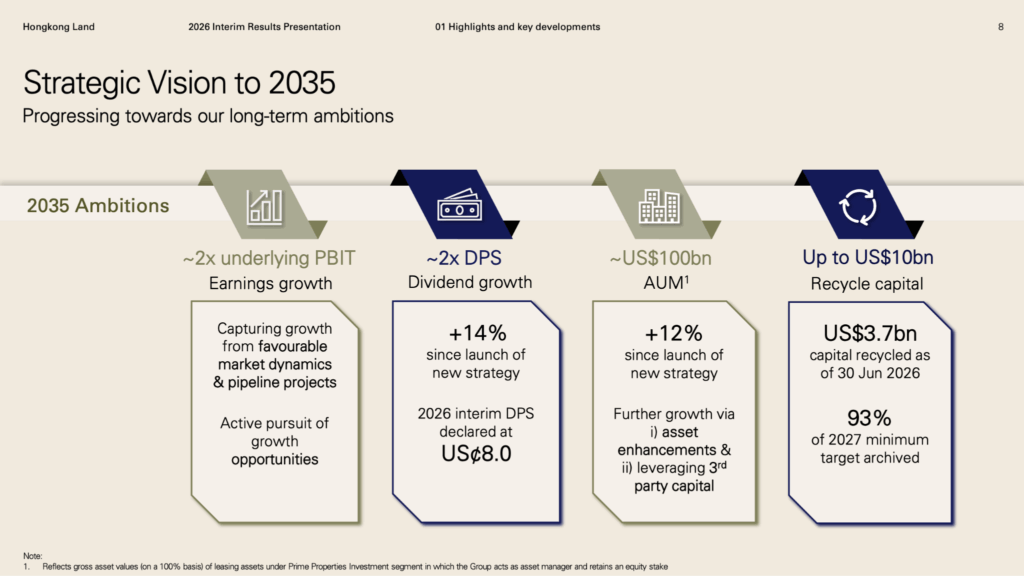
In October 2024, the board of directors endorsed a new strategic direction for HKLand.
In essence, its business is transforming into something resembling a REIT.
For decades, the group ran two businesses.
One built flats and offices to sell.
The other collected rent from prime commercial property.
Source: HKLand’s July 2026 presentation
The first business is on its way out.
Since the strategic pivot in late 2024, nearly 40% of its build-to-sell business has been wound down, including the sale of its Singapore and Malaysia operations.
In February 2026, the group launched a private property fund called the Singapore Central Private Real Estate Fund (SCPREF) with US$6.4 billion of assets under management.
Qatar Investment Authority and APG Asset Management came in as founding investors.
HKLand manages the fund.
Over time, the group expects fee income to become a second source of earnings alongside rent.
Thus, it is becoming a landlord with a fund management arm bolted on.
What did the asset sales prove?
As part of its Strategic Vision 2035, HKLand is also taking a hard look at its existing properties.
Historically, the company took the position that it would never sell its investment properties.
But the stock has long traded below its book value all the same.
The bugbear?
Are the company’s properties really worth their carrying value on the balance sheet?
Two deals put that to the test.
The group sold the top nine floors of One Exchange Square to the Hong Kong stock exchange operator for a little over US$0.8 billion, in line with their carrying value on HKLand’s balance sheet.
The group then seeded SCPREF with Singapore assets, including One Raffles Quay and Marina Bay Financial Centre Towers 1 and 2, transferred at net asset value.
In other words, external parties were willing to pay those valuations.
For a company whose properties have been carried on the balance sheet for years without ever changing hands, that is worth something.
The proceeds went to work.
Cumulative capital recycled reached US$3.7 billion by June 2026, or 93% of its target to recycle at least US$4 billion by the end of 2027.
Net debt came down to US$3.4 billion, and gearing sits at around 11% today.
Two transactions do not change the game, of course.
As of 30 June 2026, HKLand’s net asset value per share was US$14.71.
In comparison, the shares closed at US$8.44 last Friday (11 September 2026).
What about the business behind the ticker?
For the first half of 2026 (1H2026), HKLand’s underlying profit rose 11% YoY to US$259 million.
Over the same period, underlying earnings per share rose 14%, helped by buybacks shrinking the share count.
Most of that improvement came from financing rather than rents.
The group is sitting on a much larger pile of cash from its asset sales, which earns interest while it waits to be deployed.
For context, HKLand had US$2.7 billion in cash at the end of 1H’26 against US$1.1 billion a year earlier.
Can the cash cover the payout?
Free cash flow is the lifeblood of dividends.
Adjusted free cash flow for the half came to US$253 million, down 37% YoY.
The interim dividend will cost US$170.7 million.
Based on this comparison, HKLand’s dividend payout is covered.
Here’s the rub: management expects the group’s adjusted free cash flow for this year to land below 2025’s level.
That’s because there will be less activity from its build-to-sell business.
In the meantime, we could see this figure decline further as HKLand exits its property development business.
At the same time, we should expect its recurring free cash flow to become a larger share of the total.
Get Smart: What happens when the selling stops?
Hongkong Land is halfway through a rebuild.
The old development business is still being wound down, fee income from fund management has yet to arrive at scale, and asset sales are bridging the gap.
The bridge has an end date.
The recycling target runs to at least US$4 billion by the end of 2027, and 93% of it is already done.
After that, the dividend has to come from rent and fees alone.
The question worth asking every six months is whether rent and fees are growing fast enough to take over.
From there, investors will have a better idea of what is sustainable for HKLand’s annual dividend.
It almost feels like the government is paying companies to make you wealthier. Singapore’s new S$5 billion market boost could send fresh money into local stocks. We identified 5 companies positioned to benefit, including familiar names with surprising wealth potential. Our free report reveals these hidden opportunities before the money flows in. Download it now before it’s too late.
Follow us on Facebook, Instagram, Telegram and YouTube for the latest investing news and analyses!
Disclosure: Chin Hui Leong owns shares of DBS and Hongkong Land.