Late September kept three Temasek-backed companies busy.
Mapletree Logistics Trust (SGX: M44U), or MLT, went first.
On 21 September 2026, it agreed to sell an ageing logistics park in Shanghai.
A day later, Seatrium Limited (SGX: 5E2) doubled its share buyback programme to S$200 million.
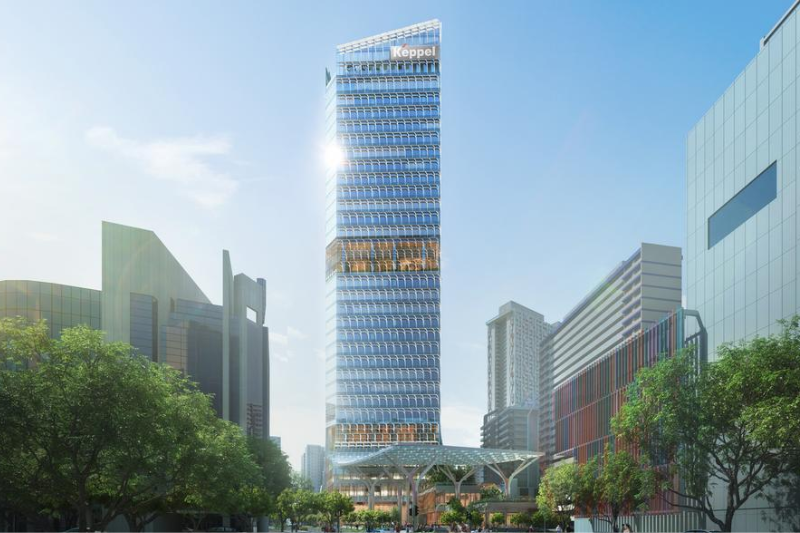
Keppel Ltd (SGX: BN4) followed on 23 September 2026, when it confirmed talks with StarHub over a potential deal involving Keppel’s telco, M1.
Temasek, a global investment company headquartered in Singapore, held about 36% of Seatrium and about 21% of Keppel as at 31 March 2026.
Its deemed interest in MLT comes through Mapletree Investments, which Temasek wholly owns, and which in turn owns MLT’s manager.
Can MLT keep its DPU steady while it sells assets?
MLT owns 175 logistics properties across nine Asia-Pacific markets, with assets under management (AUM) of S$13.1 billion as at 30 June 2026.
For the quarter ended 30 June 2026 (1QFY2026/2027), gross revenue rose 0.8% year on year (YoY) to S$178.9 million.
Net property income (NPI) grew faster, up 2% to S$156.4 million.
Distribution per unit (DPU) rose 0.2% YoY to S$0.01816.
A softer yen, won and Hong Kong dollar held back the headline numbers.
Strip those out, and gross revenue and NPI would have grown 2.0% and 3.1% respectively.
Portfolio rental reversion came in at 0.9%, or 2.3% once you exclude China.
Occupancy slipped slightly to 96.4% from 96.9% three months earlier.
So why sell the Shanghai park?
MLT wants to rejuvenate its portfolio.
It bought Mapletree Northwest Logistics Park back in 2008 and will now sell it for RMB323.0 million (around S$61.3 million), matching the property’s 31 March 2026 valuation.
MLT did better in July, when it agreed to sell 39 Changi South Avenue 2 at a 20.3% premium to valuation.
The deal is small, making up about 0.5% of AUM, and the manager expects no material impact on net asset value or NPI.
MLT targets completion by 3QFY2027/2028.
Aggregate leverage stood at 40.5% as at 30 June 2026.
What would an M1 exit mean for Keppel?
Nothing is settled yet, and both companies said a deal may not materialise.
A combination would reduce then number of Singapore’s mobile network operators from four to three, meaning regulatory approval is a hurdle.
Notably, Temasek is a controlling shareholder of StarHub as well.
M1 sits in Keppel’s Non-Core Portfolio for Divestment, which the group wants to substantially monetise by 2030.
That portfolio lost S$375 million in the first half of 2026 (1H2026), driven by legacy rig impairments and the terminated M1 sale to Simba.
Because of this, Keppel’s net profit attributable to shareholders fell 59% YoY to S$154.7 million.
The rest of Keppel tells a very different story.
Excluding the non-core portfolio, net profit rose 25% to S$530 million, while recurring income grew 13% YoY to S$467 million.
Keppel held its interim dividend steady at S$0.150 per share.
Free cash flow is the lifeblood of dividends, so where did Keppel’s cash come from?
Operating cash flow fell to S$96.8 million from S$219.4 million a year ago.
Yet Keppel still reported a free cash inflow of S$570 million, driven largely by S$1.1 billion of divestment proceeds and dividends received.
Borrowings stood at S$11.3 billion against cash of S$2.2 billion.
Keppel has announced about S$1.7 billion of asset monetisation this year, against a full-year target of S$2 billion to S$3 billion.
An M1 sale would help close that gap.
Can Seatrium afford a bigger buyback?
Seatrium finished its previous S$100 million buyback on 1 September 2026.
The new programme is twice the size, funded from existing cash.
Its share purchase mandate caps repurchases at 2% of issued shares.
The profit line looks impressive.
For 1H2026, revenue rose 4.7% YoY to S$5.6 billion, while revenue from rig building, shipbuilding and conversion grew 17.5% to S$4.2 billion.
Profit attributable to owners surged 158.3% to S$372.9 million, though part of that came from a one-off S$171.7 million gain on disposing of non-core assets.
Cash flow is another matter.
Free cash flow was negative S$11.6 million, an improvement from negative S$31.9 million a year ago.
The main drag was a S$1.6 billion build-up in contract assets, as Seatrium recognised revenue ahead of billings.
Cash stood at S$1.7 billion against total debt of S$2.4 billion, excluding lease liabilities. The new buyback equals about 12% of that cash pile.
Seatrium pays dividends once a year, so it declared no interim dividend for 1H2026.
Management expects FY2026 net profit to come in materially higher than FY2025’s, buoyed by those one-off gains.
Get Smart: Trace each payout back to its source
A buyback or dividend lasts only as long as the cash behind it.
MLT sells older buildings to buy newer ones, and its tenants’ rent continues to support the DPU.
Keppel and Seatrium lean harder on one-offs.
Divestments supplied most of Keppel’s free cash inflow, and Seatrium is buying back shares before its free cash flow has turned positive.
So when October’s updates land, ask each company one question: can the business itself pay for what it returns to you?
Imagine owning businesses that continued paying shareholders even when markets were falling. That’s the appeal of dividend investing done well. Our FREE report reveals 6 SGX companies that paid dividends every single year for two decades, through the Global Financial Crisis, COVID-19, and 2022’s rate shock. Start building the kind of income stream that could fund a more comfortable retirement. Get your free report here.
Follow us on Facebook, Instagram, Telegram and YouTube for the latest investing news and analyses!
Disclosure: The Smart Investor owns units of MLT.