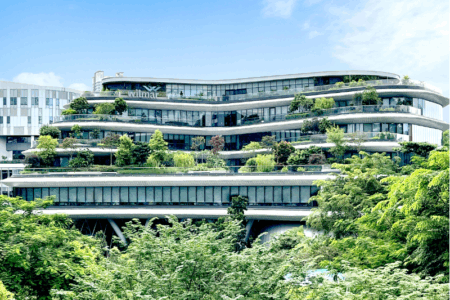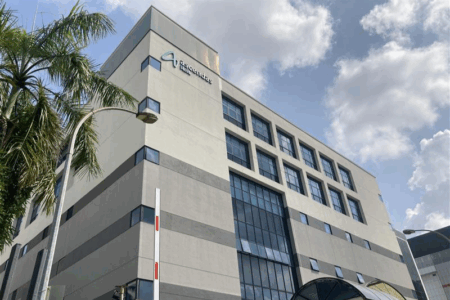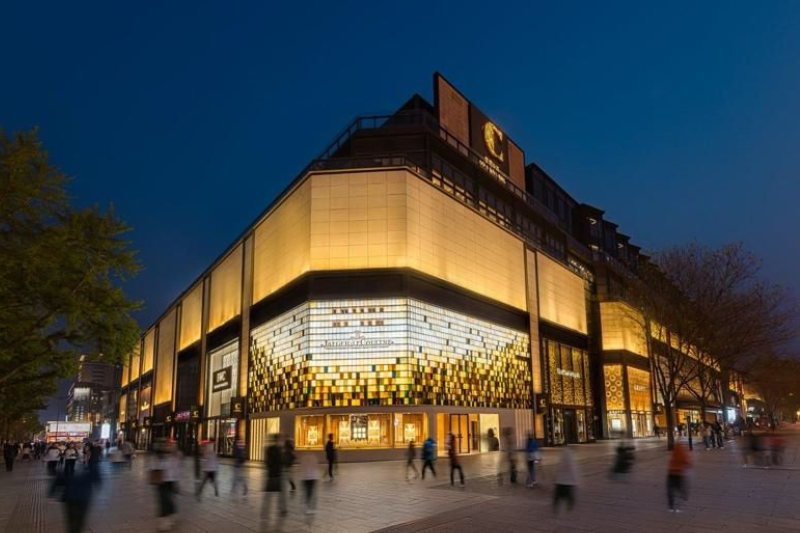
DFI Retail Group (SGX: D01), Hongkong Land (SGX: H78) and Jardine Matheson (SGX: J36) all raised their interim payouts after reporting improved first-half earnings.
All three belong to the Jardine Matheson group, with dividend hikes ranging from 8% to a significant 77%.
However, a bigger payout only counts if the company can comfortably keep paying it.
Let’s examine whether each business has the cash flows to back up these higher distributions.
Can DFI Retail sustain a 77% dividend increase?
DFI Retail declared an interim dividend of US$0.062 per share for 1H2026, up 77% year on year (YoY) from US$0.035.
No special dividend was declared this time, unlike the US$0.443 special payout declared a year ago alongside a lower ordinary dividend.
This payout boost is supported by improved underlying earnings, which rose 11% YoY to US$117 million.
Excluding the divested Singapore Food business, the closed Mannings China operations and its former minority stake in Robinsons Retail, underlying profit rose 44%.
Underlying operating profit from continuing businesses grew 14%, helped by reduced central overheads and lower net financing charges, which dropped to US$51.6 million from US$69.0 million.
Headline revenue dipped 6% YoY to US$4.1 billion due to business divestments and store closures.
However, underlying revenue from continuing businesses rose 4% YoY, supported by a 3% gain in like-for-like sales.
Free cash flow came in at US$382.7 million, down 9.3% YoY, owing to higher capital expenditure.
Nevertheless, the balance sheet remains in solid condition with just US$22 million in net debt.
Looking forward, management raised its full-year guidance, anticipating organic revenue growth of 3.0% to 4.0% and underlying profit between US$285 million and US$305 million.
Because DFI generates far more free cash flow than its ordinary dividend requires and carries minimal debt, the expanded payout looks well covered, with room for future growth.
Why did Hongkong Land raise its interim dividend by a third?
Hongkong Land lifted its interim dividend by 33% to US$0.08 per share, up from US$0.06 a year ago.
Underlying profit rose 11% to US$259.1 million, while underlying earnings per share climbed 14% to US$0.1207 on a reduced share count.
Net financing charges dropped to US$56.2 million from US$88.0 million as capital recycling efforts bore fruit.
Operating profit held broadly flat at US$318.9 million.
Higher contributions from LANDMARK and a 43% earnings increase in China Integrated Properties offset the income lost from selling Marina Bay Financial Centre Tower 3 and handing over floors at One Exchange Square.
Free cash flow declined to US$153.2 million from US$207.0 million, mainly driven by a near-doubling in major renovation spending to US$109.3 million.
Despite the lower cash flow, net gearing remained conservative at just 11%.
The group’s capital recycling programme reached US$3.7 billion, representing 93% of its target of at least US$4 billion by end-2027.
Meanwhile, a new retail cluster at Westbund Central, its flagship Shanghai development, opened in May with over 80% committed occupancy.
Management expects full-year underlying profit growth to track broadly in line with the first half.
While net gearing of 11% gives Hongkong Land ample balance-sheet flexibility to maintain this payout level, investors should monitor whether elevated renovation spending continues to constrain free cash flow in upcoming quarters.
What does Jardine Matheson’s 8% increase signal?
Jardine Matheson, the parent company of both DFI Retail and Hongkong Land, declared an interim dividend of US$0.65 per share, up 8% YoY from US$0.60.
Management also provided guidance for a full-year dividend of at least US$2.47 per share.
Group revenue fell 7% YoY to US$15.9 billion, but adjusted underlying profit rose 9% to US$735 million.
Higher contributions from Jardine Pacific, Hongkong Land and DFI Retail, alongside lower group financing costs, helped offset an 8% decline in Astra’s contribution to US$358 million.
Astra was hit by tougher conditions in its Mining Solutions and Heavy Equipment segment and a weaker Indonesian rupiah.
Performance at Jardine Pacific included US$24 million in non-recurring lease remeasurement gains.
Free cash flow declined 23% YoY to US$1.5 billion.
As of 30 June 2026, the group held US$7.5 billion in cash against total borrowings of US$14.8 billion (excluding lease liabilities).
In addition to the dividend increase, the group launched a new US$500 million share buyback programme and expects to close its US$2.4 billion acquisition of I-MED Radiology Network in 4Q2026.
Guiding for a minimum full-year dividend signals management’s confidence in the group’s cash generation.
However, with free cash flow down 23%, the I-MED acquisition and the new US$500 million buyback will compete with dividends for cash.
Get Smart: Don’t Treat Group-Wide Dividend Hikes as a Monolith
When dividend increases sweep across a parent company and its subsidiaries, it can look like a uniform signal of strength throughout the entire conglomerate.
However, each listed entity must fund its distributions from its own operating cash flows.
Before assuming a parent company’s payout is completely assured, look under the hood to confirm that each listed entity must fund its distributions from cash it actually receives or generates.
It is equally important to track major capital commitments – such as large acquisitions – that could compete with dividend payouts for available cash in the quarters ahead.
This new 10-minute read could change how you invest this year. Inside:
5 SG dividend-paying blue chips that have quietly powered through past downturns, and could reward you handsomely in the next.
Grab the free report now. It might be the most profitable thing you read today.
Follow us on Facebook, Instagram, Telegram and YouTube for the latest investing news and analyses!
Disclosure: The Smart Investor does not own shares of any of the companies mentioned.