The SPDR STI ETF (SGX: ES3), which tracks Singapore’s Straits Times Index (SGX: ^STI), turned in a 0.6% total return for August 2026.
However, three blue-chip stocks far outpaced the benchmark over the same period: Yangzijiang Shipbuilding (SGX: BS6) surged 25%, Sembcorp Industries (SGX: U96) gained 10.9%, and Oversea-Chinese Banking Corporation (SGX: O39) returned 8.3%.
Crucially, these numbers reflect total returns, including reinvested dividends, rather than simple share price movements.
All three companies released their first-half 2026 (1H2026) results during the month, and those underlying numbers explain why investors bid them up.
What drove YZJ’s 25% return?
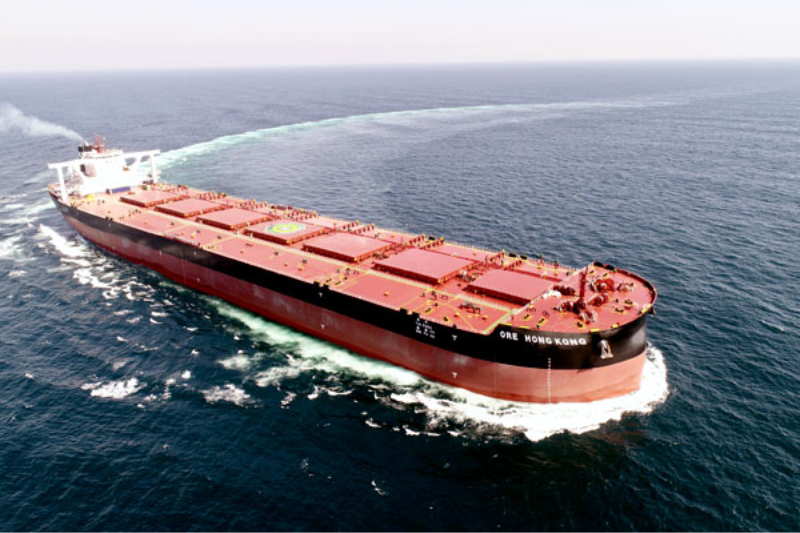
Yangzijiang’s 25% return was backed by impressive operational growth.
First-half revenue rose 36% year on year (YoY) to RMB 17.5 billion, while gross profit jumped 43% to RMB 6.3 billion.
Higher contract prices on vessels under construction drove top-line expansion, lifting shipbuilding gross margin to 37% from 35% a year ago.
Net profit attributable to equity holders ultimately grew 28% YoY to RMB 5.4 billion.
The operational expansion was broad-based.
Recent orders included 24,000 TEU ultra-large LNG dual-fuel containerships and 100,000 CBM very large ethane carriers, while the newly operational Hongyuan yard contributed RMB 545 million in shipbuilding revenue during the second quarter alone.
Because free cash flow underpins sustainable dividends, Yangzijiang’s financial balance sheet warrants close attention.
Free cash flow surged 82% YoY to RMB 675.4 million, supported by RMB 15.9 billion in cash reserves against RMB 4.1 billion in total borrowings as of 30 June 2026.
Order book visibility remains exceptionally high.
It stood at US$22.4 billion at the end of June, with the group securing US$1.96 billion in new orders through July against a full-year target of US$4.5 billion.
Yangzijiang delivered 27 vessels in the first half out of a targeted 58 for the full year, while management deepened its strategic partnership with Seaspan Corp by taking a 10% stake in Poseidon Corp.
Why did Sembcorp outperform despite a profit drop?
Sembcorp presents a more nuanced setup.
Net profit attributable to shareholders fell 72% YoY to S$150 million for 1H2026, primarily due to S$155 million in transaction costs related to the Alinta acquisition and the absence of prior-year divestment gains.
Strip out these non-recurring items, and underlying net profit fell a milder 25% YoY to S$369 million.
Group revenue grew 28% YoY to S$3.8 billion, boosted by higher domestic energy prices and the initial consolidation of Alinta following its completion on 1 June 2026.
However, weaker renewable resources across China and India, lower vesting volumes and spark spreads in Singapore, and gas curtailment at an associate company collectively weighed on operating performance.
Cash generation was similarly strained.
Free cash flow swung to a negative S$39 million from a positive S$241 million a year prior, while total borrowings swelled to S$15.2 billion from S$9.0 billion at year-end 2025 following the S$5.1 billion Alinta acquisition.
Despite these near-term cash pressures, management raised the interim dividend by 22% YoY to S$0.11 per share.
Increasing payout commitments amidst negative free cash flow point towards firm internal confidence in a second-half earnings recovery, driven by the upcoming 600 MW hydrogen-ready plant and a full-period contribution from Alinta.
Time will tell if the Australian transaction delivers the expected return.
How did OCBC hit a record despite lower lending margins?
OCBC delivered a record net profit of S$4.2 billion for 1H2026, up 13% YoY, as total income expanded 11% to S$8.0 billion.
Net interest income edged down 3% to S$4.5 billion as net interest margin compressed by 25 basis points to 1.73%.
However, broad volume growth softened the impact, with customer loans expanding 12% YoY to S$364.5 billion.
Credit risk remained well-managed, keeping the non-performing loan ratio stable at 0.9%.
Strong fee-based business easily offset the margin squeeze.
Non-interest income jumped 36% YoY to S$3.5 billion, driven by a 26% gain in fees and commissions to S$1.4 billion on robust wealth management activity.
Trading income increased 46% to S$1.1 billion, while contributions from Great Eastern Holdings Ltd (SGX: G07) surged 49% to S$791 million following stronger underwriting and investment results.
Reflecting the record performance, the board declared an interim dividend of S$0.47 per share – a 15% increase from S$0.41 a year ago – maintaining a disciplined 50% payout ratio.
Management subsequently upgraded its FY2026 guidance on 7 August 2026, projecting high-single-digit to low-double-digit loan growth and positive total income growth.
The bank’s CET1 ratio stood at a healthy 15.7%, down 1.3 percentage points YoY as loan growth and the ongoing S$2.5 billion capital return programme absorbed regulatory capital.
Get Smart: Focus on Dividend Safety Over Recent Gains
After a stock beats the index, the instinct is to chase the move.
Ask a different question instead.
Has the latest report made the company’s future dividends more secure, or less?
That question matters far more than the return already earned.
This new 10-minute read could change how you invest this year. Inside:
5 SG dividend-paying blue chips that have quietly powered through past downturns, and could reward you handsomely in the next.
Grab the free report now. It might be the most profitable thing you read today.
Follow us on Facebook, Instagram, Telegram and YouTube for the latest investing news and analyses!
Disclosure: The Smart Investor owns shares of OCBC.