Temasek is a global investment company headquartered in Singapore.
As at 31 March 2026, Temasek owned 28% of DBS Group Holdings Ltd (SGX: D05) and 51% of Singapore Technologies Engineering Ltd (SGX: S63).
Through SEL Holdings, it also held 23.3% of Singapore Exchange Limited (SGX: S68) as at 19 August 2025.
| Company | SGX Ticker | Temasek Stake | Latest Dividend Action |
|---|---|---|---|
| Singapore Exchange (SGX) | SGX: S68 | 23.3% (via SEL Holdings) | Raised FY2026 ordinary dividend by 18.7% + S$0.125 one-off dividend |
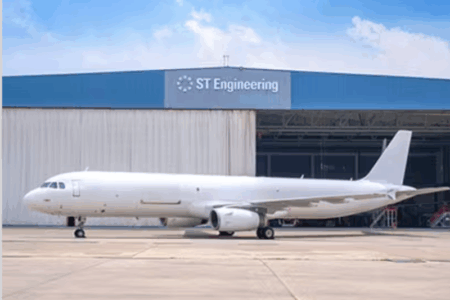
| Singapore Technologies Engineering Ltd (STE) | SGX: S63 | 51% | Lifted 2Q2026 dividend by 25% QoQ to S$0.05 |
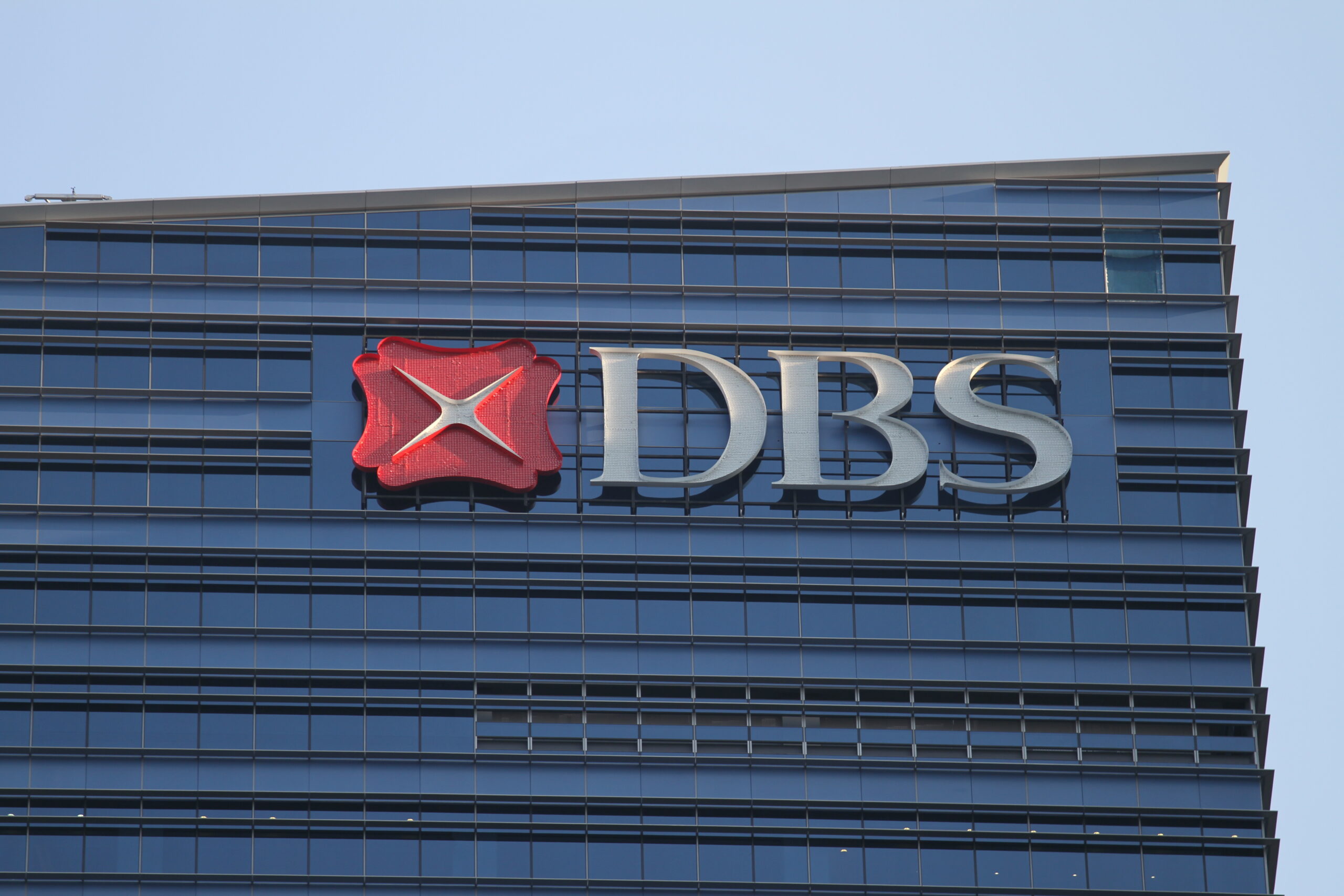
| DBS Group Holdings Ltd | SGX: D05 | 28% | Declared S$0.66 interim dividend + S$0.15 capital return |
All three reported results recently, and two raised their dividends.
The third, DBS, paired its ordinary dividend with a capital return.
A major shareholder tells you who owns the business, but it’s the financial figures that tell you whether those dividends can keep growing over time.
Can SGX keep raising its dividend?
As the operator of Singapore’s only stock exchange, SGX occupies a unique position in the local market.
Temasek’s ownership stake comes with a bit of a twist here: back in a March 2011 statement, Temasek explained that SEL Holdings holds these shares for the benefit of the Financial Sector Development Fund.
By law, SEL cannot vote them.
In the fiscal year ended 30 June 2026 (FY2026), net revenue grew 13.9% year on year (YoY) to S$1.5 billion.
Equities–Cash revenue was a standout, rising 28.1% to S$502.9 million as securities daily average traded value surged 34.9% to S$1.8 billion.
Net profit grew at a slower pace of 7.8% to S$698.4 million, dampened by a S$53.4 million goodwill impairment on Scientific Beta along with weaker investment gains.
Strip those non-operational items out, and adjusted net profit actually jumped 24.6% to S$759.5 million.
Free cash flow is the true lifeblood of dividend sustainability, and SGX generated a healthy S$788.8 million of it, up 2% YoY.
Capital expenditure increased to S$94.2 million as the exchange continues to modernise its trading technology.
With S$1.8 billion in cash sitting against S$628.2 million in debt, SGX sits comfortably in a net cash position.
Total FY2026 dividends came to S$0.570 per share, which includes a one-off additional payout of S$0.125.
Setting that special dividend aside leaves S$0.445 per share in ordinary dividends, representing an 18.7% increase over the S$0.375 paid out a year ago.
Looking ahead, management intends to raise the quarterly dividend by 0.25 cents until FY2028 and aims to clear all remaining debt in FY2027.
It also expects medium-term revenue to grow between 6% and 8% (excluding treasury income), while expenses are slated to rise by a matching 6% to 8% in FY2027.
Since much of FY2026’s performance was propelled by busier markets, investors should keep a close eye on future daily trading volumes.
Is STE’s cash flow keeping up with its dividend?
In the first half of 2026 (1H2026), STE grew revenue 11.1% YoY to S$6.6 billion.
Profitability expanded even faster, with net profit attributable to shareholders climbing 27.1% to S$512.1 million.
The Commercial Aerospace segment led the charge with a 15% revenue increase, driven by strong demand across Engine MRO, nacelles, and engine spares.
Crucially, free cash flow surged 22.1% to S$591.6 million.
That strong cash generation translated directly into higher payouts.
The group declared S$0.04 per share for 1Q2026 and raised it to S$0.05 for 2Q2026, marking a 25% step-up from one quarter to the next.
On a half-year comparison, 1H2026 dividends rose 12.5% from S$0.08 to S$0.09 per share, with management planning another S$0.05 payout for 3Q2026.
If there is an area that warrants careful monitoring, it is the balance sheet.
Cash balances fell from S$576.4 million at the end of 2025 to S$255.3 million as at 30 June 2026, while total borrowings (including lease liabilities) stood at S$4.7 billion.
On the flip side, a record order book of S$35.7 billion offers substantial revenue visibility, with roughly S$5.7 billion expected to be delivered by the end of 2026.
How is DBS paying out as interest margins shrink?
In the second quarter of 2026 (2Q2026), Singapore’s largest lender, DBS, grew total income 6% YoY to S$6.1 billion – the very first time quarterly income crossed the S$6 billion mark.
Margins got thinner.
Lower interest rates narrowed net interest margin (NIM) by 18 basis points to 1.87%, pulling net interest income down 2% to S$3.6 billion.
Nevertheless, loan demand remained intact, with customer loans growing 8% to S$469.4 billion while the non-performing loan (NPL) ratio held steady at a safe 1.0%.
Fees more than made up the difference.
Non-interest income rose 21% to S$2.5 billion, powered by a massive 42% jump in wealth management fees to S$919 million.
Overall net profit attributable to shareholders grew 9% to S$3.1 billion, delivering an impressive 17.9% return on equity (ROE).
The board declared two dividends for the quarter:
- Interim dividend: S$0.66 per share
- Capital return dividend: S$0.15 per share
Income investors will want to track the recurring interim dividend over time while evaluating the capital return as a standalone bonus.
Management raised its guidance and now expects 2026 total income to exceed 2025 levels.
It also expects commercial book non-interest income to grow in the mid-teens, mainly from wealth management.
Get Smart: Split the payout before you judge it
Dividend announcements often carry multiple layers.
SGX added a one-off to its ordinary dividend.
DBS bundled its interim dividend with a capital return.
Even STE’s 25% raise is a quarter-on-quarter increase rather than a full year-on-year jump.
Before celebrating a bigger dividend cheque, break the payout down into its core components.
Then ask what pays for the recurring part.
For SGX and STE, that means free cash flow.
For DBS, look at earnings and ROE.
Temasek’s stake may put these companies on your radar, but it is the recurring dividend – and the cash behind it – that pays you year after year.
You’ve probably shopped at their malls, banked with them, or bought their products this month. These 6 SGX companies have paid dividends for 20 straight years, GFC and COVID included. Our FREE report shows you which ones, and what has kept their dividends going for 20 years and more. Grab your copy here.
Follow us on Facebook, Instagram, Telegram and YouTube for the latest investing news and analyses!
Disclosure: The Smart Investor owns shares of SGX and DBS.