Companies that consistently raise their dividends are demonstrating something real: growing earnings, cash generation, and more importantly, a willingness to share more of it with shareholders.
But a growth streak proves nothing about the future.
Three companies stand out for raising their dividends steadily over the past five years.
The real question is whether they can do it again over the next five.
| Company (Ticker) | 5-Yr Dividend Trajectory | 5-Yr Dividend CAGR |
|---|---|---|
|
DBS Group Holdings (SGX: D05) |
S$1.09 (2021) → S$3.06 (2025)* | 29.0% |
|
Singapore Exchange (SGX: S68) |
S$0.32 (FY2021) → S$0.57 (FY2026)# | 12.2% |
|
ST Engineering (SGX: S63) |
S$0.15 (2021) → S$0.23 (2025)** | 11.3% |
#Includes a one-off additional dividend of S$0.125 from capital recycling gains.
**Includes a S$0.05 special dividend in 2025.
A few things separate a genuine dividend grower from a company that just happens to pay more this year.
Earnings need to be rising, giving the business room to pay out more without straining itself.
The earnings growth should also show up in cash, not just on paper — a company can report a healthy profit and still struggle to pay a dividend if the cash isn’t there.
The payout ratio matters too: pay out too little, and shareholders miss out; pay out too much, and there’s nothing left to reinvest.
And debt should stay manageable, since a business weighed down by loans has far less room to keep paying a dividend when conditions turn tough.
It’s a bonus if the business has an edge, such as a regulatory moat, that helps keep growth humming through different business cycles.
DBS Group Holdings (SGX: D05) – The Blue-Chip Dividend Grower
This financial powerhouse has seen its dividend nearly triple since 2021 – from S$1.09 per share to S$3.06 in 2025 (including S$0.60 of capital return dividends), which represents a 29% compound annual growth rate (CAGR).
Moreover, the dividend has been on a mostly consistent upward path, with only 2023’s dividend dipping compared to the prior year due to a one-off special dividend in 2022.
It’s not hard to see why DBS’s dividend growth has been so robust.
In the latest quarter ended 30 June 2026 (2Q2026), DBS posted record total income and net profit of S$6.1 billion and S$3.1 billion, respectively.
The former grew 6% year on year (YoY) while the latter was up 9% and supported a strong return on equity (ROE) of 17.9%.
There is room for further dividend increases.
DBS pays out only around 60% of its profit as ordinary dividends, leaving the rest of its profit for reinvestment.
Meanwhile, its fully phased-in Common Equity Tier 1 (CET1) ratio of 14.6% gives it a solid buffer to keep paying through tough times.
Finally, a booming wealth management business supports further dividend growth.
Singapore Exchange Limited (SGX: S68), or SGX – The Defensive Dividend Compounder
SGX’s total dividend rose from S$0.32 per share in FY2021 (financial year ended 30 June 2021) to S$0.57 per share in FY2026, including a one-off additional dividend of S$0.125 from capital recycling gains.
This translated to a 12.2% CAGR over five years, although the dividend record includes one flat year in FY2022.
As a toll-booth business that effectively earns fees on trading and clearing across equities, derivatives, currencies and commodities, SGX’s earnings and free cash flow (FCF) hold up even during weaker economic periods.
This is best seen in its historical dividend payments, which have held even during weaker markets.
Further dividend growth comes down to SGX’s ability to maintain its steady revenue growth over the years and a historically disciplined payout ratio (around 60% to 80% of earnings).
The bourse operator’s solid balance sheet with minimal net debt further fortifies its future dividend payments.
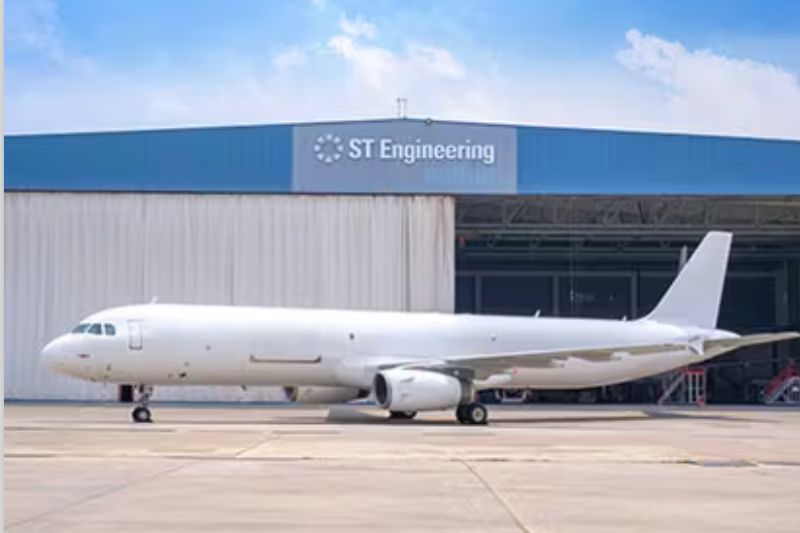
Singapore Technologies Engineering Ltd (SGX: S63), or STE – The Higher-Growth Dividend Payer
The last name on this list may not have consistently increased its dividends year after year, but its five-year track record is nothing to scoff at.
STE’s total dividend rose from S$0.15 per share in 2021 to S$0.23 in 2025 (including a S$0.05 special dividend) – an 11.3% CAGR.
Although the starting and current yields are low, STE’s dividend growth has been backed by a record order book (S$35.7 billion as of 30 June 2026), strong free cash flow generation, and strong demand in its key aerospace and defence markets.
As long as the company keeps winning orders and does a solid job of converting its order book into earnings and cash flow, it is likely that STE keep raising its dividends.
This is reinforced by a dividend policy, announced in March 2025, to pay about one-third of each year’s increase in net profit as additional dividends.
Why Dividend Growth Can Matter More Than a High Starting Yield
A simple illustration: Stock A yields 6% today but never raises its payout, while Stock B starts at 3.5% but grows its dividend 7% a year.
On a S$10,000 stake, Stock A pays S$600 a year, indefinitely. Stock B starts at S$350, but because it grows 7% a year, its annual payout overtakes Stock A’s after about eight years of increases, and keeps pulling ahead after that.
This is yield on cost: your income measured against your original investment, not today’s price. A dividend that keeps growing can turn a modest starting yield into a substantial one over a long enough horizon – something a static high yield can never do.
What Should Investors Watch Out For?
Monitor quarterly earnings and whether they translate into real free cash flow.
Key red flags include weakening cash flows, a payout ratio stretching beyond earnings, rising debt used to fund dividends, or sudden high capital expenditure requirements.
The best dividend growers are simply businesses whose earnings and cash flow keep growing faster than what they pay out – not businesses stretching to pay more than they earn.
Get Smart: Look for Dividends That Can Keep Growing
DBS, SGX and STE have all raised their dividends over the past five years, but not one of them did it every single year — each had a flat or uneven stretch somewhere along the way.
That’s worth remembering before crediting any company with a clean streak.
The dividend itself is really just the output – what decides whether it keeps rising is the business behind it.
Check the earnings, cash flow, payout ratio and debt behind it, and the yield on the label matters a lot less.
Over a long horizon, a steadily rising dividend – even an imperfect one – can become a genuinely powerful source of compounding income.
Imagine owning businesses that continued paying shareholders even when markets were falling. That’s the appeal of dividend investing done well. Our FREE report reveals 6 SGX companies that paid dividends every single year for two decades, through the Global Financial Crisis, COVID-19, and 2022’s rate shock. Start building the kind of income stream that could fund a more comfortable retirement. Get your free report here.
Follow us on Facebook, Instagram, Telegram and YouTube for the latest investing news and analyses!
Disclosure: Wilson H. does not own shares of any of the companies mentioned.