Investors sometimes try to predict when they can buy at the best price, hoping to produce the best possible return.
However, holding shares of high-quality businesses over many years is often the key to generating long-term wealth.
The challenge is identifying which blue-chip companies should be the “forever” holdings in our portfolio.
We explore the traits that set apart the long-term compounders from ordinary large-cap stocks.
What Makes a Blue Chip Worth Holding for Decades
Blue chips have a reputation for steady earnings growth and dependable dividends, even when the economy hits a rough patch.
They stand out because they pair solid financials with smart spending decisions.
Plus, they usually have a competitive edge in their fields.
Consistent dividends over time reflect a company’s financial stability and commitment to rewarding its shareholders.
In other words, a blue chip that is in it for the long run focuses on business strength, not just the size of its market capitalisation.
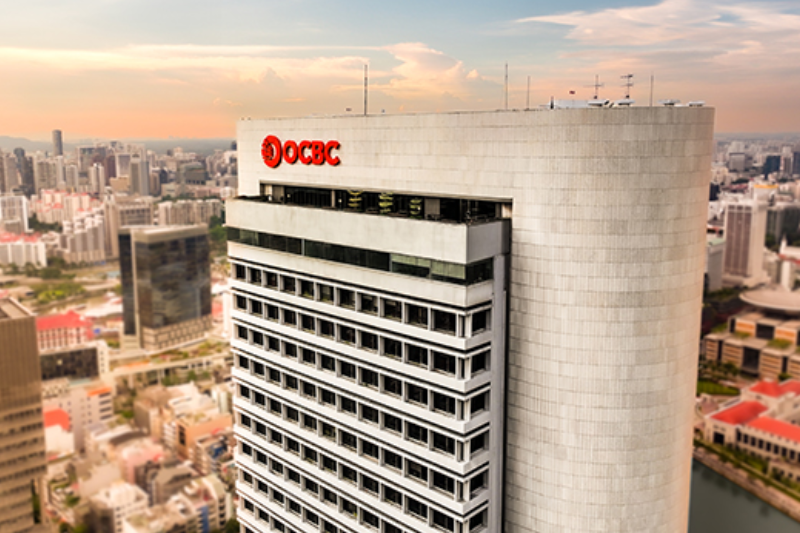
Oversea-Chinese Banking Corporation (SGX: O39), or OCBC – The Dividend Compounder
OCBC has a reputation for growing its dividends, and you can see that in the numbers – payouts just keep climbing, even through tough times.
Total dividend rose from S$0.53 in 2021 to S$0.99 in 2025, almost doubling over four years.
Even excluding specials, ordinary dividends have held firm at S$0.83 in 2025 vs S$0.85 in 2024.
But this is where OCBC really earns its “compounder” label – not just by paying dividends, but by being able to afford these payouts.
OCBC maintains a payout ratio of 60% of net profit, backed by FY2025 earnings of S$7.42 billion and a Common Equity Tier 1 (CET1) ratio of 16.9%.
If you’re looking to create a snowball effect with your wealth, OCBC could be one to look at for its consistent dividends.
Sembcorp Industries Ltd (SGX: U96) – The Market Leader
Sembcorp Industries holds a dominant and leading position in Asia’s energy and urban solutions sectors, with a major focus on the green energy transition.
Sembcorp now holds a dominant position in Singapore’s power generation sector, operating at the regulatory market share cap after building up a 50% stake in Senoko Energy between 2024 and 2025.
As a major player with solid, long-term energy contracts, it enjoys steady cash flow – something rivals have a tough time matching.
Looking at FY2025, Sembcorp pulled in a robust underlying net profit of S$1.0 billion.
Dividends have been climbing too.
In FY2020, Sembcorp handed out just S$0.04 per share. By FY2025, that had jumped to S$0.25.
Driving this is the company’s shift towards more reliable earnings from renewables.
Sembcorp’s scale and reach give it an advantage, so it can keep cash flowing even when the market isn’t so friendly.
CapitaLand Integrated Commercial Trust (SGX: C38U), or CICT – The Growth Compounder
CICT stands out as a long-term earnings growth engine as it has steadily expanded, while also ensuring future growth through acquisitions, asset enhancements, and redevelopment projects.
The trust’s distribution per unit (DPU) has continued to climb, rising 6.4% year on year (YoY) to S$0.1158 in FY2025.
The REIT delivered steady top-line growth, with FY2025 gross revenue increasing 2.1% YoY to S$1.62 billion.
Notably, earnings expanded at a much faster pace than revenue – distributable income surged 14.4% from the previous year to reach S$860.9 million.
The earnings are also expected to keep growing, with ongoing asset enhancement initiatives at properties such as Capital Tower, Tampines Mall and Lot One Shoppers’ Mall.
CICT’s sustained performance supports both rising income and long-term capital appreciation.
Keppel Ltd (SGX: BN4) – The Defensive Anchor
To many investors, Keppel remains a sturdy, defensive pick largely because it has shed its past dependence on oil.
It has repositioned itself as a global asset manager, focusing on income streams from infrastructure, real assets, and fund management.
The shift is beginning to bear fruit.
In FY2025, net profit from the ‘New Keppel’ core business rose 39% YoY to S$1.1 billion, driven by stronger contributions from its asset management and operating platforms.
Recurring income also climbed 21% to S$941 million.
As earnings stabilised, dividends followed suit.
Keppel lifted its total distribution for FY2025 to S$0.47 per share, up 38% from the previous year.
With its transformation largely in place, Keppel is now better positioned to deliver consistent income even through periods of market volatility.
Why “Permanent” Doesn’t Mean Ignoring the Stock
“Permanent” in investing is often associated with a “buy-and-hold” strategy.
While it refers to a long-term mindset, it certainly does not mean ignoring the stock.
Turning a blind eye to your holdings can turn temporary volatility into permanent capital loss if business fundamentals change.
Valuation discipline remains critical when going for investment returns, especially when market sentiment begins to overshadow balance sheet health.
If you plan to hold stocks over the long haul, it helps to keep a close eye on the company’s performance and key metrics.
Get Smart: Build Around Enduring Businesses
It’s been tried and tested: solid portfolios are built upon a foundation of companies that have stood the test of time.
The winning recipe for stand-out blue chips calls for a blend of durability, profitability, and disciplined management.
Spotting these businesses early is just the start.
It is the patience to let them simmer slowly that brings out the richness of long-term returns.
Many Singapore stocks fall behind inflation, which means your money quietly loses strength over time. Dividend stocks have a very different track record. Some continued delivering 6% to 13% every year across the toughest market conditions.
In this FREE report, discover 5 crisis-tested dividend stocks that kept rewarding investors while the market struggled. Download your dividend investing guide now.
Follow us on Facebook, Instagram and Telegram for the latest investing news and analyses!
Disclosure: Joseph G. does not own shares in any of the companies mentioned.