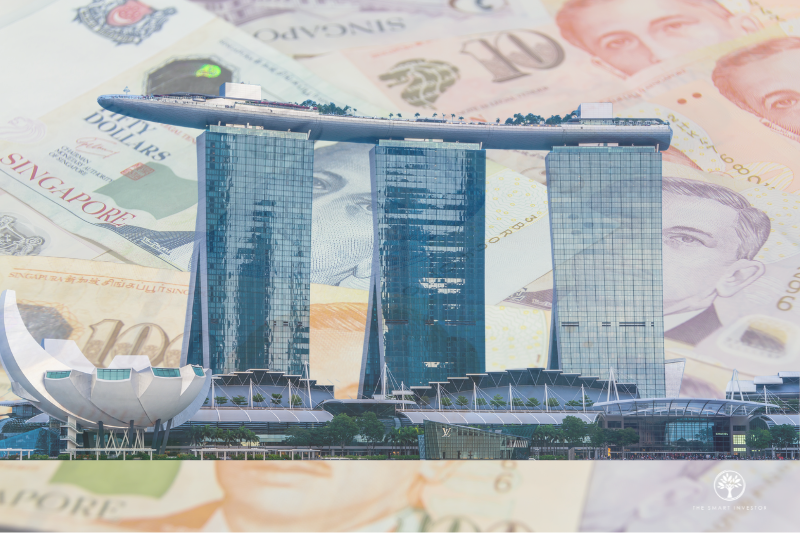
The results for the latest 6-month Singapore T-bill auction are out, and they have confirmed what many in the market were suspecting: volatility is pushing yields higher.
With a cut-off yield of 1.46% in the 26 March auction, representing a fairly significant jump from the 1.37% seen just two weeks ago, some might wonder if it’s time to take a closer look at T-bills again.
At The Smart Investor, we have always emphasised the importance of being able to sleep well at night. And when markets feel high, it’s easy to play it safe even if that means settling for lower income and no long-term growth.
What Is Driving Singapore T-Bill Yields Higher?
This sudden spike in T-bill yields did not happen in a vacuum. We are currently seeing US government bond yields moving higher as global markets react to the escalation of conflict in the Middle East and lower expectations of interest rate cuts from the Federal Reserve. These global jitters have a direct filtering effect on our local risk-free rates. When the world feels uncertain, investors naturally demand a higher return for their capital.
STI at 4,900: Should Investors Be Worried?
As the market hovers around 4,900, it is natural to feel a sense of hesitation. Some might view the recent pull-back from the 5,000-point milestone as a sign to retreat into the safety of government securities. However, we believe that market pull-backs often provide the best entry points for long-term income.
T-Bills vs Singapore Stocks: Which Is Better for Income?
A T-bill offers a fixed return of 1.46% with no growth. In contrast, the SPDR Straits Times Index ETF (SGX: ES3) delivers around 3.5% in dividends, along with potential capital appreciation.
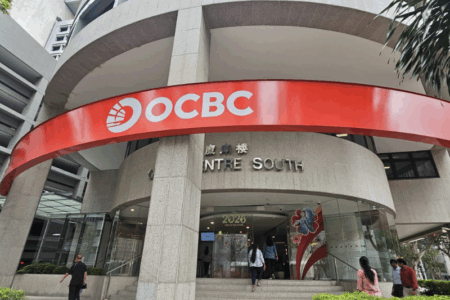
The gap becomes even more stark when we look at the individual income engines behind the market. Singapore’s banking giants, including DBS Group (SGX: D05), OCBC (SGX: O39), and UOB (SGX: U11), offer even higher yields of about 3.8 to 4.2%.
When Do T-Bills Make Sense?
T-bills still have a role to play. They are useful for short-term cash needs, where capital preservation matters more than returns. In other words, for money you know you’ll need soon, such as an upcoming property payment, taxes, or emergency funds. In these cases, stability matters more than returns.
But beyond that, the role of T-bills can be limited. Locking in 1.46% may feel safe, but it also means your money is not working very hard.
Get Smart: Balancing Safety and Growth in Today’s Market
The latest rise in T-bill yields is worth noting, but it does not change the bigger picture.
The real question is not whether 1.46% is attractive. It is whether that return is enough for what you want your money to do.
If your goal is short-term certainty, T-bills do their job well. For investors building long-term income, the stock market continues to offer a more compelling path, not just for higher yields, but for the ability to grow those returns over time.
As markets continue to move, the balance between safety and growth will keep shifting. But the principle remains the same: Focus on assets that can support your life, not just preserve your capital.
One Singapore bank has quietly become one of the strongest income engines in the market. Its dividends have grown at 16.6% a year while others were pulling back. That level of consistency can change a retirement plan entirely. Our FREE 2026 Dividend Game Plan explains why this bank keeps lifting payouts and why many long-term investors rely on it for stable income. Download your free copy today.
Follow us on Facebook, Instagram and Telegram for the latest investing news and analyses!
Disclosure: Joanna Sng owns shares of SPDR STI ETF, DBS, OCBC, and UOB.