October was a down month for Singapore stocks, but the broader picture looks brighter when viewed over the year.
The SPDR Straits Times Index ETF (SGX: ES3), which mirrors Singapore’s Straits Times Index (SGX: ^STI), delivered a total return of 19.2% for the year to end-October, despite the month’s decline.
Three Temasek-linked blue chips did even better.
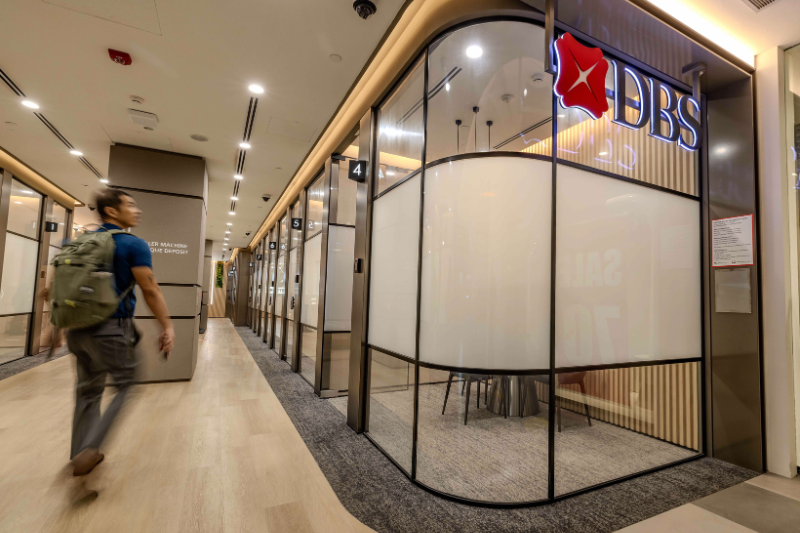
DBS Group Holdings Ltd (SGX: D05) returned 35%.
Singapore Technologies Engineering Ltd (SGX: S63), or ST Engineering, delivered a return of 23%, while Singapore Exchange Limited (SGX: S68), or SGX, returned 22%.
All three figures include dividends and cover the first 10 months of 2026.
Temasek, a global investment company headquartered in Singapore, owned 28% of DBS and 51% of ST Engineering as at 31 March 2026.
Its link to SGX is less direct: Temasek owns SEL Holdings, which held a 23.35% stake in SGX as at 1 September 2026.
Beyond their Temasek connections, the three companies have two things in common.
In their latest results, ST Engineering and SGX grew profit faster than revenue (SGX only after excluding one-off items), and DBS did so until its 3Q2026 results.
They also gave investors a clearer view of future payouts.
Investors may be rewarding that combination.
What does SGX offer dividend investors?
SGX offers a growing ordinary dividend, with a timetable for future increases.
For the year ended 30 June 2026 (FY2026), SGX grew net revenue by 13.9% year on year (YoY) to S$1.5 billion, as securities daily average traded value rose 34.9% to S$1.8 billion and Equities – Cash revenue increased 28.1% to S$502.9 million.
Reported net profit grew by a more modest 7.8% to S$698.4 million, held back by a S$53.4 million goodwill impairment on Scientific Beta and weaker investment gains.
Excluding these items, adjusted net profit rose 24.6% to S$759.5 million.
SGX ended the year with S$1.8 billion in cash against S$628.2 million in borrowings, while operating cash flow reached S$870.7 million and capital expenditure stood at S$94.2 million.
For FY2026, SGX declared ordinary dividends of S$0.445 per share and a one-off dividend of S$0.125 per share, bringing the total to S$0.570, up from S$0.375 a year earlier.
Management has guided for quarterly dividend increases of S$0.0025 per share through FY2028 and plans to repay all its debt in FY2027.
However, trading activity can fade as quickly as it picks up, while FY2027 expenses are expected to rise by 6% to 8%.
Can DBS keep growing as its trading income slumps?
The customer business is still growing.
The trading desk is another matter.
By the end of October, investors had DBS’s second-quarter results (2Q2026), which showed net profit growing 9% on a 6% rise in total income.
The 3Q2026 results, released on 5 November 2026, look different.
Total income for Singapore’s largest bank by market capitalisation slipped 1.5% YoY to S$5.85 billion.
Net interest income rose 3.7% to S$3.71 billion, even as the net interest margin narrowed to 1.87% from 1.96%.
Customer loans grew 9.5% to S$478.6 billion.
Here’s the thing: markets trading non-interest income fell to S$17 million from S$419 million.
Net fee and commission income still rose 6% to S$1.43 billion.
Net profit fell 4.8% to S$2.81 billion.
For the first nine months, net profit reached a record S$8.82 billion.
The non-performing loan (NPL) ratio fell to 0.9% from 1.0%.
The board declared an ordinary dividend of S$0.66 per share, up from S$0.60 a year ago.
The capital return dividend stayed at S$0.15 per share.
Management expects mid-single-digit total income growth in 2027, warning of a more uncertain outlook amid elevated energy prices, tighter financial conditions and geopolitical risks.
Is ST Engineering’s dividend on firm ground?
Free cash flow offers some reassurance, but the balance sheet deserves a closer look.
For 1H2026, ST Engineering grew revenue by 11.1% YoY to S$6.6 billion and net profit by 27.1% to S$512.1 million.
Commercial Aerospace revenue increased 15%, supported by higher engine maintenance, engine housing and spares sales, while net finance costs fell 14.9%.
Free cash flow improved to S$591.6 million from S$484.6 million a year earlier.
The group paid S$0.04 per share for 1Q2026 and declared S$0.05 for 2Q2026, bringing its half-year dividend to S$0.09, up from S$0.08, with another S$0.05 planned for 3Q2026.
However, cash fell to S$255.3 million as at 30 June 2026, from S$576.4 million at the end of 2025, while total borrowings, including lease liabilities, stood at S$4.7 billion.
The order book reached a record S$35.7 billion, with about S$5.7 billion due for delivery over the rest of 2026.
Get Smart: Check the return against the profit growth
Compare each stock’s total return with its latest profit growth to see how the two stack up.
ST Engineering returned 23%, against net profit growth of 27.1%, while SGX returned 22%, against adjusted profit growth of 24.6%.
DBS tells a different story, with its 35% return well ahead of quarterly profit growth of 9% in 2Q2026.
The 3Q2026 results widened that gap, with net profit down 4.8%.
In other words, investors may now be paying more for each dollar of DBS’s profit.
The periods differ, so treat this as a rough guide rather than a like-for-like comparison.
When share returns outpace earnings growth, future gains may depend on profits catching up.
Before buying these stocks, ask yourself: can their businesses keep growing into their current valuations?
Many Singapore stocks fall behind inflation, which means your money quietly loses strength over time. Dividend stocks have a very different track record. Some continued delivering 6% to 13% every year across the toughest market conditions.
In this FREE report, discover 5 crisis-tested dividend stocks that kept rewarding investors while the market struggled. Download your dividend investing guide now.
Follow us on Facebook, Instagram, Telegram and YouTube for the latest investing news and analyses!
Disclosure: The Smart Investor owns shares in SGX and DBS.