If you own shares in Singapore’s local banks, last week was a busy one.
United Overseas Bank Limited (SGX: U11), or UOB, reported last Wednesday, 4 November 2026, followed by DBS Group Holdings Ltd (SGX: D05) on Thursday.
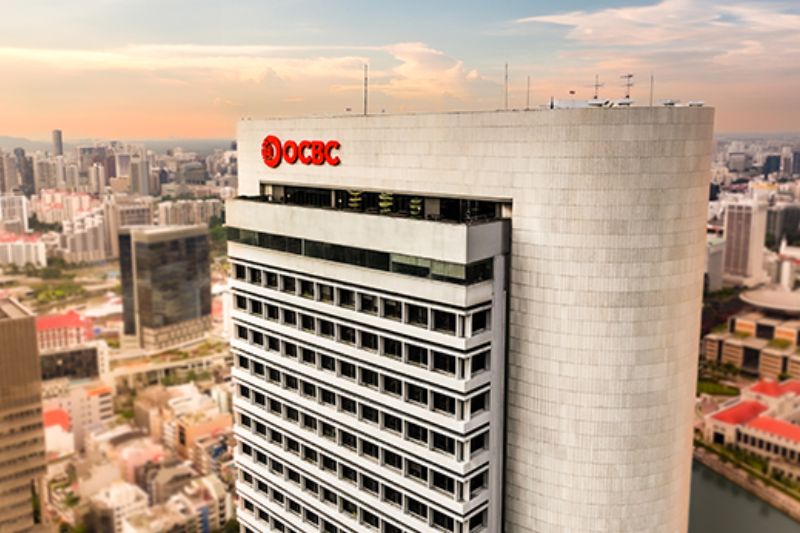
Oversea-Chinese Banking Corporation Limited (SGX: O39), or OCBC, wrapped things up on Friday morning.
Only OCBC delivered a profit above analysts’ estimates for the third quarter of 2026 (3Q2026).
Before you read too much into that, remember that a “beat” or a “miss” only compares a bank’s results with a forecast.
It doesn’t tell you whether the business is getting stronger or weaker.
For that, you need to dig deeper.
OCBC: How did a bank with lower income beat forecasts?
OCBC’s net profit rose 3.2% year on year (YoY) to S$2.04 billion, just above the S$2.01 billion average estimate from four analysts polled by LSEG.
In other words, the beat was a narrow one, at about 1.5%.
Total income slipped 1.7% YoY to S$3.73 billion.
Insurance income fell 37% to S$198 million as Great Eastern Holdings Limited (SGX: G07) booked mark-to-market losses on its bond portfolio.
Look past the insurance arm, and you’ll find a bank in good shape.
OCBC’s banking operations posted a record net profit of S$1.90 billion, up 16% YoY.
Customer loans grew 14% in constant-currency terms to S$372 billion, which lifted net interest income (NII) by 3.9% to S$2.3 billion.
That’s despite a net interest margin (NIM) that narrowed to 1.66% from 1.84%.
Trading income dipped 10.2% to S$465 million, the mildest decline among the three banks.
If you’re waiting for a dividend, it’s not due yet.
OCBC pays dividends only at its half-year and full-year results.
Management has raised its 2026 guidance to low-double-digit loan growth and kept its 50% dividend payout ratio.
DBS: Why did a growing bank miss forecasts?
DBS’s net profit fell 4.8% YoY to S$2.81 billion, short of the S$2.90 billion LSEG consensus.
The main culprit was markets trading income, which fell 65% YoY to S$152 million amid unfavourable equity market conditions.
Set that aside, and the core business kept growing.
Customer loans rose 9.5% to S$478.6 billion.
NII climbed 3.7% to S$3.71 billion even though NIM narrowed to 1.87% from 1.96%.
Net fee and commission income grew 6% to S$1.43 billion.
If you own DBS, you have a dividend coming, as it is the only local bank that pays one every quarter.
The bank declared an ordinary dividend of S$0.66 per share, 10% higher than the S$0.60 paid a year ago.
On top of that, you’ll receive a capital return dividend of S$0.15 per share, unchanged from a year ago.
UOB: Why did profit more than double yet still miss?
UOB’s net profit rose 182.2% YoY to S$1.25 billion.
Don’t let that number fool you.
A year ago, UOB set aside S$1.36 billion in allowances, which shrank its 3Q2025 profit to S$443 million.
Against forecasts, UOB missed by the widest margin.
Profit came in about 7.4% below the S$1.35 billion LSEG estimate.
Trading and investment income fell 33% YoY to S$322 million.
UOB’s NIM also narrowed to 1.68%, down 6 basis points from the previous quarter as funding costs rose.
Management now expects full-year NIM below 1.75%, down from its earlier guidance of 1.75% to 1.80%.
On the flip side, UOB’s fee business hit a record.
Net fee income rose 19% to S$733 million, with wealth management fees reaching a record S$258 million.
The non-performing loan (NPL) ratio eased to 1.5% from 1.6%.
Like OCBC, UOB pays dividends twice a year, so no dividend was due this quarter.
What do the three results tell you?
Trading income fell at all three banks.
UOB also faced a shrinking margin.
Here’s the thing: the parts of each bank that fund your dividends kept growing.
All three banks grew their loans and NII YoY.
All three also lowered their NPL ratios.
Get Smart: Look past the scorecard
When a bank misses forecasts, it’s tempting to treat it as bad news.
But a forecast is a guess about a single quarter.
Your dividends depend on years of lending and fee income.
So the next time a bank misses, ask yourself one question: did the miss come from trading, or from the core business?
Trading income rises and falls with the markets.
A shrinking loan book or a rise in bad loans is a far bigger warning sign for your dividends.
This quarter, all three banks passed that test.
The number to keep an eye on next is NIM.
OCBC expects higher US interest rates to lift its NII as its assets reprice, while UOB has just cut its margin guidance.
How each bank handles interest rates in 2027 will shape how much your dividends can grow.
Many Singapore stocks fall behind inflation, which means your money quietly loses strength over time. Dividend stocks have a very different track record. Some continued delivering 6% to 13% every year across the toughest market conditions.
In this FREE report, discover 5 crisis-tested dividend stocks that kept rewarding investors while the market struggled. Download your dividend investing guide now.
Follow us on Facebook, Instagram, Telegram and YouTube for the latest investing news and analyses!
Disclosure: Chin Hui Leong owns shares of DBS, OCBC, and UOB.