Singapore’s listed companies are buying more of their own shares.
Investors may want to sit up and take note.
Over the first seven months of 2026, more than 70 primary-listed companies repurchased S$1.9 billion of shares on the open market, up from around S$1.3 billion spent in the same period a year ago.
That count excludes secondary listings, REITs, business trusts and stapled trusts.
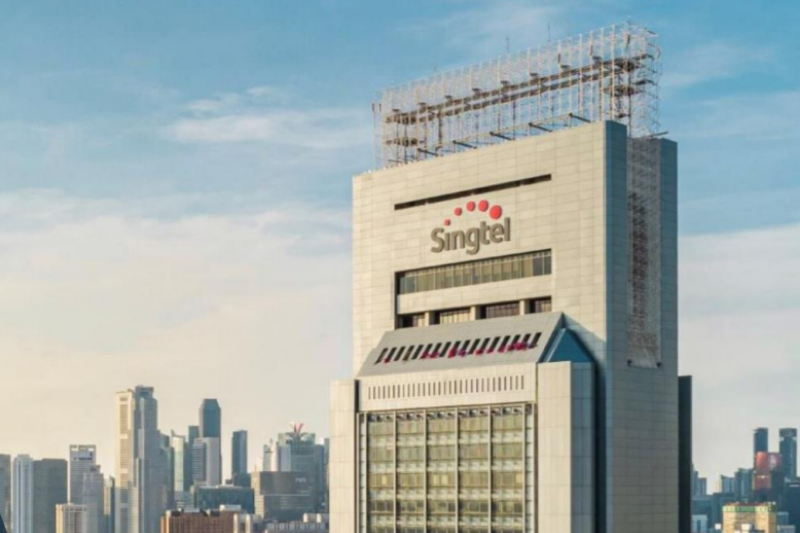
Singapore Telecommunications (SGX: Z74), or Singtel, led the seven-month table.
Keppel Ltd (SGX: BN4) ranked second.
Oversea-Chinese Banking Corporation (SGX: O39), or OCBC, ranked third.
Companies repurchase shares to support employee compensation plans or to put surplus capital to work.
ACRA notes that buybacks can lift earnings per share (EPS) and return on equity (ROE), or let a company act on perceived undervaluation.
A buyback and a dividend draw on the same cash.
What does Singtel get for S$893 million?
Singtel repurchased 195.3 million shares for S$893 million over the seven months.
It bought 23.6 million of those shares for S$103.6 million in July alone.
That single company supplied close to half of the S$1.9 billion market tally.
Singtel cancels the shares it buys under its S$2 billion Value Realisation Share Buyback programme.
Cancelling them removes those shares for good and lifts every remaining shareholder’s stake.
On a pro-forma FY2026 basis, the group expects a permanent uplift of around 3% in underlying EPS once it completes the programme.
Singtel also expects a higher trajectory for EPS and dividend per share (DPS).
The company projects those figures; it has not reported them.
For the fiscal year ended 31 March 2026 (FY2026), the board proposed a total ordinary dividend of S$0.185 per share, up 9% year on year (YoY).
That total comprises a core dividend of S$0.134 and a separate value realisation dividend of S$0.051.
Underlying net profit rose 12% YoY to S$2.8 billion.
Operating profit gained 8.9% to S$1.5 billion.
Those buyback totals run on a calendar basis, not on Singtel’s fiscal year.
What is Keppel buying back with?
Keppel ranked second over the seven months.
The group repurchased 21.6 million shares for around S$247 million in July.
How is it funded?
For the first half of 2026 (1H2026), revenue rose 24.6% YoY to S$3.8 billion.
Net profit attributable to shareholders fell 59% to S$154.7 million after a S$375 million loss in the non-core portfolio.
Strip out that portfolio, and net profit climbed 25% to S$530 million.
Recurring income grew 13% to S$467 million.
Operating cash flow fell to S$96.8 million from S$219.4 million a year ago.
Add investing activities, and Keppel reported a free cash inflow of S$570 million.
S$1.1 billion of divestment proceeds and dividends received drove that inflow, not day-to-day trading.
Keppel held S$2.2 billion of cash as at 30 June 2026 against borrowings of S$11.3 billion excluding lease liabilities.
The interim dividend stayed at S$0.150 per share.
Can profits sustain OCBC’s buybacks?
OCBC ranked third over the first seven months of the year, purchasing more than 10 million shares for around S$220 million.
For the first half of 2026 (1H2026), total income rose 11% YoY to S$8 billion.
Net profit attributable to shareholders climbed 13% to a record S$4.2 billion.
Non-interest income carried the result.
It surged 36% YoY to S$3.5 billion.
Fees and commissions rose 26% to S$1.4 billion, while trading income jumped 46% to S$1.1 billion.
Insurance income added 49% to S$791 million.
Lending worked harder for less.
Net interest income slipped 3% YoY to S$4.5 billion as the net interest margin narrowed to 1.73% from 1.98%.
Customer loans grew 12% to S$364.5 billion and absorbed much of that squeeze.
The board declared an interim dividend of S$0.47 per share, up 15% from S$0.41 a year ago.
OCBC’s CET1 ratio fell 1.3 percentage points YoY to 15.7%.
Loan growth and a S$2.5 billion capital return both draw on that capital.
Get Smart: Read the mechanism, not the amount
A large buyback tells you a company had cash to spend.
It does not tell you what shareholders received in return.
Ask whether the repurchased shares get cancelled or sit in treasury.
Cancelled shares disappear permanently, and Singtel’s EPS uplift rests on that.
Treasury shares can return to the market later.
Check the announcements for the other two names.
Work out what pays for the buyback.
Cash from operations differs from the proceeds of an asset sale.
Asset sales cannot repeat forever.
Then look at the dividend over the same stretch.
Singtel and OCBC both raised theirs, while Keppel’s has not moved.
Which of the three can keep both levers moving if earnings flatten from here?
Many Singapore stocks fall behind inflation, which means your money quietly loses strength over time. Dividend stocks have a very different track record. Some continued delivering 6% to 13% every year across the toughest market conditions.
In this FREE report, discover 5 crisis-tested dividend stocks that kept rewarding investors while the market struggled. Download your dividend investing guide now.
Follow us on Facebook, Instagram and Telegram for the latest investing news and analyses!
Disclosure: The Smart Investor owns shares in OCBC.