When companies buy back their own shares, they are putting their own cash behind their stock.
Over the five sessions to 5 November 2026, three dividend-paying stocks on the Straits Times Index (SGX: ^STI) did just that.
Data from Singapore Exchange Limited (SGX: S68), or SGX, shows that 19 primary-listed companies bought back shares over the period, spending a combined S$11.1 million.
United Overseas Bank Ltd (SGX: U11), or UOB, and Seatrium Limited (SGX: 5E2) accounted for the two biggest purchases, spending S$4.59 million between them, or about 41.5% of the total.
SGX took a different approach.
How much did each company spend on buybacks?
| Company | Shares Repurchased | Total Buyback Value | Average Price Paid |
|---|---|---|---|
| United Overseas Bank | 68,000 | S$2,590,368 | S$38.09 |
| Seatrium | 1,085,000 | S$1,997,653 | S$1.84 |
| Singapore Exchange | 6,000 | S$120,999 | S$20.17 |
| Three Combined | 1,159,000 | S$4,709,020 | – |
Note: Figures cover market purchases from 30 October to 5 November 2026, and buyback value includes stamp duties and clearing charges.
Why is UOB the week’s biggest buyer?
UOB topped the table, with its buyback accounting for 23.4% of the week’s total buyback value.
Its results for the quarter ended 30 September 2026 (3Q2026) provide useful context, with net fee income rising 19% year on year (YoY) to a record S$733 million on growth in wealth, cards and loan-related activities.
Gross customer loans also grew 6.0% YoY to S$372.3 billion.
Margins, however, moved in the opposite direction as the net interest margin narrowed to 1.68%, from 1.82% a year ago, mainly due to higher deposit costs.
Net profit attributable to shareholders came in at S$1.3 billion, up 182.2% YoY, although this increase came off a low base after UOB set aside S$1.4 billion in allowances, including pre-emptive provisions, a year earlier.
UOB did not declare a dividend alongside its 3Q2026 results, in line with its practice of paying dividends twice a year.
For 2027, the bank expects mid-single-digit loan growth and total credit costs of 25 to 30 basis points.
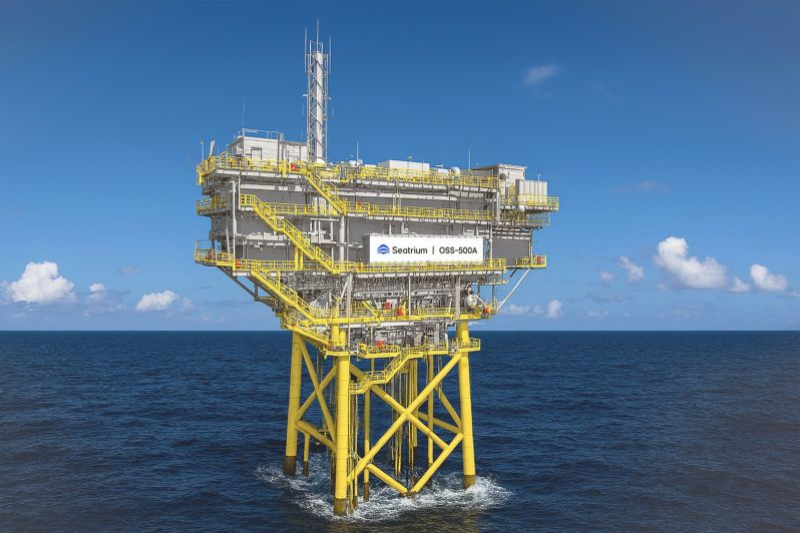
What sits behind Seatrium’s buyback?
Seatrium bought the most shares of the three companies, while its buyback value ranked second for the week.
For the first half ended 30 June 2026 (1H2026), revenue rose 4.7% YoY to S$5.6 billion, with ship and rig building or conversion revenue climbing 17.5% to S$4.2 billion and more than offsetting a 29% decline in offshore platforms revenue.
Profit attributable to owners rose 158.3% YoY to S$372.9 million, but this figure includes a one-off S$171.7 million gain on the disposal of non-core assets.
Free cash flow (operating cash flow minus capital expenditure) was negative S$11.6 million, an improvement from negative S$31.9 million a year earlier.
Seatrium recognised revenue ahead of billings, lifting contract assets by S$1.6 billion to S$6.5 billion, while its balance sheet showed S$1.7 billion in cash against S$2.4 billion of debt, excluding lease liabilities, as at 30 June 2026.
Seatrium pays dividends once a year, so it declared no interim dividend for 1H2026.
Management guided that FY2026 net profit should come in materially higher than FY2025, helped by the one-off divestment gains.
How does SGX reward shareholders instead?
SGX ranked 15th out of the 19 companies by buyback value, with dividends doing most of the work for its shareholders.
For the financial year ended 30 June 2026 (FY2026), net revenue grew 13.9% YoY to S$1.5 billion, while net profit rose 7.8% to S$698.4 million after a S$53.4 million goodwill impairment on its indices business.
Excluding that impairment and other adjustments, adjusted net profit rose 24.6% to S$759.5 million.
Free cash flow (operating cash flow minus capital expenditure) grew 2.0% to S$788.8 million.
SGX held S$1.8 billion in cash against S$628.2 million in borrowings, giving it a net cash position of about S$1.18 billion.
Its FY2026 dividends comprised:
- Ordinary dividends: S$0.445 per share
- One-off additional dividend: S$0.125 per share
- Total: S$0.570 per share, up from S$0.375 a year earlier
Management guided for quarterly dividend increases of S$0.0025 per share through FY2028 and full repayment of debt in FY2027.
Get Smart: Follow the cash behind the buyback
A buyback shows that a company is willing to spend, but it does not tell you whether that spending can be repeated.
Before treating a buyback as a vote of confidence, look at where the money comes from and whether recurring profit and cash flow can support both dividends and share repurchases.
It is also worth stripping out one-off gains before judging the profit line, as Seatrium’s disposal gain illustrates.
For a bank like UOB, keep an eye on net profit and credit costs, while for SGX and Seatrium, free cash flow deserves closer attention because it is the lifeblood of dividends.
The next time a company tops the buyback table, ask yourself one question: will the cash that pays for it still be there next year?
When the market is unpredictable, where can you park your money with confidence? Our latest FREE report reveals 5 Singapore dividend-payers built to withstand global storms. Get it now and see what’s still worth holding.
Follow us on Facebook, Instagram, Telegram and YouTube for the latest investing news and analyses!
Disclosure: The Smart Investor owns shares in SGX.