For income investors, few things feel better than opening a results announcement and spotting a higher dividend than expected.
In Singapore, these pay-outs often feel like financial “ang pows”.
With the Lunar New Year just around the corner, these small but meaningful rewards for staying invested through the ups and downs are once again front of mind for many.
Looking ahead, the outlook for 2026 is quietly improving which could create room for higher dividends.
If you are hoping for a bigger dividend “ang pow” this year, you may want to add these three Singapore stocks to your watchlist.
What Drives Dividend Growth
Increases in dividends rarely happen overnight.
They are usually the result of steadily improving business fundamentals rather than a single strong year.
While profits make headlines, dividends are paid using cash generated from operations.
Companies that can consistently produce surplus cash after covering expenses and investments, are naturally better positioned to raise payouts.
Financing costs also play a role.
Lower interest expenses of reduced debt levels can ease cash flow pressure, leaving more room for shareholder payouts.
The payout ratio is another important metric, as it measures how much of a company’s earnings are paid out as dividends.
A lower payout ratio means the company is distributing a smaller portion of profits.
While this provides greater flexibility, it does not guarantee better outcomes.
What matters is how the management allocates the remaining cash – whether it is for reinvestments, strengthening of balance sheets or simply just left to idle.
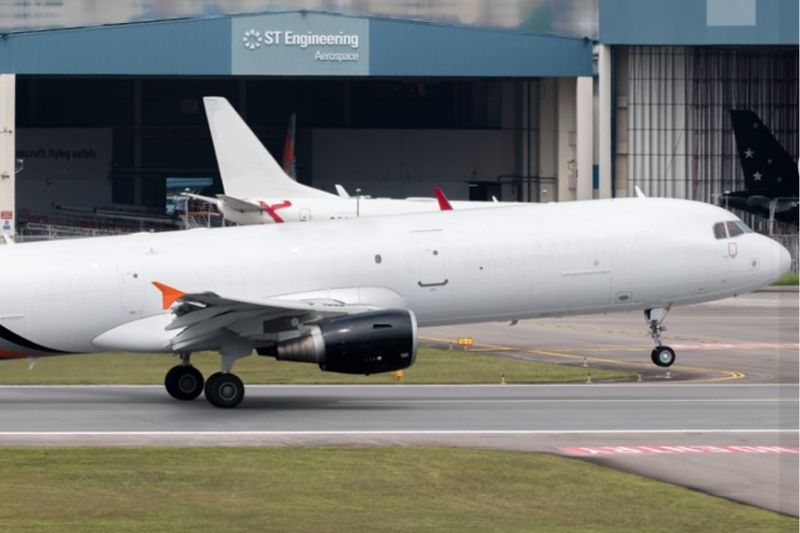
Singapore Technologies Engineering Ltd (S63.SI), or ST Engineering
ST Engineering has been making headlines recently, with news ranging from special dividends to fresh contracts by the Ministry of Defence (MINDEF).
In the first nine months of 2025 (9M2025), the group saw strong growth across all three business segments, with revenue increasing 9% year on year (YoY) to S$9.1 billion.
Contract momentum remained strong, with new contract wins totalling to approximately S$14.0 billion, including S$4.9 billion secured in the third quarter of 2025 (3Q2025) alone.
The order book was lifted to S$32.6 billion as of 30 September 2025, providing the company with multi-year revenue visibility and steady cashflow generation.
Additionally, divestments from its non-core assets generated S$594 million cash proceeds.
This gave the board room to propose a special dividend of S$0.05 per share on top of the higher final dividend of S$0.06 per share.
If approved during the 2026 AGM, total dividend for FY2025 will be S$0.23 per share.
Although dividends may fluctuate year to year, ST Engineering’s recurring cash flows and sizable order book provide a solid foundation for shareholder returns over time.
Keppel Ltd (BN4.SI)
Keppel has spent recent years reshaping its portfolio, redirecting capital into areas with stronger returns.
Driven by higher recurring incomes from infrastructure, real estate, and asset management under the “New Keppel” structure, the group achieved a 25% YoY growth in earnings, while overall net profits rose 5% YoY in 9M2025.
This was achieved even after including an accounting loss from the proposed divestment of M1’s telco business.
During the same period, Keppel returned S$617 million to shareholders, comprising cash dividends and S$92.6 million in share repurchases.
As recurring income continues to scale and capital recycling frees up the balance sheet capacity, the group’s dividend becomes less dependent on one-off asset sales.
In other words, Keppel is building a dividend base supported by recurring income to produce more consistent and sustainable payouts.
PropNex Ltd (SGX: OYY)
Driven by the robust demand in Singapore’s property market, PropNex delivered one of its strongest first-half performances in 2025.
For the six months ended 30 June 2025, revenue jumped 73.3% YoY to S$599 million, while net profit more than doubled to S$45.5 million.
This performance was supported by the strong commission income from project marketing services and higher transaction volumes across the residential market.
PropNex has been known to pay regular cash dividends, reflecting a shareholder return orientation.
In August 2025, the company declared an interim dividend of S$0.05 per share, with a payout ratio of 87.6% in 1H2025.
This high payout ratio reflects PropNex’s commitment to returning excess cash flows to shareholders when performance permits.
However, this also means that dividends are more sensitive to property market conditions and transaction volumes.
What to Watch Before Counting on Higher Dividends
Before getting too excited over bigger dividend “ang pows”, do remember to look beyond headline announcements.
Since dividends are funded using cash, free cash flow matters more than reported profits.
The management commentary is also important, because companies that clearly communicate payout intentions tend to deliver more predictable outcomes.
Investors should also assess whether earnings drivers are sustainable.
Not every dividend increase is built to last, especially if it relies on a one-off gain or unusual strong conditions.
Get Smart: Let Cash Flow Deliver the Ang Pow
Dividend growth usually reflects healthier businesses, not just generous boards.
Companies should have durable cash flows, strong balance sheets, and disciplined asset management, otherwise they may be unable to raise their payouts consistently.
Bigger dividends rarely occur due to accidents because they are often the result of stronger fundamentals built over time.
So, instead of chasing those short-term yields or special payouts, it might be better to focus on sustainability and diversification.
Smart income investors watch the cash flow, stay patient, and let the “ang pows” follow.
What if every stock trade in Singapore puts money in your pocket? One company earns whenever the market moves. Its free cash flow has grown close to 10% a year, and dividends are set to rise 40% over the next three years. Our free 2026 Dividend Playbook reveals this legal monopoly. Download it for free now.
Follow us on Facebook, Instagram and Telegram for the latest investing news and analyses!
Disclosure: Wilson.H does not own shares in any of the companies mentioned.