An extra dividend can make the results season feel generous, but whether that generosity returns depends on where the extra money came from.
On 11 November 2026, we looked at three Temasek-linked names making extra payouts: DBS Group Holdings Ltd (SGX: D05), Keppel Ltd (SGX: BN4) and Keppel REIT (SGX: K71U).
Here are two more, bringing the list to five.
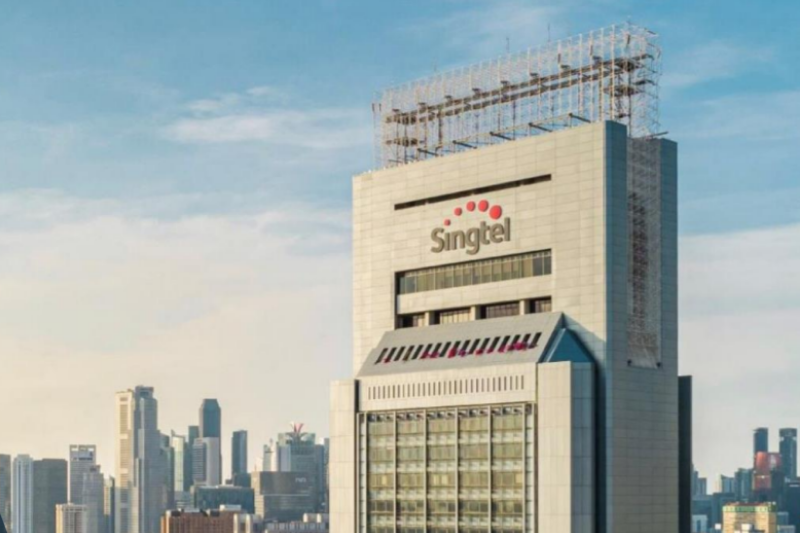
Temasek, a global investment company headquartered in Singapore, owned 52.0% of Singapore Telecommunications Limited (SGX: Z74), or Singtel, as at 2 June 2026.
On the same date, it owned 50.6% of Singapore Airlines Limited (SGX: C6L), or SIA.
| Company | Temasek Stake (As At) | Dividend Per Share | Change Year on Year |
|---|---|---|---|
| Singapore Telecommunications Limited (SGX: Z74), or Singtel | 52.0% (2 June 2026) | Core S$0.071 Value realisation S$0.019 |
Core +10.9% Value realisation +5.6% |
| Singapore Airlines Limited (SGX: C6L), or SIA | 50.6% (2 June 2026) | Ordinary S$0.02 Special S$0.05 |
Ordinary −60% Special +66.7% |
Both figures include direct and deemed interests.
Each company’s fiscal year ends on 31 March, so the first half of FY2027 (1HFY2027) covers the six months to 30 September 2026.
Is Singtel’s extra dividend backed by growing profits?
Singtel owns Optus in Australia, Singtel Singapore, technology services arm NCS and Digital InfraCo, which houses its data centre and AI cloud businesses.
For 1HFY2027, Singtel’s underlying net profit rose 10.4% year on year (YoY) to S$1.5 billion, while operating revenue grew 5.5% to S$7.3 billion.
NCS lifted revenue by 10%, while Digital InfraCo’s revenue climbed 22% after its new DC Tuas data centre began operating in January 2026.
Singtel Singapore was the weak spot, with earnings before interest and tax (EBIT) falling 4.5% as intense price competition weighed on mobile revenue.
The interim dividend rose 9.8% to S$0.09 per share, but its two parts tell different stories.
The core dividend rose 10.9% to S$0.071 and, at 78% of underlying net profit, kept the same payout ratio as a year ago.
On the surface, that is earned growth.
The extra component is a value realisation dividend of S$0.019, up from S$0.018.
It is paid from excess capital freed up by capital recycling, which has unlocked S$6.8 billion since the Singtel28 plan began in 2024, or 75% of its S$9 billion mid-term target.
So where does the risk lie?
First, only about S$2.2 billion of that target remains to be unlocked.
Second, part of the profit growth came from a first-time S$153 million dividend from Gulf Development, in which Singtel holds a small stake.
In June 2026, Singtel sold more than a third of that stake for net proceeds of S$952 million, so investors should not expect the same boost every half.
Third, Singtel plans an extra S$1.2 billion of capital expenditure this fiscal year, mainly on data centres and AI.
Partners and customer prepayments will fund S$0.7 billion, leaving about S$0.5 billion to compete with dividends for cash.
Is SIA’s special dividend making up for a smaller ordinary payout?
SIA runs full-service carrier Singapore Airlines and low-cost carrier Scoot, flying passengers and cargo worldwide.
Revenue hit a record S$11.3 billion in 1HFY2027, up 16.8% YoY.
Profit, however, went in the opposite direction.
Jet fuel averaged US$171 per barrel, 86.7% higher than a year ago amid the Middle East conflict, while profit attributable to owners fell 43.9% to S$133.9 million.
SIA declared an interim ordinary dividend of S$0.02 and a special dividend of S$0.05, bringing the total to S$0.07.
A year earlier, it paid S$0.05 ordinary and S$0.03 special.
The special dividend rose by two-thirds while the ordinary dividend fell 60%, leaving the total payout 12.5% lower.
Five of the seven cents are special, so most of this payout rests on a one-off decision rather than recurring profit.
Cash flow offers some comfort.
Free cash flow rose 70.2% to S$1.4 billion.
Much of that improvement came from working capital, mainly a smaller outflow to trade creditors, but such movements can reverse.
As at 30 September 2026, SIA held S$8.1 billion in cash and bank balances against S$7.0 billion of borrowings and S$3.0 billion of lease liabilities.
Fuel remains the key swing factor.
SIA says adjusting fares and cargo rates does not fully offset sustained high fuel prices, and an extended conflict could hurt demand for travel and air freight.
Until fuel costs ease, the ordinary dividend is the line to watch.
Get Smart: Put the extra on its own line
When a company pays you more, split the payout into its parts.
Look at the ordinary or core dividend on its own and check it against profit.
Then ask what funds the extra, and whether that source will be there next year.
Singtel’s core dividend grew with profit, though part of that profit came from a Gulf stake it has partly sold.
SIA’s ordinary dividend shrank as profit fell, with the special dividend making up part of the difference.
Here’s the thing: an extra dividend is a gift, not a habit.
If the extra disappeared tomorrow, would you still want to own the stock?
Imagine receiving steady rent increases for more than two decades. It sounds unusual, but one healthcare REIT already has rental escalations locked in until around 2042. Income visibility like this is hard to find today. We break down how this REIT built such dependable cash flow in our FREE dividend report and how it could strengthen a retirement portfolio. Get the free report here.
Follow us on Facebook, Instagram, Telegram and YouTube for the latest investing news and analyses!
Disclosure: The Smart Investor owns shares in DBS.