The Central Provident Fund Ordinary Account (CPF OA) remains one of Singapore’s most reliable savings vehicles.
Its 2.5% interest rate provides stability and certainty that few investments can match.
But for those who are willing to accept market volatility to target higher returns with quality dividend stocks, the first thing to do is filter for businesses with strong balance sheets, robust cash generation, and most importantly, sustainable payouts.
Currently we have these three businesses on our radar.
Why Cash Matters More Than Ever
Cash is the ultimate buffer for companies.
When times get tough, companies sitting on large cash reserves don’t need to panic.
Excess cash not only provides financial flexibility to preserve dividend payouts when economic conditions become challenging but also helps fund strategic acquisitions, share buybacks, and special dividends.
In short, it provides a crucial margin of safety for us investors.
Why Compare Dividend Stocks with CPF OA?
Opportunity cost.
The 2.5% yield from your CPF OA requires zero effort and carries zero risk.
To justify moving funds out of the CPF ecosystem, a dividend stock needs to offer a significantly higher yield alongside structural stability.
However, a higher yield is only worth chasing if the underlying business is stable enough to keep paying for years to come.
Venture Corporation Limited (SGX: V03) — The Cash-Rich Blue Chip
Venture Corporation is a global heavyweight in electronics manufacturing and technology services.
Because the company focuses on high-value and capital-light manufacturing, it converts a massive chunk of profits directly into free cash flow (FCF).
As of 31 December 2025, end of fiscal year 2025, Venture reported a FCF of S$223.5 million.
While this represents a 52% year-on-year (YoY) drop compared to FY2024’s S$465.7 million, there is no need to be alarmed.
The decline was due to the increase in capital expenditure used for new manufacturing capabilities and future growth pipelines.
Despite heavier investments, the group consistently maintained a pristine balance sheet.
Venture held over S$1 billion in net cash with zero bank borrowings even after paying an additional special dividend of S$0.05 per share.
With an annual payout that hovers around S$0.75 per share, Venture offers a current trailing dividend yield of 4.8%, comfortably beating the CPF OA benchmark.
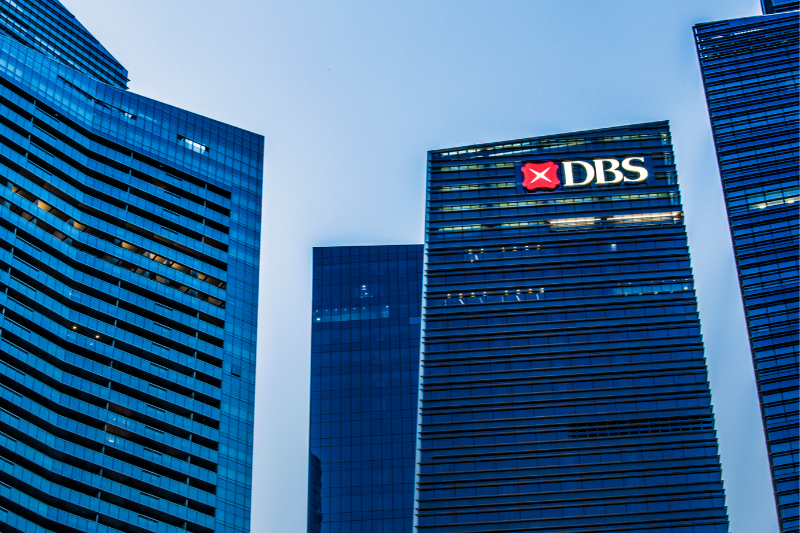
DBS Group (SGX: D05) — The Dividend Growth Compounder
While changing interest rates have slowed down net interest income growth, DBS has cushioned the drag through its wealth management engine.
For the first quarter of 2026 (1Q2026), total income grew 1% YoY and hit a record high of S$5.95 billion, driven by double-digit growth in wealth fees.
During the same quarter, ROE ticked up to 17.0% on the back of a S$2.93 billion quarterly net profit.
Furthermore, DBS maintained a massive capital cushion with a Common Equity Tier-1 (CET1) ratio of 16.9%, making its balance sheet exceptionally resilient.
Known for its generous shareholder returns, DBS declared a total dividend of S$0.81 per share (comprising S$0.66 ordinary + S$0.15 capital return) for 1Q2026, an 8% YoY growth from the S$0.75 paid in 1Q2025.
DBS’s trailing dividend yield currently stands at 4.5%, more than double the baseline CPF OA rate.
Haw Par Corporation Limited (SGX: H02) — The Defensive Income Generator
Best known as the custodian of the iconic Tiger Balm brand, Haw Par is built like a financial fortress.
Since consumer healthcare products enjoy highly inelastic demand, people will continue to buy Tiger Balm ointments and plasters regardless of the economy.
And together with its strategic stake in UOB (SGX: U11), Haw Par is granted strong earnings resilience.
Latest earnings reported a 16.3% YoY increase in its net profit, from S$228.3 million in FY2024 to S$265.5 million in FY2025.
Management also kept a conservative and manageable dividend payout ratio of around 33.3%.
This conservative buffer means the core S$0.40 annual dividend is exceptionally safe from cuts.
While Haw Par’s trailing dividend yield sits right around 2.5%, relatively close to the CPF OA rate, the stock acts as a defensive anchor for a portfolio.
As of 31 December 2025, the group holds S$791.4 million in cash and cash equivalents against a borrowing of S$44.3 million.
With such a massive liquid reserve, the risk of capital loss is relatively low.
What Investors Should Watch Before Buying
Before you break your CPF OA shielding or deploy fresh cash, keep these three filters in mind:
- Dividend Sustainability: Don’t just look at headline yield – ensure the company’s net profits and free cash flows comfortably cover the total dividend payout.
- Balance Sheet Quality: Double-check if the company is genuinely cash-rich on a net basis or simply carrying low debt.
- Valuation: Confirm that the current stock price hasn’t already priced in all the good news, which would compress your forward yield.
Tempting high dividend yields happen for a reason.
Do check for strong business fundamentals before cashing in.
Why These Stocks Could Remain Attractive Through 2026
Although interest rates are expected to stay sticky for longer, overall yields have plateaued below their previous multi-year peaks.
As fixed deposit rates and safer cash alternatives cool off, quality dividend stocks become highly attractive to income seekers.
And that’s when the financial strength of a company becomes a major competitive advantage.
Companies with massive cash piles can easily fund their growth without worrying about high borrowing costs.
Get Smart: Yield Is Good, But Financial Strength Is Better
A high dividend yield will always catch an investor’s eye, but sometimes a flashy headline number can be a trap if the business behind it is fragile.
Only after looking beneath the surface can you find those that are truly sustainable.
If you’re looking for something that provides a higher yield compared to the baseline 2.5% CPF OA rate, these three stocks are excellent candidates for you to consider.
Imagine receiving steady rent increases for more than two decades. It sounds unusual, but one healthcare REIT already has rental escalations locked in until around 2042. Income visibility like this is hard to find today. We break down how this REIT built such dependable cash flow in our FREE dividend report and how it could strengthen a retirement portfolio. Get the free report here.
Follow us on Facebook, Instagram and Telegram for the latest investing news and analyses!
Disclosure: Si-Fan T. owns shares of DBS.