If you’re an income investor in Singapore, you probably benchmark your portfolio against the CPF Ordinary Account’s 2.5% interest rate.
It’s a fair hurdle – risk-free, guaranteed, and easy to measure against.
Here are three SGX-listed companies that clear it comfortably.
Better yet, each one holds far more cash than debt on its balance sheet.
Can QAF sustain its dividend?
QAF Limited (SGX: Q01) is the food group behind household bread brands Gardenia and Bonjour, with operations across Singapore, Malaysia, the Philippines, and Australia.
Let’s start with the balance sheet.
As at 31 December 2025, QAF held S$214.1 million in cash against just S$4.8 million in debt (excluding lease liabilities). That’s a net cash position exceeding S$209 million.
For FY2025, QAF maintained its total payout at S$0.05 per share, unchanged from a year ago.
Revenue held steady at S$633.6 million, while net profit rose 15% year on year (YoY) to S$39.8 million.
Now, that profit jump needs context.
The lift was partly powered by QAF’s Malaysian joint venture, Gardenia Bakeries (KL), whose contribution surged from S$4.7 million to S$15.4 million.
But that figure included a S$8.7 million non-cash impairment reversal – a one-off boost that won’t recur.
Free cash flow also dipped 23% YoY to S$35.4 million on higher working capital needs.
Even so, with over S$209 million in net cash on its books, QAF’s steady dividend has plenty of room to breathe.
Is Delfi’s dividend cut a red flag?
Delfi Ltd (SGX: P34) is a chocolate confectionery manufacturer behind Indonesian household names SilverQueen, Ceres, and Delfi, distributing across 17 markets.
The number that jumps out is free cash flow.
In FY2025, Delfi generated US$69.9 million, up from US$24.7 million a year ago – nearly tripling. Net cash stood at US$53.5 million at year-end and climbed further to US$76.9 million by end-March 2026.
Yet despite this surge, management trimmed the total dividend to S$0.0343 per share, down from S$0.0429 in FY2024.
Revenue dipped 0.5% YoY to US$500.1 million, while gross margins contracted by 0.9 percentage points to 26.5%, pressured by a weaker Indonesian Rupiah and higher cocoa costs.
So why cut the dividend when cash flow is surging?
Delfi appears to be ploughing resources back into its Own Brands segment, which grew 19.6% YoY in 1Q2026.
With a growing net cash pile and a return to top-line growth, the lower payout looks less like a distress signal and more like a conscious trade-off – accept a smaller dividend today, invest for a bigger brand tomorrow.
What is Valuetronics doing with all that cash?
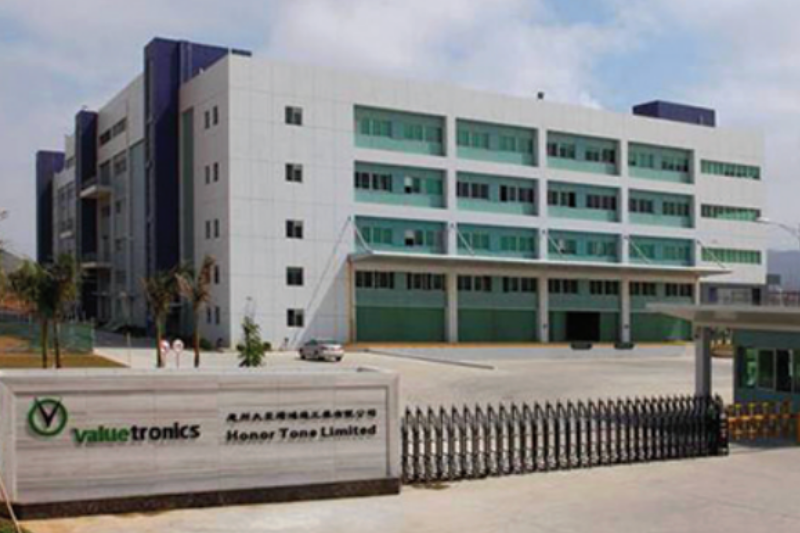
Valuetronics Holdings Limited (SGX: BN2) is an electronics manufacturing services provider with manufacturing facilities in China and Vietnam.
The balance sheet here is hard to miss.
Valuetronics completed the fiscal year ended 31 March 2026 (FY2026) with HK$1.21 billion in cash and zero debt.
That’s up from HK$1.09 billion a year ago.
Free cash flow swung to a positive HK$178.4 million, compared to negative HK$20.1 million in the prior year, as heavy GPU and AI-hardware capital spending dropped sharply.
Management is putting that cash to work for shareholders.
Total dividends for FY2026 came in at HK$0.38 per share, up 41% YoY.
The group also raised its dividend policy band to between 50% and 70% of net profit, up from a range of 30% to 50% previously.
On top of that, it announced a programme to return around HK$300 million in surplus cash to shareholders across FY2027 and FY2028 through special dividends and share buybacks, with about HK$146 million earmarked for FY2027 alone.
Revenue fell 4% YoY to HK$1.66 billion, dragged down by a deliberate wind-down of low-margin legacy consumer electronics.
The Industrial and Commercial Electronics (ICE) segment, which now dominates the revenue mix, grew 6.2% YoY to HK$1.45 billion.
Net profit dropped 33.1% to HK$111.4 million, but that headline figure includes a HK$48.4 million net loss tied to its Trio AI investment.
Strip that out, and adjusted net profit was HK$159.9 million. Investors should note that dividends are denominated in Hong Kong dollars.
Management expects the group to remain profitable in FY2027 but flagged a fluid operating environment amid US tariff measures and supply-chain uncertainty.
Get Smart: Don’t Chase Yields Without the Cash
A high dividend yield is only as good as the balance sheet behind it.
All three companies share one trait that income investors should care about – they hold far more cash than debt.
That net cash buffer matters.
It gives management room to keep paying dividends even when earnings hit a rough patch. So the next time a stock’s yield catches your eye, don’t stop there.
Check the balance sheet. The cash has to be there to back it up.
S$5 billion in government backing. S$1.1 billion already deployed. Singapore’s small-cap market is about to explode, and most people are completely clueless. Our FREE report gives you the inside track on 5 companies positioned to benefit. Download now before the crowd catches on.
Follow us on Facebook, Instagram and Telegram for the latest investing news and analyses!
Disclosure: Calvina L. does not own shares of any companies mentioned. Chin Hui Leong contributed to the article and owns shares of Delfi.