What gives a company’s board the confidence to raise dividends?
There are many possible answers.
But one of the most overlooked is a simple one: having zero debt on the balance sheet.
Think about it. When a company owes nothing to creditors, every dollar of cash it generates belongs to shareholders. There are no interest payments eating into profits. No loan repayments draining the coffers.
Management can focus on growing the business – and rewarding those who own it.
Here are three SGX-listed stocks that carry zero debt, sit on sizable cash piles, and raised their dividends for FY2025.
Sheng Siong Group (SGX: OV8)
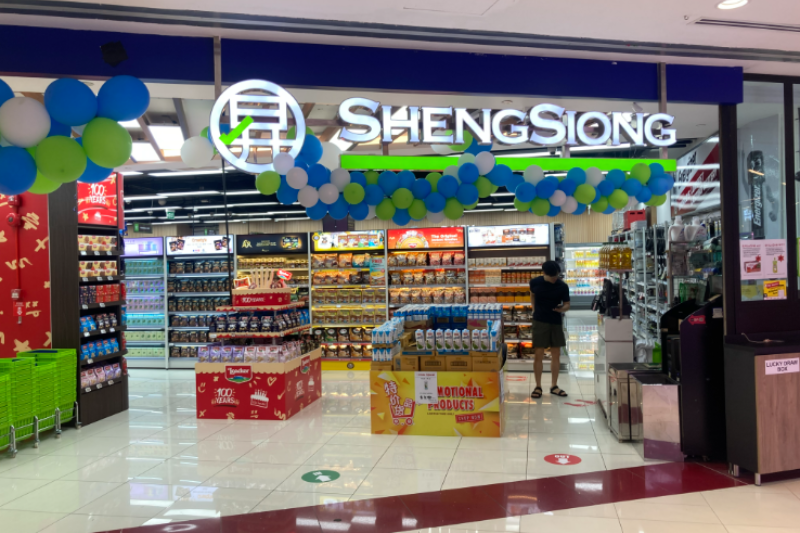
Sheng Siong is one of Singapore’s largest supermarket operators, with 93 stores across Singapore and China as at 31 March 2026.
The retailer had a good FY2025.
Revenue rose 9.9% year on year (YoY) to S$1.57 billion, fuelled by 12 new store openings – its biggest expansion since 2018.
Gross margin improved from 30.5% to 31.3% as the group sold more house-brand products.
Net profit grew 8.7% YoY to S$149.5 million.
Free cash flow, the lifeblood of dividends, came in at S$215.8 million, up 7.5% YoY.
And the balance sheet? Cash of S$435.5 million. Debt of zero.
With all that going for it, the board raised the total FY2025 dividend to S$0.070, up 9.4% from S$0.064 a year ago.
At a share price of S$3.03 as at 28 May 2026, the trailing dividend yield works out to around 2.3%.
This is the textbook case.
Earnings grew, cash flow grew, and dividends followed suit.
Venture Corporation (SGX: V03)
Venture is a technology solutions provider serving customers across life sciences, networking, semiconductor equipment, and lifestyle consumer domains.
FY2025 was a tougher year.
Revenue fell 7.4% YoY to S$2.53 billion, dragged by softer demand in the Lifestyle Consumer segment and unfavourable currency movements.
Net profit dipped 7.4% to S$227.0 million, though net margin held at 9.0%.
So why did the board raise the total dividend from S$0.75 to S$0.80?
The answer lies in the balance sheet.
Venture held S$1.28 billion in net cash with zero debt as at end-FY2025. Free cash flow, while lower at S$223.5 million, still covered the higher payout.
One caveat, though.
The FY2025 dividend of S$0.80 included a special dividend of S$0.05.
Strip that out, and the ordinary dividend stayed flat at S$0.75.
The “growth” came from the company dipping into its cash reserves, not from higher earnings.
Still, there are reasons for optimism.
Demand for AI-related infrastructure is picking up across Venture’s networking, test and measurement, and semiconductor equipment businesses.
Management expects these early signs of recovery to strengthen through 2026.
At a share price of S$17.83 as at 28 May 2026, the trailing yield comes to around 4.5%.
SBS Transit (SGX: S61)
As Singapore’s largest bus operator, SBS Transit runs around 200 bus services and a fleet of some 3,400 buses, as well as rail services through the North East Line, Downtown Line, and two LRT systems.
The headline number for FY2025 is eye-catching: total dividends jumped 73.0% YoY to S$0.4960 per share.
But look closer.
Of that S$0.4960, a whopping S$0.3199 came from a special dividend.
Ordinary dividends – an interim of S$0.0895 and a final of S$0.0866 – totalled just S$0.1761.
At a share price of S$3.50 as at 28 May 2026, the ordinary dividend yield is around 5.0%.
How could SBS Transit afford such a large special payout?
Once again, the balance sheet tells the story.
Cash of S$384.3 million. No debt. And free cash flow that surged to S$104.3 million, up from just S$21.5 million a year ago.
The operations side is less clear-cut.
Revenue slipped 2.7% to S$1.5 billion, and net profit fell 13.0% to S$61.2 million.
The loss of the Jurong West bus package hurt, and another setback looms with the Tampines package set to go from July 2026.
Rail operations, at least, continue to benefit from higher ridership and fare adjustments.
Get Smart: What zero debt really means for dividends
All three companies share one thing in common – zero debt and plenty of cash.
That combination gave each board the room to raise dividends in FY2025, even when the operating environment was far from perfect.
But as fellow investors, we should always look beneath the headline dividend figure.
Special dividends may not come around again at the same level.
The most dependable dividend growth comes from companies that raise their ordinary payouts year after year, backed by growing free cash flow.
A debt-free balance sheet is a great starting point.
But it is the quality and consistency of the underlying cash flow that keeps dividends going.
What if every stock trade in Singapore puts money in your pocket? One company earns whenever the market moves. Its free cash flow has grown close to 10% a year, and dividends are set to rise 40% over the next three years. Our free 2026 Dividend Playbook reveals this legal monopoly. Download it for free now.
Follow us on Facebook, Instagram and Telegram for the latest investing news and analyses!
Disclosure: The Smart Investor owns shares of Sheng Siong.