For the longest time, doing nothing felt like the best move.
It was the era of the “effortless returns”. You could just park your money and watch it grow without any risk. Sit on cash, park your money in T-bills or fixed deposit accounts, and earn returns that rival a stock’s dividend yield.
The last few years were comfortable, it was safe.
That chapter is now closing.
Here in 2026, interest rates in Singapore have started to move lower. What was once a comfortable 4% yield for T-bills in late 2022 slowly slipped to 3%, and is now at 1.37%. Sure, it’s not a dramatic drop, but it’s enough to tell us that the easy money days are over.
This is where many of us are going to feel an income squeeze.
While Singapore’s inflation rate has also come down, it hasn’t disappeared. Parking your money in T-bills or fixed deposits means that while your money is still safe, it is barely covering inflation.
The key question for us as long-term investors is no longer “How do I protect my capital?” but “How do I generate income when cash no longer does the heavy lifting?”
The Pivot: From Safe Haven to Real Assets
When interest rates fall, the entire income landscape shifts with it.
This is why many investors are turning to REITs, not because they are fashionable, but because their fundamentals start to work in your favour. Think of REITs as the “landlords” of Singapore. For the past two years, these landlords were fighting two major battles: investors leaving for “risk-free” cash, and high interest costs squeezing their profits.
Now, the tide is turning. As rates fall, two big things happen. First, those landlords get to refinance old, expensive debt with cheaper loans. This immediately frees up cash, meaning more money can be passed on to you as income.
Second, as interest rates drop, the dividend yields offered by REITs look attractive again. This supports REIT prices and restores their role as an income asset.
Not All Landlords are Created Equal
Just because rates are falling doesn’t mean you should grab the first high-yield stock you see. That’s how you get caught in a trap. Focus on companies that can sustain their income no matter what.
As long-term investors, we should look at different types of “landlords.” For example, look at the large, well-managed REITs like CapitaLand Integrated Commercial Trust (SGX: C38U). Because of their sheer size, boasting a total AUM of S$25.57 billion as of mid-2025, they enjoy better financing terms and own assets that remain relevant through cycles. Their scale gives them negotiating power, and their high-quality assets support occupancy even when times are tough.
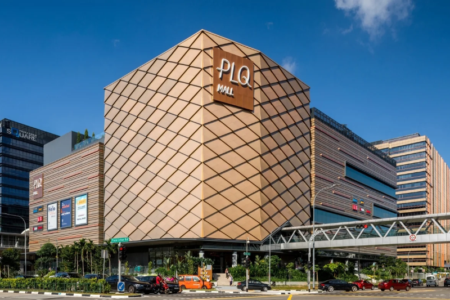
Then, there are the landlords focused on defensive income, like Frasers Centrepoint Trust (SGX: J69U). Because they are anchored by suburban retail and daily necessities, they behave very differently from discretionary or tourism-driven assets. In fact, their suburban malls consistently maintain high occupancy rates, hitting 98.1% in the first quarter of 2026, providing a rock-solid cushion when economic growth slows.
Finally, you have REITs that are not just yield vehicles, but structural growth plays. Those tied to long-term digital infrastructure, such as Keppel DC REIT (SGX: AJBU), benefit from structural demand and long contracts. If we look at their 2025 performance, they saw a 55.2% jump in distributable income while simultaneously lowering their cost of debt to 3.0%. Because they’ve secured long-term tenants with an average lease over six years, this REIT isn’t just riding a trend. They are guaranteeing reliable cash flow for the long haul
Get Smart: The Long-Term Takeaway
The easy income from cash is fading.
The next decade will reward investors who look past headline yields and focus on balance sheets, cash flow visibility, and business resilience.
If you ask me, income investing is less about running for cover and more about owning quality assets that deliver, no matter the season. When you get that right, you aren’t just getting a yield; you’re building real, lasting comfort.
When the market is unpredictable, where can you park your money with confidence? Our latest FREE report reveals 5 Singapore dividend-payers built to withstand global storms. Get it now and see what’s still worth holding.
Follow us on Facebook, Instagram and Telegram for the latest investing news and analyses!
Disclosure: Joanna Sng of The Smart Investor owns the REITs mentioned.