Singapore’s blue chips have had a good run in 2026.
The SPDR STI ETF (SGX: ES3), which tracks the Straits Times Index (SGX: ^STI), delivered a total return of 26.3% in the first nine months of the year.
Four smaller names did even better.
MoneyMax Financial Services (SGX: 5WJ) returned 70.5% over the same period, including dividends, while Micro-Mechanics (SGX: 5DD) returned 67.5%.
Civmec (SGX: P9D) and Union Gas Holdings (SGX: 1F2) also beat the index with returns of 34.1% and 30.4%, respectively.
What do these four have in common?
In their latest results, each grew profit at roughly twice the pace of revenue, or faster.
Investors may have been paying up for that operating leverage.
All four are expanding, too, though they differ in how they pay for it.
| Company / Benchmark | Stock Ticker | Return (First 9M 2026) | Return vs. STI Benchmark |
| SPDR STI ETF | SGX: ES3 | 26.3% | Benchmark |
| MoneyMax Financial Services Ltd. | SGX: 5WJ | 70.5% | +44.2% |
| Micro-Mechanics (Holdings) Ltd. | SGX: 5DD | 67.5% | +41.2% |
| Civmec Limited | SGX: P9D | 34.1% | +7.8% |
| Union Gas Holdings Limited | SGX: 1F2 | 30.4% | +4.1% |
Can Micro-Mechanics pay for its own growth?
Micro-Mechanics makes precision tools and parts for semiconductor processing.
In its financial year ended 30 June 2026 (FY2026), revenue rose 15.8% year on year (YoY) to S$75.5 million.
Consumable tools, which make up 80.0% of sales, grew faster at 19.8% to S$60.4 million.
Profit grew faster still.
Profit attributable to owners climbed 28.3% to S$15.9 million as gross margin widened to 51.6% from 49.4%.
The cash came through, too.
Free cash flow held steady at S$16.8 million, and the company ended June with S$30.1 million in cash and no bank borrowings.
The board kept the FY2026 dividend at S$0.06 per share.
Its five-year plan aims to roughly double revenue to at least S$150 million.
Capital expenditure is expected to rise to S$12 million in FY2027, which could squeeze free cash flow.
Management also flagged geopolitical risk.
What’s driving Union Gas?
Union Gas supplies gas fuels and sells diesel and petrol through its Cnergy service stations.
For the six months ended 30 June 2026 (1H2026), revenue rose 66.4% YoY to S$106 million, and profit attributable to shareholders climbed 175.8% to S$12.0 million.
Free cash flow came in at S$25.1 million, up from just S$1.3 million a year ago.
The new service stations made the difference.
Liquid fuel revenue rose 444.4% to S$51.7 million as its new Dunman Road and Queensway stations contributed for the first time.
Gas fuel revenue stayed flat at S$53.8 million.
Union Gas ended June with S$29.3 million in cash and S$7.6 million in bank borrowings, leaving net cash of S$21.7 million.
It then spent S$8.2 million to acquire two LPG retailers on 31 July 2026.
The interim dividend stayed at S$0.0048 per share, alongside a maiden special dividend of S$0.0032 per share.
Investors should not count on the special dividend recurring.
Growth rates will likely cool once the new stations enter the comparison base – two more are due to open in 2027.
Why did Civmec’s cash flow turn negative?
Civmec is a construction and engineering group based in Western Australia.
For FY2026, revenue rose 11.4% YoY to A$903.0 million, and net profit attributable to owners climbed 22.5% to A$52.1 million.
Part of that growth was bought.
Civmec acquired Luerssen Australia, now Civmec Defence Industries, in July 2025.
Infrastructure, Marine & Defence revenue more than doubled to A$210.2 million and Energy rose 62.1% while Resources, its largest segment, fell 8.4%.
Cash flow went the other way.
Free cash flow swung to an outflow of A$28.5 million from an inflow of A$56.1 million, as working capital and unbilled work in progress absorbed cash.
Civmec ended June with A$54.6 million in cash against A$60.0 million in borrowings, excluding lease liabilities.
The dividend held at A$0.060 per share for FY2026, and management points to a record order book.
Watch whether that work turns back into cash.
How is MoneyMax funding its expansion?
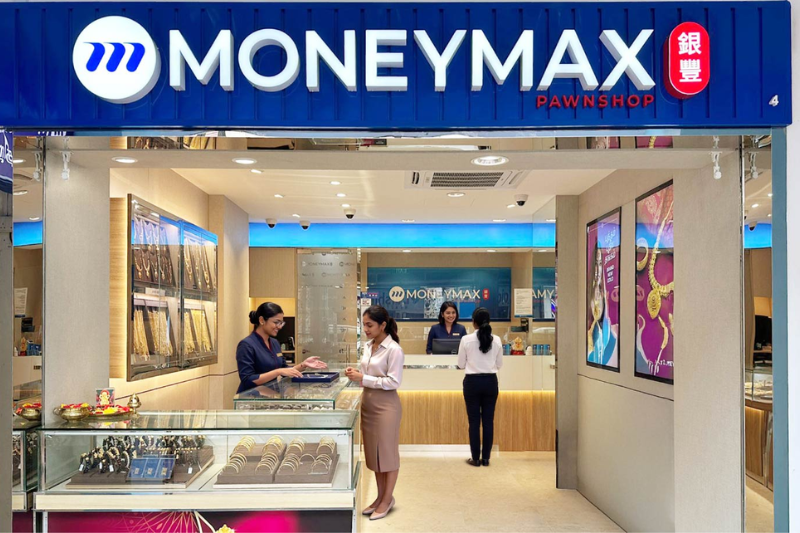
MoneyMax runs pawnbroking, gold and luxury retail, and secured lending in Singapore and Malaysia.
For 1H2026, revenue rose 34.1% YoY to S$325.7 million, while profit attributable to owners climbed 77.3% to S$52.5 million.
A bigger pawnbroking portfolio lifted interest income, and the retail arm sold more gold and luxury items.
Free cash flow, though, was an outflow of S$155.8 million, wider than the S$29.5 million outflow a year ago.
So where did the cash go?
Largely into new loans, as trade and other receivables grew by S$219.6 million.
A growing loan book consumes cash, and MoneyMax borrows to fund it.
Net debt stood at S$981.8 million at the end of June.
MoneyMax declared an interim dividend of S$0.0025 per share, after declaring none a year earlier, but free cash flow did not cover it.
The group has added 26 stores in 2026 and plans 10 more by year-end.
Management expects higher profit for FY2026, though softer consumer sentiment could weigh on gold retail.
Get Smart: Who pays for the growth?
Only two of these winners, Micro-Mechanics and Union Gas, generated the cash to pay for their expansion.
Civmec and MoneyMax consumed cash as they grew, and both now owe more than they hold in cash.
Neither path is wrong, but you’ll want to know which kind of company you own.
So before you buy a stock that has outrun the STI, open its cash flow statement.
Can the business fund its next leg of growth without borrowing more?
The answer tells you how much weight its dividend can bear.
You walk past million-dollar opportunities every single day. Your coffee shop. Your commute. Your grocery run. But these “boring” Singapore companies are quietly building fortunes while everyone chases crypto and overpriced tech stocks. Our latest report reveals 5 small-cap goldmines hiding in plain sight. Click here to download for free now before prices catch up.
Follow us on Facebook, Instagram, Telegram and YouTube for the latest investing news and analyses!
Disclosure: Calvina L. does not own any stocks mentioned. Chin Hui Leong contributed to this article and owns shares of Micro-Mechanics.