The local earnings season reveals a market in transition, where diversification and strategic pivoting are the primary drivers of shareholder value.
For investors, the latest updates from two major telecommunications players, a U.S.-focused office REIT, and a global real estate manager provide a nuanced view of the current landscape.
While intense domestic competition and macroeconomic shifts in China present clear challenges, these companies are increasingly relying on regional strength and fee-based income to sustain their payouts.
Navigating this environment requires a close look at how each firm balances growth and capital recycling.
Singtel’s Underlying Profit Rises as Regional Associates Grow
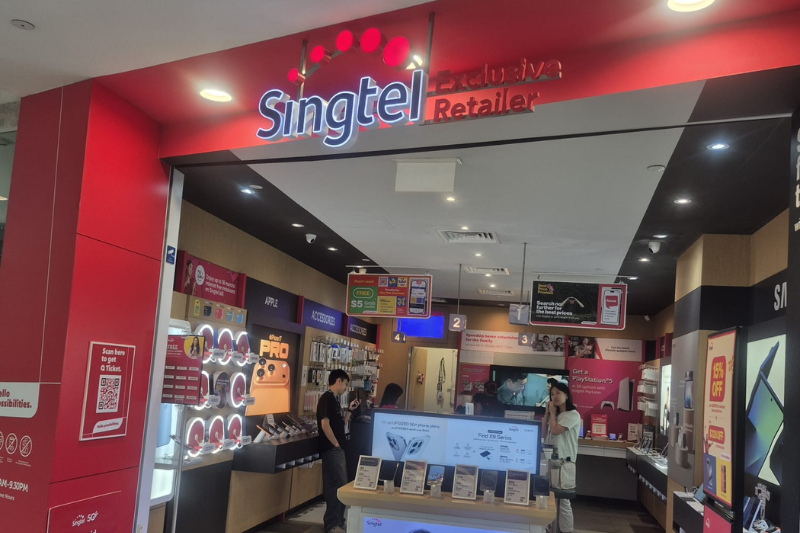
Singapore Telecommunications (SGX: Z74), or Singtel, delivered a resilient performance for the third quarter of the fiscal year ending 31 March 2026 (3QFY2026).
The group’s underlying net profit grew by 9.5% year on year (YoY) to reach S$744 million, a feat largely achieved through the strength of its regional associates.
While the domestic Singapore market faced a 9.7% decline in operating profit due to intense mobile price competition, regional powerhouses like Airtel and AIS stepped up with a 15.4% increase in post-tax profit contributions.
This geographical diversity remains Singtel’s core advantage, allowing it to navigate local headwinds while capturing growth in emerging markets.
Beyond its traditional telco business, the company is aggressively scaling its digital infrastructure and IT services.
NCS saw its operating profit surge by 32%, while the data centre arm, Digital InfraCo, made progress with the opening of its largest AI-ready facility in Singapore.
Shareholders were rewarded for this diversified growth with an interim dividend of S$0.082 per share, representing a 17.1% increase from the previous year.
Strategic capital management, including the sale of a stake in Airtel for S$1.5 billion, has further bolstered the balance sheet to fund future expansion in the digital space.
StarHub’s Net Profit Tumbles 46% Amid Mobile Competition
StarHub Ltd (SGX: CC3) reported a challenging set of results for the full year 2025 (FY2025), with net profit attributable to owners tumbling 46.2% YoY to S$86.4 million.
This significant drop was primarily influenced by a one-off S$14.1 million spectrum forfeiture payment and higher overall operating expenses.
Revenue also saw a slight dip of 0.6% to S$2.4 billion, as the mobile and entertainment segments struggled under the weight of lower roaming income and intense local rivalry.
Free cash flow moved into a deficit of S$24.7 million for the period, largely due to the capital requirements for spectrum acquisition, though excluding this one-time cost would have resulted in stable cash generation.
Despite these pressures, the company’s enterprise business showed positive momentum.
Regional enterprise revenue grew 2.9% to S$614.6 million, while cybersecurity services rose by 4.3%, indicating that StarHub is finding success in diversifying away from purely consumer-led services.
Management is maintaining a cautious yet supportive stance on dividends, declaring a total full-year payout of S$0.060 per share.
Although this is slightly lower than the previous year, the company’s cash position of S$857.1 million provides a buffer to support its commitment of distributing at least the same amount in the upcoming fiscal year.
Prime US REIT DPU Doubles Amid Occupancy Recovery
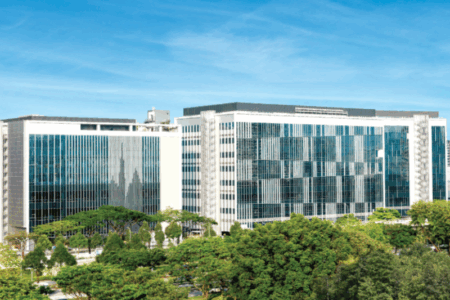
Prime US REIT (SGX: OXMU) demonstrated a notable operational turnaround in its fiscal year 2025 (FY2025) results.
Even though same-store net property income saw a 4.4% decline to US$69.2 million, the REIT significantly increased its distribution per unit (DPU) to US$0.0061, more than doubling the payout from the prior year.
This jump was made possible by a strategic decision to raise the distribution payout ratio from 10% to 65%.
Portfolio committed occupancy also showed a healthy recovery, rising to 82.7% by the end of December.
This improvement was supported by major leasing transactions with government and corporate tenants, providing a stable foundation for future income.
The REIT’s capital management efforts were equally focused, as aggregate leverage was reduced to 45.0% following a successful US$25 million equity fund raise in October.
Rental reversions remained strong at 5.6%, outpacing the performance of the previous year and reflecting a steady demand for high-quality Class A office space.
With return-to-office trends strengthening among major U.S. employers, the REIT is positioned to benefit from improved contracted cash flows.
The upcoming commencement of rent from several recently signed large-scale leases is expected to provide further income visibility for unitholders as the REIT enters the next fiscal year.
CapitaLand Investment Scales Fees Amid China Headwinds
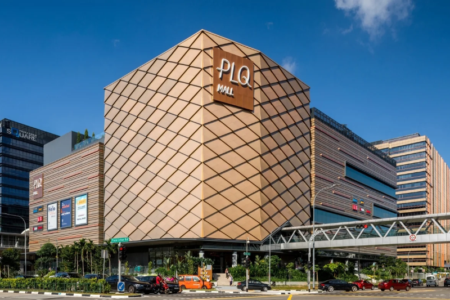
CapitaLand Investment (SGX: 9CI), or CLI, continues to transition toward an asset-light model, as evidenced by its 2025 results.
The group’s funds under management grew 7% YoY to S$125 billion, driving a 6% increase in operating PATMI to S$539 million.
This growth was fueled by broad-based gains in fee-related income, particularly from private funds management which surged 24%.
However, total PATMI fell 70% to S$145 million, weighed down by S$439 million in unrealised revaluation losses — predominantly from China — and lower portfolio gains.
Despite these accounting headwinds, the core fee-earning segments remained robust, with the lodging division reaching record contract signings.
Management is actively repositioning the portfolio through strategic acquisitions, such as the Wingate Group in Australia and a 40% stake in SC Capital Partners.
These moves deepen the group’s private credit and regional capabilities.
On the capital recycling front, CLI is accelerating divestments in China to align with a domestic-for-domestic strategy.
For income seekers, the board proposed a final dividend of S$0.120 per share, maintaining the base payout from the previous year.
This stability highlights the group’s ability to generate steady cash flow from its management fees even while navigating the cyclical challenges of its direct real estate holdings.
Get Smart: Focus on Diversification and Cash Flow
The common thread across these four companies is the pursuit of stability through diversification.
The takeaway for investors is clear: companies that can tap into regional growth or pivot toward high-demand enterprise services are better equipped to handle domestic saturation.
While the telecommunications sector remains a battleground, the steady recovery in the U.S. office market and CLI’s fee-income growth suggest that strategic pivots are paying off.
Monitoring capital management and payout sustainability will be essential as these businesses navigate the year ahead.
Some companies cut dividends in a downturn. These 5 didn’t.
Find out which Singapore blue chips have weathered past chaos…and why they could be your portfolio’s anchors in the next wave of downturn. Download the report free.
Follow us on Facebook, Instagram and Telegram for the latest investing news and analyses!
Disclosure: The Smart Investor does not own shares to any companies mentioned.