Dividend investors enjoy getting paid.
It’s even better if they are getting paid more than expected.
That is the scenario playing out for shareholders in three Singapore Exchange (SGX: S68) small-cap stocks this September 2026.
Every one of them is boosting its payout compared to a year ago, either through a higher interim dividend or a fresh special dividend.
Taking home extra cash is always nice, but the more useful question is what funded each payout and whether that source can repeat.
What drove Ever Glory’s first interim dividend?
Ever Glory United Holdings (SGX: ZKX) is breaking new ground by issuing its first-ever interim dividend.
Shareholders will receive S$0.0075 per share on 18 September 2026, a sharp contrast to the zero payout at this time last year.
This payout is backed by solid growth.
Guthrie Engineering, acquired back on 1 July 2025, finally contributed a full six months to the ledger.
As a result, revenue for the first half of 2026 (1H2026) tripled to S$103.2 million – a massive 200.1% year-on-year (YoY) jump.
Net profit attributable to owners kept pace, rising 177.5% to S$12.7 million.
More importantly, free cash flow – the real lifeblood of any payout – swung to a positive S$18.5 million, up from a S$0.1 million cash burn a year ago.
Ever Glory sits on S$38.7 million in cash and fixed deposits against S$33.5 million in total debt, keeping it in a healthy net cash position of S$5.2 million.
It wasn’t all smooth sailing, though.
Gross margin narrowed slightly from 21.9% to 20.8% due to a lower-margin project mix, while administrative and finance costs climbed by S$4.1 million and S$1.3 million respectively.
The company also absorbed S$1.4 million in one-off expenses for its proposed Hong Kong dual listing.
However, with its order book crossing the S$1 billion mark for the first time, Ever Glory offers strong earnings visibility heading into 2028.
Why is APAC Realty paying more than double despite declining results?
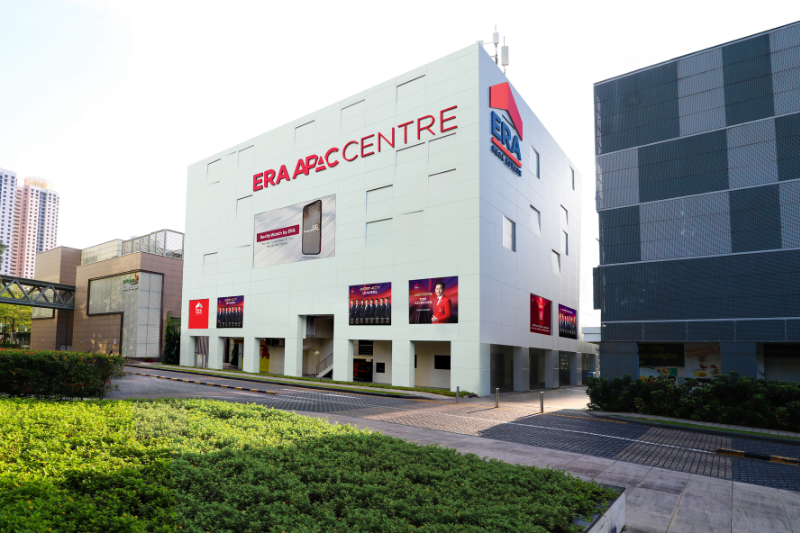
APAC Realty (SGX: CLN), the entity behind the ERA Real Estate franchise in Asia Pacific, declared a combined payout of S$0.055 per share – comprising an interim dividend of S$0.019 and a special dividend of S$0.036.
That total, scheduled for payout on 4 September 2026, is more than double the S$0.027 paid out a year ago.
Here is the twist: the actual business results went in the opposite direction.
1H2026 revenue slipped 3.6% YoY to S$329.3 million, weighed down by an 11.0% drop in new home sales revenue.
A modest 0.8% uptick in resale and rental transactions wasn’t enough to bridge the gap, causing net profit to fall 16.8% to S$9.4 million.
Free cash flow also shrank from S$15.5 million down to S$12.2 million.
So, how did APAC Realty afford a larger cheque?
Look at the balance sheet.
The company holds S$53.1 million in cash against S$35.5 million in borrowings, leaving a comfortable net cash cushion of S$17.6 million.
The board essentially decided to return excess capital to shareholders from its cash reserves rather than funding it out of expanding operational profits.
A cash distribution like this is nice to receive, but it isn’t a sign of an operational turnaround.
What is behind Boustead’s record profit?
Boustead Singapore (SGX: F9D), founded in 1828 as Singapore’s oldest continuous business organisation, reported headline numbers that deserve a closer look.
Revenue for the full year ending 31 March 2026 (FY2026) grew 18% to S$624.4 million, while net profit soared 145% to S$232.6 million.
That surge prompted the board to propose a final dividend of S$0.040 and a special dividend of S$0.045.
Combined with the S$0.015 interim dividend, total payouts hit S$0.10 per share, up from S$0.075 last year.
The dividend will be paid on 28 September 2026.
A glance behind the curtain reveals that the profit spike was driven primarily by a S$140.8 million one-off gain from the sale of assets to UI Boustead REIT (SGX: UIBU), which listed on 12 March 2026.
Strip away that transaction, and underlying net profit actually fell 35% YoY, with adjusted gross margins compressing from 44% to 35%.
Additionally, free cash flow swung into negative territory at negative S$84 million, compared to positive S$69.7 million previously, as working capital absorbed S$140.7 million to push active projects forward.
Boustead’s net cash position of S$294.6 million easily covers the total cheque, but investors should remember that asset-sale windfalls are non-recurring events.
The current order backlog offers a stable foundation for regular dividends moving forward, but matching this year’s total payout level will be a tall order.
Get Smart: How do you judge whether an extra dividend can last?
When a company pays more than it did a year ago, the first question is where the money came from.
Free cash flow from recurring operations is the most repeatable source.
Payouts funded by asset sales or drawn down from bank balances can give your yield a temporary boost, but they rarely last.
Separating the ordinary dividend from the special dividend, then tracing each back to its funding source, turns a welcome payment into a genuine insight about what lies ahead.
While your friends debate which tech stock to buy next, money is quietly flowing into these 5 Singapore companies you see every day. They are proven to have steady dividends and strong balance sheets. Our FREE report shows you exactly which ones and why they’re safer than flashy darlings everyone’s chasing. Download your free report now.
Follow us on Facebook, Instagram, Telegram and YouTube for the latest investing news and analyses!
Disclosure: Calvina L. does not own shares of any stocks mentioned. Chin Hui Leong contributed to this article and owns shares of Boustead Singapore.