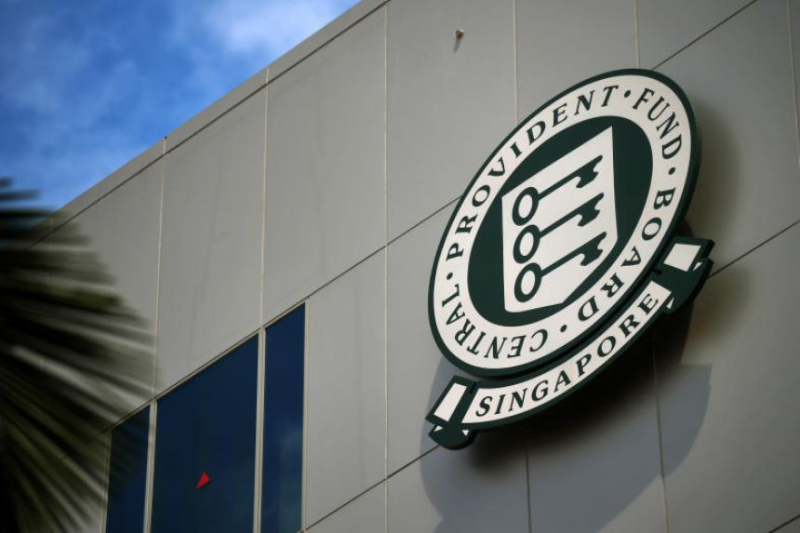
Announced as part of Budget 2023, the Central Provident Fund (CPF) Ordinary Wage (OW) monthly salary ceiling will be gradually raised to S$8,000 by 2026.
To the employees, it means higher CPF savings and lower take-home pay.
For investors, this change could reshape how you plan your long-term savings and investment strategy.
Let us break down what this change means, how it can benefit you, and how it can affect your retirement planning.
What’s Changing — and Why It Matters
From 1 January 2026, the CPF OW monthly salary ceiling will be raised to S$8,000.
Wages above this ceiling are not counted for mandatory CPF contributions.
| CPF Ordinary Wage ceiling | CPF Annual Wage ceiling | |
| From 1 Jan 2016 to 31 Aug 2023 | S$6,000 | S$102,000 (no change) |
| From 1 Sep to 31 Dec 2023 | S$6,300 (+S$300) | |
| From 1 Jan to 31 Dec 2024 | S$6,800 (+S$500) | |
| From 1 Jan to 31 Dec 2025 | S$7,400 (+S$600) | |
| From 1 Jan 2026 | S$8,000 (+S$600) |
This increment was made to keep pace with rising salaries and help middle-income Singaporeans save more for their retirement.
Employees will, however, see a slightly reduced amount of immediate take-home pay when the CPF OW monthly ceiling is raised to S$8,000 come January 2026.
How It Affects Employees
If you are earning a monthly salary above the old ceiling, the raised OW ceiling means more of your income will now be CPF-eligible.
That increases the mandatory contributions, which will mean lower take-home pay but higher CPF savings.
If you are making S$8,000 monthly, this is how your CPF savings and take-home pay will be affected:
| Salary accounted for CPF | Employee CPF contribution amount | Take-home pay | |
| From 1 Jan 2016 to 31 Aug 2023 | S$6,000 | S$1,200 | S$6,800 |
| From 1 Sep to 31 Dec 2023 | S$6,300 | S$1,260 | S$6,740 |
| From 1 Jan to 31 Dec 2024 | S$6,800 | S$1,360 | S$6,640 |
| From 1 Jan to 31 Dec 2025 | S$7,400 | S$1,480 | S$6,520 |
| From 1 Jan 2026 | S$8,000 | S$1,600 | S$6,400 |
The new change will translate to reduced disposable income but could boost long-term housing, healthcare, and retirement savings.
What It Means for Employers
Since CPF contributions are shared between employee and employer, increasing the ceiling also raises the amount which employers are required to contribute for employees whose salaries exceed the old ceiling.
Employers will now be required to take on increased payroll costs, which have a profound effect on those companies that have large white-collar or high-income workforces.
As an employer, you will see your CPF contribution affected as follows:
| Salary accounted for CPF | Employer CPF contribution amount | |
| From 1 Jan 2016 to 31 Aug 2023 | S$6,000 | S$1,020 |
| From 1 Sep to 31 Dec 2023 | S$6,300 | S$1,071 |
| From 1 Jan to 31 Dec 2024 | S$6,800 | S$1,156 |
| From 1 Jan to 31 Dec 2025 | S$7,400 | S$1,258 |
| From 1 Jan 2026 | S$8,000 | S$1,360 |
Businesses are looking at a monthly increment of S$340 in CPF contributions per employee who has a salary of S$8,000 and above, which translates to S$4,080 in annual expenses.
With this new change, employers must budget for higher CPF liabilities for affected staff and adjust hiring plans accordingly.
The impact on employers is relatively manageable, but smaller firms or those operating on thin margins could feel the squeeze.
Long-Term Impact on Retirement Savings
For employees, the raised ceiling can lead to significantly larger CPF balances over a working lifetime.
The new ceiling will mean S$740 more monthly into your CPF savings if you earn a monthly salary of S$8,000 or above.
For a 35-year-old earning S$8,000, the raised OW ceiling could mean approximately S$227,000 more in their CPF savings over a period of 20 years.
This factors in the additional contributions and accumulated interest across CPF accounts.
CPF’s guaranteed interest rates – 2.5% per annum on the Ordinary Account and 4% per annum on the Special and Retirement Accounts – amplify long-term compounding power for middle- to higher-income earners.
Members aged 55 and above can earn up to 6% per annum on the first S$60,000 of their combined CPF balances, providing risk-free growth for retirement savings.
What High-Income Earners Should Know
Those already earning above the old ceiling will see a larger CPF deduction, but also higher eventual retirement payouts.
This means that their CPF LIFE payouts will rise as their retirement savings grow.
With the raised OW ceiling, more Singaporeans will be able to hit the Full Retirement Sum (FRS) and Enhanced Retirement Sum (ERS).
| Savings in your Retirement Account (RA) at age 55 | Savings in your RA at age 65 (factoring in CPF interest rates of up to 6% per annum) | Monthly Payout from 65 (under the CPF LIFE Standard Plan) |
| S$50,000 | S$82,400 | S$490 |
| S$106,500 (Basic Retirement Sum for members turning 55 in 2025) | S$164,800 | S$930 |
| S$150,000 | S$227,900 | S$1,250 |
| S$213,000 (FRS) | S$319,400 | S$1,730 |
| S$300,000 | S$445,600 | S$2,380 |
| S$426,000 (ERS) | S$628,600 | S$3,300 |
Note: Monthly payouts are estimates based on the CPF LIFE Standard Plan for members turning 65 in 2035. Actual payouts may vary based on prevailing interest rates and life expectancy assumptions at the time of payout.
Those who have maxed out their CPF savings can consider the Supplementary Retirement Scheme (SRS), a voluntary scheme to encourage individuals to save for retirement, over and above their CPF savings, and contributions to SRS are eligible for tax relief.
The investment returns using SRS are tax-free before withdrawal, and only 50% of the withdrawals are taxable at retirement.
Should You Adjust Your Investment Strategy?
With more funds allocated for CPF, investors will need to review their investment strategies and ensure sufficient cash flow and liquidity.
CPF provides predictable returns with zero downside risk, with your principal being protected, but with limited flexibility.
Balancing CPF with other investments, such as REITs, dividend stocks, and ETFs, is the key to continuous wealth generation.
For example, with a stronger CPF core retirement base, you can choose to reduce the growth stocks portion in your portfolio and instead focus on diversified lower-risk blue-chip stocks.
Quality dividend stocks like DBS Group Holdings (SGX: D05) and Singapore Exchange Limited (SGX: S68), backed by consistent cash flows and strong balance sheets, are great additions to such a portfolio.
Balance your CPF savings, cash savings, and investments according to your risk tolerance to ensure that you do not prematurely sell off your stocks when there are market downturns.
The CPF OW ceiling increment serves to strengthen your retirement foundation, not an excuse to neglect wealth accumulation in your broader portfolio.
What This Means for Investors
The CPF ceiling hike helps Singaporeans build a stronger retirement base through compounding and guaranteed returns.
For investors, the raised ceiling can affect their cash flow, and they should review their liquid cash before committing to more investments.
Integrate CPF into your long-term financial planning to have a comprehensive strategy that can provide you with a secure retirement.
Get Smart: Fit CPF Into Your Retirement Strategy
More than just a policy change, the raised OW ceiling is an opportunity to grow your retirement savings with less effort.
The smartest investors recognise that consistent, guaranteed compounding can be just as powerful as market returns over time.
By integrating CPF savings into your retirement investment strategy, you can have the best of both worlds: stable, risk-free CPF savings and higher potential wealth accumulation through stock investing.
Imagine a life where steady income flows, no matter the market. Our new free report, “Retire Early with Dividends,” reveals how. We’ve pinpointed 5 dependable Singapore dividend stocks that offer a proven, stress-free path to financial freedom. Stop just dreaming and start building your early retirement plan today. Your free guide awaits here.
Follow us on Facebook, Instagram and Telegram for the latest investing news and analyses!
Disclosure: Wenting does not own any of the above-mentioned stocks.