Singapore companies are buying back their own shares at a record pace.
In the first nine months of 2026 (9M2026), 80 primary-listed companies bought back S$2.38 billion of their own shares on the open market.
That already tops 2025’s full-year total of S$2.23 billion, which was itself a 10-year high on the SGX.
Singapore Telecommunications Ltd (SGX: Z74), or Singtel, Keppel Ltd (SGX: BN4), and United Overseas Bank Ltd (SGX: U11), or UOB, led the charge, spending S$1.72 billion between them – or 72% of the total.
Further down the list, three dividend payers outside the Straits Times Index (SGX: ^STI) are buying too.
Together, they spent S$1.87 million, less than 0.1% of the market total.
| Company | Total number of shares repurchased | Total buyback value | Average price |
| Micro-Mechanics (Holdings) Ltd (SGX: 5DD) | 250,000 | S$738,521 | S$2.95 |
| Nordic Group Ltd (SGX: MR7) | 1,125,700 | S$625,731 | S$0.56 |
| Boustead Singapore Ltd (SGX: F9D) | 291,400 | S$509,891 | S$1.75 |
Source: SGX, data as of 30 September 2026. Buyback value includes stamp duties and clearing charges.
These are small sums, so why look?
A buyback means more when you read it next to the dividend and the cash that pays for both.
Can Micro-Mechanics fund its growth plan and its dividend?
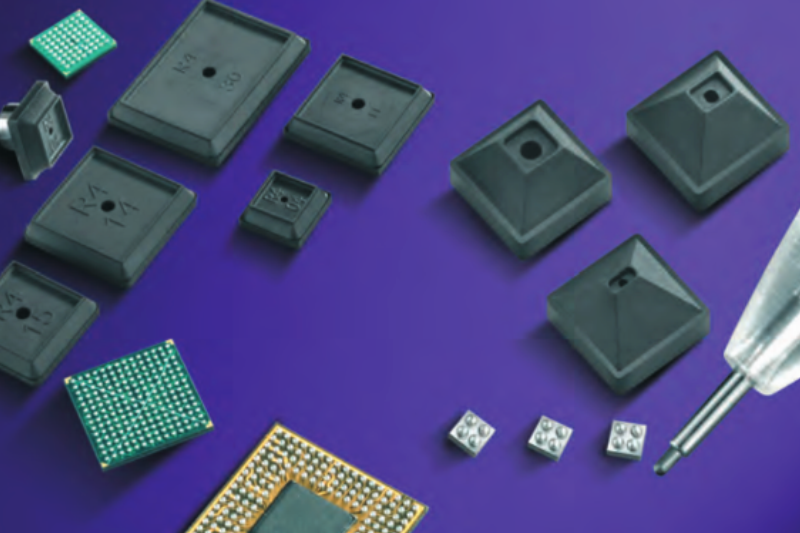
Micro-Mechanics (SGX: 5DD) makes precision consumable tools and parts for semiconductor processing.
For the financial year ended 30 June 2026 (FY2026), revenue grew 15.8% year on year (YoY) to S$75.5 million.
Consumable tools, which represent 80% of sales, grew 19.8% to S$60.4 million.
Gross margin widened to 51.6% from 49.4%, while net profit attributable to owners climbed 28.3% to S$15.9 million.
The cash side held steady.
Free cash flow came in at S$16.8 million, broadly flat compared with the previous year.
As at 30 June 2026, Micro-Mechanics had S$30.1 million in cash reserves and no bank borrowings.
The total dividend held at S$0.06 per share.
The buyback barely dents that cash.
Micro-Mechanics bought back 250,000 shares for S$738,521 in 9M2026, all before September.
That is about 4.4% of FY2026 free cash flow.
The bigger call on cash lies ahead.
Management aims to lift revenue to at least S$150 million within five years, roughly double FY2026 level.
Capital expenditure is set to rise to S$12 million in FY2027.
China contributed 34.2% of total revenue, and management highlighted geopolitical uncertainty as a key risk factor to monitor.
Can Nordic turn a record order book into cash?
Nordic Group (SGX: MR7) is an engineering services provider to the semiconductor, defence, petrochemical and marine sectors.
In the first half of 2026 (1H2026), revenue rose 3% YoY to S$87.2 million.
Profit grew much faster.
Net profit attributable to shareholders climbed 21% to S$10 million, partly because lower borrowings cut finance costs by 51%.
Cash flow tells a softer story.
Free cash flow fell 28% YoY to S$10.2 million as working capital absorbed cash and tax and capital expenditure payments rose.
Operating cash flow before working capital changes nevertheless improved to S$14.9 million.
The balance sheet got stronger anyway.
Net cash expanded to S$10.2 million as of 30 June 2026, up from S$4.1 million at the end of 2025.
The board raised the interim dividend to S$0.010 per share from S$0.008, which was paid out on 4 September 2026.
Nordic has not stopped buying either.
It repurchased 1,125,700 shares for S$625,731 in 9M2026, and about 37% of that came in September.
Looking forward, the pipeline appears full.
Its order book hit a record S$254.3 million as at 30 June 2026, mostly for delivery over the next 36 months.
The next step is turning that work into free cash flow.
What happens to Boustead’s dividend once the one-off gain fades?
Boustead Singapore (SGX: F9D) is an engineering and technology group.
For the financial year ended 31 March 2026 (FY2026), revenue rose 18% YoY to S$624.4 million.
The headline profit figure needs a closer look.
Net profit rose 145% year on year to S$232.6 million, largely driven by a S$140.8 million gain from selling assets to UI Boustead REIT (SGX: UIBU).
Strip out exceptional items and net profit would have fallen 35% YoY.
Gross margin also narrowed to 35% from 44%.
Boustead’s dividends follow the same split.
Ordinary dividends comprised an interim dividend of S$0.015 per share and a proposed final dividend of S$0.04.
The board also proposed a special dividend of S$0.045, bringing total distributions to S$0.10 per share, compared with S$0.075 a year earlier.
Cash flow went the other way.
Free cash flow swung to a negative S$84 million from a positive S$69.7 million in the prior year, as working capital absorbed S$140.7 million due to project execution timing.
Nevertheless, Boustead maintained a healthy net cash position of S$294.6 million as of 31 March 2026, and its September buyback utilised less than 0.2% of that buffer.
The order book offers some comfort.
As of May 2026, the engineering backlog stood at around S$840 million, including S$461 million in contracts secured since the start of FY2027.
Management expects satisfactory results for FY2027.
Get Smart: Start with the cash behind the buyback
Buyback league tables will always favour the large blue chips.
For a small cap, measure the buyback against the cash that pays for it.
Free cash flow is the core driver of sustainable dividends, so that is where you start.
Ask whether it covers the ordinary dividend before you credit any buyback or special payout.
A buyback funded from surplus cash adds to your return.
One funded while free cash flow shrinks deserves a harder look.
When they next report, ask one question: Can free cash flow cover the ordinary dividend without help from a one-off gain?
S$5 billion in government backing. S$1.1 billion already deployed. Singapore’s small-cap market is about to explode, and most people are completely clueless. Our FREE report gives you the inside track on 5 companies positioned to benefit. Download now before the crowd catches on.
Follow us on Facebook, Instagram, Telegram and YouTube for the latest investing news and analyses!
Disclosure: Calvina L. does not own any stocks mentioned. Chin Hui Leong contributed to this article and owns shares in Micro-Mechanics and Boustead Singapore.