Imagine if you had invested S$100,000, the bulk of your savings, into the Straits Times Index (SGX: ^STI) when it reached a peak of 5,041 on 23 February 2026.
Less than a month later, the index fell to 4,697 (down almost 7%) on 9 March 2026.
Your portfolio is suddenly worth less than what you paid.
Many investors fear this, making them wary of investing in a bull market.
Why Investing at the Peak Feels So Painful
Investors tend to feel the pain of losses more intensely than the satisfaction of equivalent gains due to loss aversion.
A S$100 loss stings more than an equivalent S$100 gain pleases.
Investors are tempted to sell when they see losses, fearing further declines and regretting that they did not wait for lower prices.
Was It Really a Mistake?
Remember, nobody can consistently predict market peaks.
Professionals also struggle to time markets consistently, and “best” timings are only obvious in hindsight.
However, history suggests markets eventually recover.
Emotional decisions, more often than not, are detrimental in the long run.
During a decline, many investors panic-sell.
They exit too early, miss the recovery, and lock in permanent losses.
Fear also makes investors wait “forever” for lower prices.
However, markets can recover unexpectedly, and sitting in cash may result in missing long-term gains.
What Should You Do Next?
Say you have already invested a large sum during the STI peak; here are three options for you:
Option 1: Stay Invested
If you are still confident in your investment thesis, the best action may be to simply do nothing.
Investors who stay the course while the market fluctuates are much more likely to see the powerful effects of compounding returns in the long run.
Remember that temporary declines and periods of market weakness are part of long-term investing.
Option 2: Continue Investing Regularly
No one can consistently predict market peaks.
Rather than trying to time the market, you can commit to a regular dollar-cost averaging (DCA) strategy that takes emotion out of the equation and lets you buy more shares whenever prices drop.
Option 3: Review Your Portfolio
Review your portfolio regularly by asking these questions:
- Has the business fundamentally changed?
- Has your investment objective changed?
- Are you still comfortable with your asset allocation?
You may need to re-evaluate your investment if the company’s fundamentals have weakened, your financial goals have shifted, or the asset mix no longer aligns with your risk tolerance.
The Difference Between Price and Value
One of the most common misconceptions is that a falling share price automatically indicates that a company has become a worse business.
However, the share price reflects what investors are willing to pay, which can be influenced by various reasons such as emotions or economic uncertainty.
For example, the share price of Sheng Siong (SGX: OV8), moved within a range of roughly S$2.53 to S$2.94 in the opening months of 2026, while its underlying business kept growing.
For its first half of 2026 (1H2026), the supermarket chain recorded S$272.4 million in gross profit, an increase of 15.6% year on year (YoY).
With zero debt and a strong arsenal of S$402.3 million in cash and cash equivalents, the group declared an interim dividend of S$0.0375, up 17.2% from the prior year.
Successful investors should focus more on the strength of the underlying business and its value rather than temporary fluctuations in its share price.
How Diversification Can Reduce Regret
Diversification is dividing your investments across multiple sectors, industries, and regions.
A good example of a diversified portfolio holds banks, real estate investment trusts (REITs), consumer stocks, and stocks from international markets.
Singapore’s largest bank, DBS Group (SGX: D05), is a steady anchor of many local investors’ portfolios.
The bank delivered record total income of S$5.95 billion in 1Q2026, up 1% YoY, despite a challenging environment.
DBS declared a first-quarter total dividend of S$0.81 per share, up 8% from the S$0.75 paid for 1Q2025, comprising S$0.66 in ordinary dividend and $0.15 in capital return dividend.
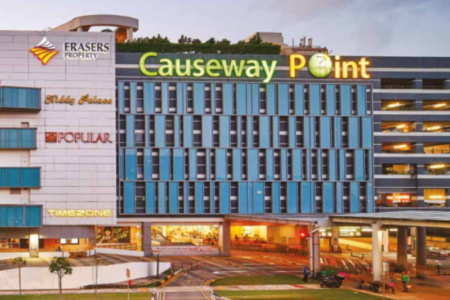
REITs like CapitaLand Integrated Commercial Trust (SGX: C38U) or Frasers Centrepoint Trust (SGX: J69U) are also popular amongst income investors looking for reliable distributions.
Diversification cushions your portfolio against interest rate cycles, as rate hikes that weigh down rate-sensitive assets like REITs or borrowing-heavy companies can be balanced by stronger performance in sectors like banking.
A balanced portfolio should include investments in various sectors and spread across different geographical regions.
Common Mistakes Investors Make
A common yet expensive mistake is selling when the market falls after buying at a peak, as this immediately locks in losses.
The price you paid on a single day does not determine your long-term returns.
Investors who stay invested, using DCA to smooth out market volatility over a long time, can achieve long-term wealth creation better than trying to perfectly time every investment.
Another common folly is ignoring dividends and focusing only on short-term price movements.
Stable blue-chips, such as DBS and Singapore Exchange Limited (SGX: S68) have a reliable dividend history, providing an additional stream of passive income for investors on top of capital appreciation.
Get Smart: Your Next Decision Matters More Than Your Last One
If you have invested at the STI’s peak, it may give you the jitters, especially when markets fall soon after.
However, experienced investors know that long-term returns are rarely determined by a single purchase.
By staying invested, continuing to accumulate quality assets, and avoiding emotional decisions, you can own businesses that help you compound wealth over the years.
And that is how investors create long-term wealth.
Imagine owning businesses that continued paying shareholders even when markets were falling. That’s the appeal of dividend investing done well. Our FREE report reveals 6 SGX companies that paid dividends every single year for two decades, through the Global Financial Crisis, COVID-19, and 2022’s rate shock. Start building the kind of income stream that could fund a more comfortable retirement. Get your free report here.
Follow us on Facebook, Instagram and Telegram for the latest investing news and analyses!
Disclosure: Wenting A. does not own any of the companies mentioned.