

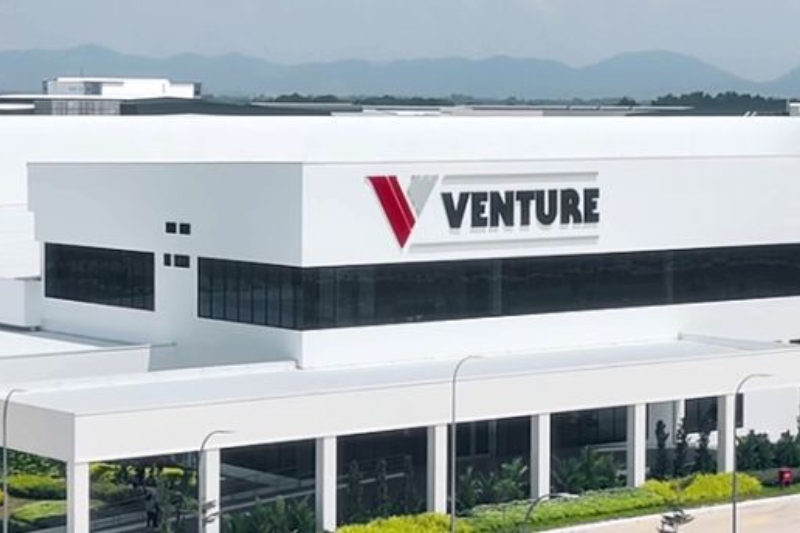
Venture Corporation Limited (SGX: V03), or Venture, has been garnering interest from investors given its attractive trailing dividend yield of almost 5%.
However, it’s not about how high a company’s dividend yield is, but whether the payout is sustainable.
We look at Venture’s fundamentals, including its earnings, cash flow, and balance sheet, to assess if its dividend is safe.
Why Venture’s Dividend Is Catching Investors’ Attention
At around 5%, Venture’s dividend yield is attractive compared to alternatives.
For instance, Singapore’s six-month Treasury bill (T-bill) pays less than 1.5%, the July 2026 Singapore Savings Bond (SSB) averages 2.1%, and the best fixed deposits are in the neighbourhood of 1.5%.
However, compared with Singapore REITs such as Mapletree Industrial Trust (SGX: ME8U) and Frasers Centrepoint Trust (SGX: J69U), Venture’s 5% yield does not seem as attractive as their respective yields of 6.6% and 5.3%.
Against other blue-chip dividend stocks such as DBS Group Holdings (SGX: D05) that offers a trailing yield of 4.2%, Venture stands out.
What Venture also has on its side is consistency, having paid an annual dividend stretching back to at least 2014.
Notably, the company’s ordinary dividend was steady at S$0.75 per share from 2020 to 2024, a stretch that included both the COVID-19 pandemic and a bout of high inflation. In 2025, Venture went a step further, adding a S$0.05 per share special dividend to lift the total payout to S$0.80 per share.
Understanding Venture’s Business
Venture is a technology solutions provider that designs and builds products for global customers across diversified industries, including life sciences and medical technology, lifestyle and wellness, test and measurement instrumentation, next-generation communications, and smart industrial applications.
This diversified spread ensures that no single industry can sink the company.
But make no mistake: this is a cyclical business.
Venture’s revenue and earnings are dependent on its customers’ product cycles and capital spending, which are prone to fluctuations in global technology spend.
Should spending cool, orders get pushed out, and revenue falls.
It has happened before (Venture’s revenue fell each year from 2008 to 2012, with another multi-year period of revenue declines occurring from 2023 to 2025); it can happen again.
Can Venture Afford Its Dividend?
In 2025, Venture’s dividend of S$0.80 per share equated to S$230.2 million, which exceeded its free cash flow (FCF) of S$226.3 million. This gave a dividend payout ratio of 102%.
Although this payout ratio seems unsustainable, management has kept the payout ratio below 100% in each of the three preceding years.
Thankfully, Venture operates with a fortress balance sheet: no bank borrowings and a cash position of S$1.3 billion as of 31 December 2025. This affords the company plenty of financial flexibility to keep the dividends flowing, especially during downturns.
The Bull Case: Why the Dividend Looks Sustainable
Beyond its fortress balance sheet, bulls argue that the company’s consistently healthy cash generation over the cycle supports the dividend.
Operating cash flow has averaged S$316.1 million from 2015 to 2025, and stayed positive in every one of those years.
The same holds for FCF, which averaged S$284.7 million over the same period.
As highlighted earlier, Venture’s ability to sustain consistent cash flow stems from its diversified base of customers, which provides a buffer against a single industry’s downturn.
Finally, the company’s dividend history (consistent dividends since at least 2014) is an example of management’s shareholder-friendly policies.
The Bear Case: What Could Threaten the Dividend?
Bears argue that the business still carries real risks.
A slowdown in technology spending is the obvious one: customers delay product launches, orders thin out, and Venture’s revenue follows.
Next, margins are thin. Venture’s operating margins run around 9% to 11%, so cost inflation or customer pricing pressure can bite quickly.
Finally, a prolonged downcycle would eventually grind down both Venture’s earnings and cash flow.
The balance sheet could absorb it — but management might still trim the payout to preserve firepower.
How Venture Compares With Other Dividend Stocks
| Metric | Venture | DBS | Singapore Exchange (SGX) | ST Engineering |
| Trailing Dividend Yield | 5% | 4.2% | 1.8% | 2.2% |
| FCF (Last Fiscal Year) | S$226.3 million | NA | S$773.6 million | S$1.1 billion |
| Full-Year Dividend Growth | 6.7% | 37.8% | 8.7% | 35.3% |
| Earnings Stability | Cyclical | Cyclical | Very Steady | Steady |
| Cyclicality | High | Moderate | Low | Low |
In the table above, we compare Venture with some popular dividend stocks in the Singapore market, such as DBS, Singapore Exchange (SGX: S68) and ST Engineering (SGX: S63).
The pattern is clear.
Venture offers a higher yield than the other three, but it’s the most cyclical of the four and its dividend growth has been lacklustre.
What Investors Should Watch Going Forward
Revenue and the order pipeline lead everything else, so start there.
Then gross margins, which reveal whether Venture retains pricing power.
Then free cash flow — the number that actually pays you.
If FCF coverage once again exceeds the payout, the dividend is fine.
And listen to management’s guidance: it will signal trouble before the numbers do.
Venture suits long-term income investors who want technology exposure without buying an unprofitable growth story — and who can genuinely stomach lumpy, cyclical earnings, knowing a fortress balance sheet sits beneath the business.
If a 30% earnings drop in a bad year would make you jittery, this stock is not for you.
Get Smart: A High Yield Is Only as Good as the Business Behind It
So — is Venture’s dividend safe?
On the evidence, it’s about as safe as a cyclical business gets: free cash flow slightly undershot the dividend for 2025 but has generally covered total dividends over the last few years.
The company’s strong net cash position supports dividend payments, and management held the payout flat through the last downturn rather than cutting it.
The business’s well-diversified nature also provides some buffer against its inherent cyclicality.
For those tracking SGX income stocks, Venture stands out as a classic trade-off: greater exposure to technology cycle, offset by a balance sheet with no bank borrowings built to weather the bumps.
2008. 2020. 2022. Three of the toughest stretches for Singapore markets in a generation. We found 6 SGX companies that paid a dividend every single year through all three. Our free report reveals the six companies and what allowed them to keep paying when others couldn’t. Click here to download now.
Follow us on Facebook, Instagram and Telegram for the latest investing news and analyses!
Disclosure: Wilson H. does not own shares of any companies mentioned.


