The SPDR STI ETF (SGX: ES3), which mimics Singapore’s Straits Times Index (SGX: ^STI), turned in a 13.1% return for the first half of 2026.
Most of the index’s 30 constituents shared in that climb.
A handful did not.
Three names went the other way.
Genting Singapore (SGX: G13) delivered negative 13.4% in total returns over the half.
Mapletree Pan Asia Commercial Trust (SGX: N2IU), or MPACT, returned negative 9.7%.
CapitaLand Ascendas REIT (SGX: A17U), or CLAR, came in at negative 8.1%.
A falling share price is not always a broken business.
Sometimes the market is right, and sometimes it is pricing a worry that the operating numbers only partly justify.
Here is what sat behind each decline.
Is Genting’s earnings drop the whole story?
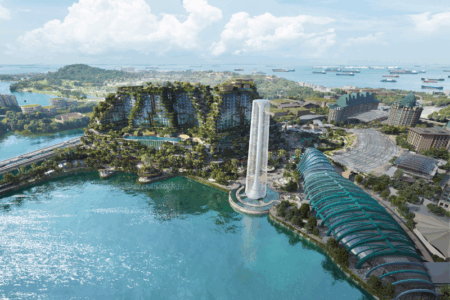
Genting Singapore owns and operates Resorts World Sentosa, home to Universal Studios Singapore, the Singapore Oceanarium, hotels, dining, and one of Singapore’s two licensed casinos.
Gaming and non-gaming operations drive its revenue.
The group reported revenue of S$607.6 million for the first quarter of 2026 (1Q2026), down 3% year on year (YoY) from S$626.2 million.
Gaming revenue did the damage, falling 8% to S$403.4 million, while non-gaming revenue rose 8% YoY to S$204.1 million, helped by higher visitation to Universal Studios Singapore and the Singapore Oceanarium.
The bottom line looked worse.
Net profit fell 55% YoY to S$65.2 million, and adjusted EBITDA fell 24% to S$179 million.
Management pointed to improving gaming momentum towards the end of the quarter.
It also flagged headwinds from the conflict in the Middle East and broader geopolitical developments, which have lifted cost pressures across supply chains and weighed on travel demand through higher airfares.
A profit halving, a soft top line, and named external risks give investors concrete reasons to stay cautious.
Did MPACT’s headline numbers tell the truth?
MPACT holds 15 commercial properties across Singapore, Hong Kong, Mainland China, Japan, and South Korea, with assets under management (AUM) of S$15.2 billion.
For the full year FY2025/2026, ending 31 March 2026, gross revenue and net property income (NPI) fell 4.6% and 4.3% YoY to S$867.3 million and S$654.4 million respectively.
Full-year distribution per unit (DPU) came in at S$0.0797, down 0.6% YoY.
That headline dip hides something.
Strip out a one-off tax charge of S$8.3 million tied to the Festival Walk Tower divestment, and full-year DPU would have risen 1.1% YoY.
The underlying business held up better than the top line suggests.
Singapore NPI rose 4.1% YoY on a comparable basis.
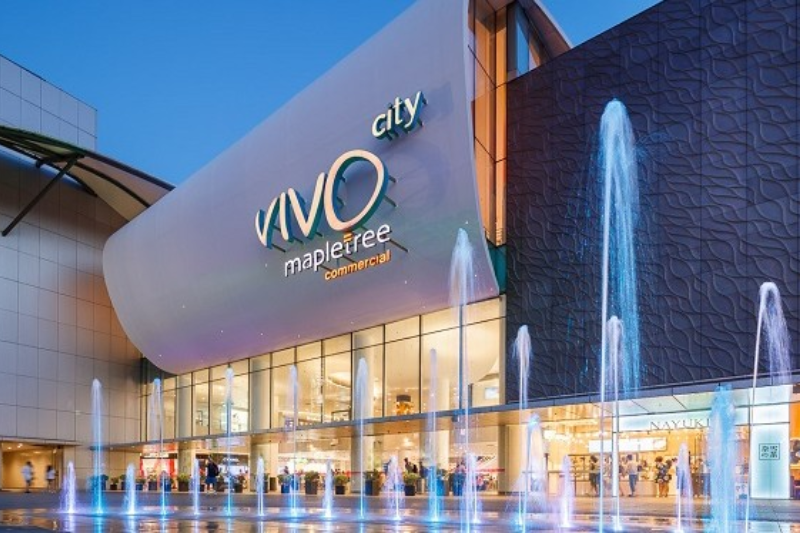
VivoCity posted a 14.1% rental uplift, with full-year shopper traffic and tenant sales up 3.6% and 3.7%.
Meanwhile, finance expenses fell 15.3% YoY.
MPACT completed three divestments over the year and used the proceeds to bring aggregate leverage down to 36.5%.
A market reading the reported DPU decline at face value may be missing the operational picture underneath.
Why did CLAR fall when its numbers held firm?
CLAR is Singapore’s oldest industrial REIT, with 229 properties across Singapore, the US, Australia, and the UK/Europe, and AUM of S$18.6 billion as at 31 March 2026.
CLAR reports revenue, NPI, and DPU half-yearly, so none appeared this quarter.
What it did report looked healthy.
Portfolio rental reversion came in at +10.6% for leases renewed during the quarter, with Singapore at +10.5% and the US leading at +15.1%.
The REIT completed around S$525 million of acquisitions in the quarter and announced a further S$1.1 billion of DPU-accretive deals, including its debut investment in Japan.
The cash picture is more complicated.
Aggregate leverage rose to 42.0% as at 31 March 2026.
It is expected to ease to around 37.3% after the S$903.5 million equity fund raising completed in April 2026.
That raising dilutes existing unitholders in the near term, before the acquisitions it funds contribute.
Investors may be pricing that dilution now and waiting for the accretion later.
Get Smart: The market’s verdict is not always the final word
Three stocks, three different reasons for lagging the index.
Genting faces a real earnings decline and named external risks.
MPACT’s headline DPU masks an underlying rise once a one-off charge is removed, while CLAR’s operating numbers held firm while dilution and leverage weighed on sentiment.
Free cash flow is the lifeblood of dividends, and none of these three disclosed it this period.
That leaves the full dividend picture for the half-year and full-year results to come.
Until then, a lagging price tells you what the market fears, not what the business is worth.
You bought these companies for a reason.
Check whether that reason still holds.
If it does, a soft six months is not the same as a broken thesis.
Many Singapore stocks fall behind inflation, which means your money quietly loses strength over time. Dividend stocks have a very different track record. Some continued delivering 6% to 13% every year across the toughest market conditions.
In this FREE report, discover 5 crisis-tested dividend stocks that kept rewarding investors while the market struggled. Download your dividend investing guide now.
Follow us on Facebook, Instagram and Telegram for the latest investing news and analyses!
Disclosure: The Smart Investor owns units of MPACT and CLAR.