Singapore’s Straits Times Index (SGX: ^STI) made history in February 2026, breaching the 5,000 mark for the first time ever.
While the three local banks – which account for roughly half the STI’s weighting – have deservedly grabbed headlines, not every outperformer this quarter wears a bank badge.
Three blue chips from very different corners of the market have beaten the benchmark in the first quarter of 2026.
What do a defence giant, a bourse operator, and an agribusiness conglomerate have in common?
More than you might think.
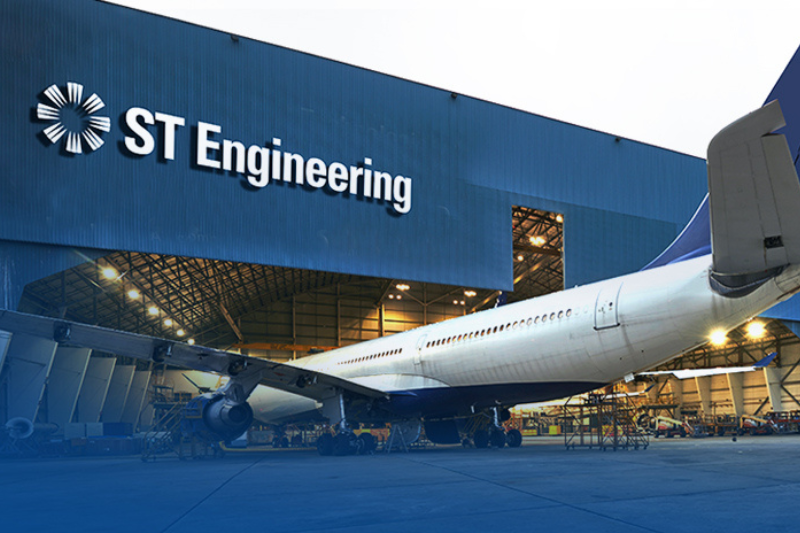
ST Engineering: The Defence and Aerospace High-flyer
Singapore Technologies Engineering (SGX: S63), or STE, delivered a stellar set of full-year 2025 results.
Revenue rose 9% year on year (YoY) to S$12.3 billion, while base operating performance (BOP) net profit surged 21% to S$850.8 million, driven by higher profitability and lower net finance costs.
The group’s two growth engines – Commercial Aerospace and Defence & Public Security – did the heavy lifting.
Commercial Aerospace BOP EBIT jumped 22% YoY, fuelled by strong Engine MRO and Nacelles revenue, while Defence & Public Security posted a 14% YoY increase.
Most impressively, STE’s order book ballooned 49% to a record S$33.2 billion, with about S$9.9 billion expected to be delivered in 2026 alone.
Free cash flow (FCF) was healthy at S$1.1 billion.
Dividend investors have reason to cheer too.
STE declared a total dividend of S$0.23 per share for FY2025, up sharply from S$0.17 the year before.
The group has also introduced a progressive dividend policy from 2026 onwards, pledging an incremental dividend equal to one-third of the YoY increase in net profit.
With rising global defence budgets and structural demand for aerospace MRO services, STE’s strong order book gives investors considerable earnings visibility.
SGX: The Toll Booth of Singapore’s Market Rally
Singapore Exchange (SGX: S68), the country’s sole stock exchange operator, is a natural beneficiary when the STI surges – and surge it did.
For the first half of its fiscal year ending 30 June 2026 (1HFY2026), SGX reported net revenue of S$695.4 million, up 7.6% YoY.
The standout was the Equities-Cash division, which climbed 16.2% to S$223.9 million as securities daily average traded value rose 19.5%.
The Fixed Income, Currencies and Commodities (FICC) segment also contributed, rising 12.5% to S$178.9 million on the back of higher OTC FX, commodity and currency derivatives volumes.
Adjusted net profit rose 11.6% to S$357.1 million, though reported net profit was broadly flat at S$342.7 million due to a S$15.0 million goodwill impairment related to Scientific Beta.
For dividend investors, SGX offers a rare commodity: a clearly mapped-out dividend trajectory.
The group declared total dividends of S$0.2175 per share for 1HFY2026, up from S$0.18 a year ago, and has committed to maintaining its 0.25-cent quarterly dividend increase through FY2028.
SGX also generated S$363.7 million in operating cash flow during the half, comfortably covering its distributions.
Management remains on track for 6-8% organic top-line growth, excluding treasury income.
Wilmar: The Contrarian Cash Flow Comeback
Wilmar International (SGX: F34), one of the world’s largest integrated agribusiness groups, may be the most surprising outperformer of the trio.
For FY2025, Wilmar reported revenue of US$70.4 billion, up 4.5% YoY, while net profit attributable to owners climbed 20.6% to US$1.4 billion.
Core net profit – which strips out one-off items including a US$1.14 billion remeasurement gain from its AWL Agri Business stake change, offset by US$782.3 million in Indonesia-related provisions – grew a more modest 9.7% to US$1.3 billion.
But the real story is the dramatic turnaround in FCF, which swung from negative US$200 million a year ago to a whopping US$1.3 billion.
The improvement came as the group’s major capital expenditure programme neared completion, with capex falling 31.2%.
Net gearing also improved to 0.91 times from 0.94 times.
There is a catch for income investors, however.
Wilmar declared a total dividend of S$0.14 per share for FY2025, down from S$0.16 the year before.
Management acknowledged that operating conditions for 2026 are expected to remain difficult amid geopolitical tensions, trade tariffs, and evolving regulatory landscapes.
Still, with FCF now firmly in positive territory and the heavy investment cycle winding down, Wilmar’s cash generation story may have more room to run.
Get Smart: When the index makes headlines, look beyond the obvious winners
STE, SGX, and Wilmar sit in three very different sectors, yet they share a common thread: each demonstrated a tangible improvement in its cash generation during FY2025.
STE’s S$1.1 billion in FCF, SGX’s S$363.7 million in operating cash flow, and Wilmar’s dramatic FCF turnaround all gave investors confidence that these rallies have substance behind them – not just sentiment.
When markets run hot, it pays to focus on the cash.
If you want to retire with a constant stream of dividends, these 5 stocks might be all you need. We’ve found 5 SG stocks that have kept paying (and growing) through inflation, rate hikes, and recessions. See what they are with our latest free report for SGX dividend investors. Click here to get instant access.
Follow us on Facebook, Instagram and Telegram for the latest investing news and analyses!
Disclosure: The Smart Investor owns shares of SGX.