When profits fall, dividends often follow.
It is the natural order of things in the investing world.
But for these three SGX-listed stocks, the payout story is far more nuanced than those headline-grabbing numbers might suggest.
Each company saw earnings decline on at least one key metric, yet dividends were either maintained or even raised.
There is a simple lesson here: we must look past headline profits to the balance sheet and the actual cash flow underpinning each payout.
LHN Group (SGX: 41O) – The Power of Non-Cash Swings
LHN’s net profit fell by a staggering 57.6% year on year (YoY) to S$20.1 million for its fiscal year ended 30 September 2025 (FY2025).
That sounds alarming at first glance, until you dig into what actually caused the slide.
The decline was largely driven by a S$18.0 million net fair value loss on investment properties, compared to a S$10.5 million gain a year ago.
In other words, a non-cash swing of S$28.5 million did the heavy lifting.
The real story that matters to investors’ pockets lies in cash flow.
Free cash flow nearly tripled to S$64.1 million, up from S$23.5 million in FY2024, supported by positive working capital movements.
This surge in cash generation comfortably funded a 33% dividend increase, bringing the total FY2025 payout to S$0.04 per share.
At a recent share price of S$0.64, that works out to a trailing dividend yield of around 6.3%.
Revenue, meanwhile, grew 8.6% year on year to S$131.5 million, driven by property development sales and new facilities management contracts.
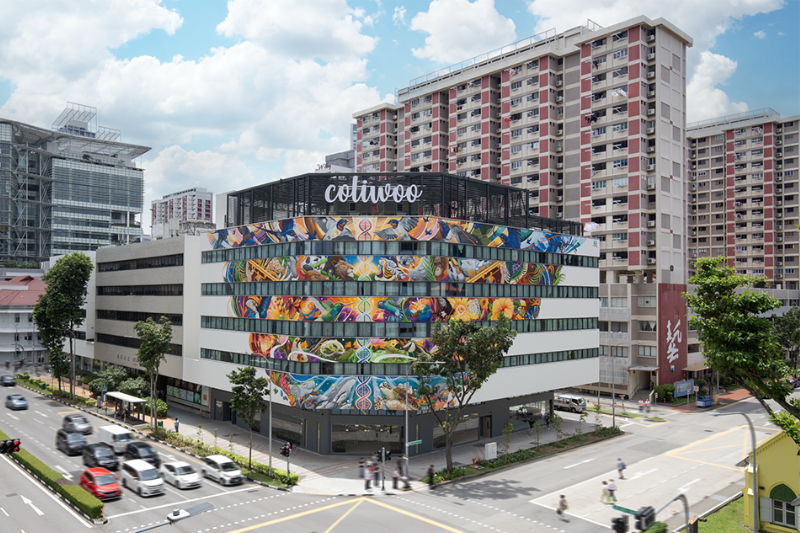
While management plans to expand its Coliwoo portfolio to nearly 4,000 rooms by the end of 2026, investors should keep an eye on its leverage, as bank borrowings of S$239.2 million are notably higher than the other names on this list.
Aztech Global (SGX: 8AZ) – A Fortress of Cash
Aztech’s FY2025 was a tough year by any measure.
Revenue fell 30.4% YoY to S$432.5 million and net profit declined 43.0% to S$40.2 million, as demand softened for IoT devices and data communication products.
Despite this, the board proposed a final and special dividend totalling S$0.12 per share.
While this is lower than the previous year, the decision to raise the special dividend portion to S$0.08 signals a quiet confidence from management.
That confidence is backed by hard numbers.
As at 31 December 2025, Aztech sat on a mountain of S$269.6 million in cash against just S$9.8 million in debt.
This net cash cushion of nearly S$260 million gives the board significant room to reward shareholders even through a downcycle.
At a recent share price of S$0.67, the total yield sits at an eye-popping 17.9%.
Even if we strip out the special payout, the regular dividend yield remains a respectable 6.0%.
With 27 new project orders, 10 new customers onboarded in FY2025, and a fresh US FDA registration for its Malaysia facility (a potential catalyst for its growing MedTech business), the groundwork for a recovery is clearly being laid.
Civmec (SGX: P9D) – Relying on the Order Book
Civmec, the Australia-headquartered construction and engineering services provider, reported a weaker first half for its fiscal year ending 30 June 2026 (1HFY2026).
Revenue dipped 24.3% YoY to A$380.4 million, with the Resources segment nearly halving.
Net profit fell 19.0% to A$21.4 million, though margins actually improved — net profit margin edged up to 5.6% from 5.3%, suggesting the decline is cyclical rather than structural.
The interim dividend was maintained at A$0.025 per share, fully franked, payable on 10 April 2026.
Underpinning the payout is a net cash position of A$27.6 million (A$87.6 million in cash against A$60.0 million in borrowings).
However, free cash flow remained in negative territory at A$11.3 million, though this was an improvement from negative A$26.1 million a year ago.
For now, the dividend is being funded from the strength of the balance sheet rather than current cash generation.
What keeps the outlook credible is a growing order book, which hit A$1.35 billion at the end of 2025.
As these projects move into execution, we should see an eventual uplift in activity.
Just remember that because dividends are in Australian dollars, there is always a small currency conversion element for us local investors to consider.
Get Smart: Look Beyond Headline Profits
All three companies saw profits fall, yet all three maintained or raised their dividends.
The common thread here is the presence of a strong balance sheet, or in LHN’s case, a surging free cash flow that told a very different story from the bottom line.
For dividend investors, the takeaway is clear: when profits dip, check the cash flow statement and the balance sheet before drawing conclusions about the sustainability of your payout.
What if you could collect a steady income from Singapore companies for decades to come? We found one in a near-duopoly with 70%+ market share that’s practically printing money. Our FREE small-cap report uncovers this “hidden monopoly” advantage (plus 4 other dividend powerhouses) that will keep paying no matter what the market does. Click here to grab your copy now.
Follow us on Facebook, Instagram and Telegram for the latest investing news and analyses!
Disclosure: Calvina L. does not own any of the stocks mentioned. Chin Hui Leong contributed to the article and does not own any of the stocks mentioned.