SaaS businesses are engulfed in the dark clouds of “SaaSpocalypse”.
Haven’t we seen doom-and-gloom scenarios in other cases that did not come to pass?
From the advent of DeepSeek stoking fears about falling demand for leading-edge AI chips, to the fear of ChatGPT killing Google Search, these predictions have been proven wrong over time.
We check out some of these SaaSpocalypse-beaten businesses to find out how likely they are to survive.
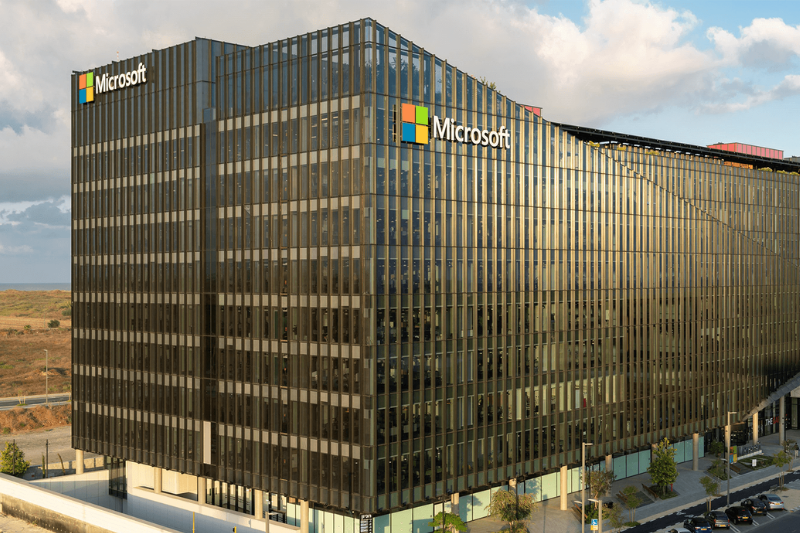
Microsoft (NASDAQ: MSFT) – Enterprise System of Records (SoR)
As ‘vibe coding’ gains traction in the IT world, any Microsoft application can theoretically be coded in-house.
However, given the massive scope of its applications, it’s realistically a mammoth task.
Even if it can be done, the indispensability of Microsoft’s enterprise software suite is underscored by its stranglehold on enterprises’ records, such as emails, Teams transcripts, and SharePoint documents that form their history and memory.
Even if one can theoretically build an alternative office application, good luck trying to migrate the colossal records seamlessly without losing them.
In the second quarter ended 31 December 2025 (2QFY2026), Microsoft’s revenue surged 17% year on year (YoY) to US$81.3 billion, with net income rising 60% to US$38.5 billion, supported by the strong demand for its portfolio of services. This attests to Microsoft’s indispensability.
The company’s indispensability is likely to strengthen further with AI being deployed across almost all its family of products.
With management expecting operating margins to improve “slightly” in FY2026, Microsoft doesn’t just survive but thrives.
ServiceNow (NYSE: NOW) – Workflow SoR
ServiceNow’s core product, the Now Platform, allows enterprise workflow orchestration for a diverse range of functions.
Crucially, ServiceNow stores regulated, auditable, and legally sensitive records – not the type of data that enterprises are willing to risk losing with a casual replacement. This provides an effective barrier to exit, as observed from its 98% renewal rate in the fourth quarter of 2025 (4Q2025).
During the same quarter, ServiceNow’s revenue climbed 21% YoY to US$3.6 billion because of accelerating growth in subscriptions and this drove net income 4% higher to US$401 million.
Furthermore, the outperformance of Now Assist’s net new Annual Contract Value adds visibility to the company’s future revenue.
Instead of being crushed by AI, the workflow orchestrator benefits from being an “AI control tower for business reinvention”, helping companies to execute AI-driven workflows. Operationally, ServiceNow complements probabilistic AI features with deterministic workflow orchestration, ensuring results are predictable and effectively governed.
Veeva Systems (NYSE: VEEV) – SoR in Life Science
Veeva’s business is built on managing records of highly regulated pharmaceutical and biotech companies, making it an important SoR within the Life Science domain.
The records handled by Veeva span the entire lifecycle of a drug and they provide the “single source of truth” required for legal and medical compliance.
In Veeva’s fourth quarter ended 31 January 2026 (4QFY2026), revenue climbed 16% YoY to US$836 million while net income jumped 25% to US$244.2 million. Veeva enjoyed a 16% increase in subscription revenue, attesting to the relevance of its specialised offerings.
Creating an in-house alternative to Veeva using AI involves the Herculean task of fulfilling the regulatory requirements to preserve sophisticated records.
Is it possible? Sure, but it’s not going to be a walk in the park.
Furthermore, Veeva isn’t waiting for AI to figure out its replacement – it’s using it to make its offering even better, with industry-specific agentic AI capabilities increasingly built into the company’s suite of software products.
Adobe (NASDAQ: ADBE) – On-Brand Content Over Generic Content
Adobe has long dominated the creative industry with Creative Cloud, providing tools for designing front-end websites, apps, and marketing content.
For the first quarter of its fiscal year ended 27 February 2026 (1QFY2026), Adobe’s revenue grew 12% YoY to US$6.4 billion, supported by higher subscriptions and AI-first Annualised Recurring Revenue. This drove net income up 4.3% to US$1.89 billion.
Despite the creative giant’s improving financials, Adobe’s traditional content creation tools are more vulnerable to AI disruption.
While Adobe tools are still the creative industry’s de facto standard, users can now easily create and edit images and videos using natural language with AI chatbots, bypassing its offerings.
Fortunately, Adobe’s broader growth strategy suggests it’s not going down without a fight.
Crucially, its Adobe Experience Platform acts effectively as a SoR, enabling Adobe GenStudio to contextualise data and deliver personalised experiences that maintain brand consistency.
This is unlike commonised AI tools that simply generate ‘generic’ content.
Adobe’s commitment to uphold brand governance for reputable clients underscores its moat, appealing to larger enterprise customers that matter more to its business.
Get Smart: Survivors Own the Irreplaceable Data
Microsoft, ServiceNow, and Veeva Systems manage critical customer records, where migrating them to alternative systems is cumbersome, if not impossible.
These advantages make them highly unlikely to be replicated by AI.
Adobe’s traditional creative tools, on their own, are more susceptible to disruption by AI.
However, it mitigates these risks significantly by establishing an SoR within the creative domain using AEP and GenStudio.
Investors should own the most irreplaceable SoR business, not the software layers increasingly commoditised by AI.
Big Tech is spending hundreds of billions on AI, and the ripple effects are just beginning. Our new investor guide shows how AI is changing the way companies generate revenue, structure their business models, and gain an edge. Even if you already know the major players, this report reveals something far MORE important: The why and how behind their moves, and what it means for your portfolio. Download your free report now.
Follow us on Facebook, Instagram and Telegram for the latest investing news and analyses!
Disclosure: Larry L. owns shares of Microsoft and Adobe.