Many newcomers approach the stock market like it is a trading ground.
They are focused on charts and short-term price movements, circling daily market news, hoping to go in or out at the “perfect” time.
Experienced investors, however, adopt a very different perspective.
They think of buying stocks as owning businesses.
This simple mindset shift can improve long-term investing decisions.
Why Thinking Like a Trader Can Lead to Mistakes
Rather than focusing on business fundamentals, traders let short-term price movements dominate their decision-making.
Without truly understanding the underlying business, many decisions are based on hype or momentum, and at times, on emotions.
They tend to panic during market volatility, which can lead to buying high due to hype and selling low because of fear.
Without focusing on the actual business performance in their evaluation, thinking and acting like a trader can lead to costly mistakes.
What It Means to Own a Business
Think about it.
You actually become a partial owner of the company when you buy its shares.
Your returns come from capital appreciation via earnings growth and long-term business expansion, and from dividends.
By changing your mindset from being a trader to a business owner, you are now personally invested in the business and are reminded to be patient and disciplined in your investment journey.
How Business Owners Evaluate Companies
There are several key factors that business-focused investors consider before making investment decisions.
- Revenue growth and profitability trends: Steady and consistent revenue growth shows a strong demand for the company’s service or product.
- Free cash flow (FCF) generation: This is cold, hard cash available to pay dividends, reduce debt, and reinvest for growth.
Venture Corporation (SGX: V03) is a strong example of a cash-generative business.
Despite a year-on-year (YoY) revenue dip of 7.4%, the company generated FCF of S$223.5 million.
With a net cash position of S$1.28 billion and zero debt (as at 31 December 2025), Venture demonstrates a robust balance sheet.
This strength allowed the group to pay a final dividend of S$0.80 per share for FY2025, which is S$0.05 more than the previous year.
- Return on equity (ROE): This metric shows how effectively management uses shareholders’ capital to generate earnings.
An ROE above 15% is typically considered a sign of an efficient business.
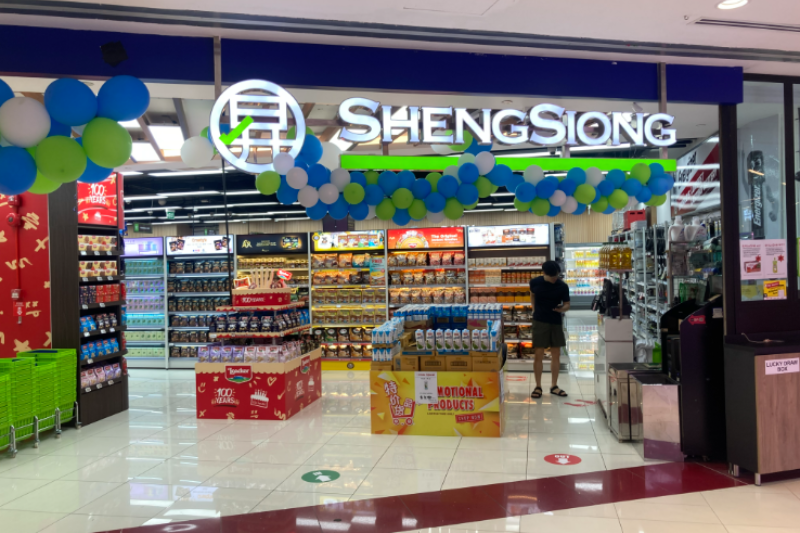
Sheng Siong Group (SGX: OV8) demonstrates strong management execution and an ability to maintain healthy margins with a high five-year average ROE of 28.7%.
- Balance sheet strength: Shows how well a company can withstand economic downturns.
- Competitive advantages and market position: A company’s ability to maintain an edge over its competitors protects its market share and long-term profitability.
- Management quality and capital allocation: If leadership claims to be capturing more market share while revenues remain flat, something is off.
Poor capital allocation can erode even the strongest business fundamentals.
Benefits of Adopting the Business Owner Mindset
Adopting a business owner mindset encourages you to think beyond the daily flicker of stock prices.
You begin to evaluate whether a business is truly growing its earnings and generating sustainable cash flow.
This shift in perspective makes price fluctuations less like a threat and more like background noise, as your focus remains fixed on the company’s underlying health.
By viewing yourself as a part-owner, you can better manage the human nature of fear during downturns or greed during rallies.
It allows you to replace emotional reactions with a disciplined investment framework, ensuring your decisions are rooted in business fundamentals rather than fleeting market sentiment.
How This Mindset Changes Selling Decisions
When you think like a business owner, you will not be rattled into selling just because stock prices fluctuate.
Instead, the decision to sell should be due to a deterioration in business fundamentals, such as slowing growth, rising debt, or fading competitive edge.
Holding just because the stock performed well in the past is simply not a good enough reason.
A more prudent reason to sell is when a valuation becomes overstretched, with the share price well beyond what the underlying business can reasonably support.
Even the strongest companies can become poor investments if they are held at inflated prices that no longer reflect their true earning power.
Common Misconceptions About Stock Ownership
Stocks are tools for quick trading gains.
A common misconception is that stocks are merely tools for rapid profits.
This view reduces investing to mere speculation, where decisions are driven by short-term price movements rather than the underlying business value.
Thinking like this may cause investors to be impulsive and make costly mistakes in decision-making.
Successful investors know this: building wealth is not achieved overnight and requires patience and discipline.
Stocks are just numbers on a screen.
Another misconception is failing to realise that owning shares means owning a piece of a company.
When you buy a stock, you are essentially purchasing a claim to partial ownership in a business, including its profits, assets, and potential for growth.
While the stock market facilitates the buying and selling of these ownership stakes, the long-term strength of the business remains the most important factor regardless of near-term price volatility.
Get Smart: Act Like A Business Owner
The most successful investors do not treat stocks as pieces of paper or ticker symbols.
They understand that by buying a stock, you are owning a part of the business.
The long-term potential of a company matters more than the short-term price movements.
By shifting from trading stocks to owning businesses, investors can focus on long-term value creation and make more thoughtful investment decisions.
If you want to retire with a constant stream of dividends, these 5 stocks might be all you need. We’ve found 5 SG stocks that have kept paying (and growing) through inflation, rate hikes, and recessions. See what they are with our latest free report for SGX dividend investors. Click here to get instant access.
Follow us on Facebook, Instagram and Telegram for the latest investing news and analyses!
Disclosure: Wenting A. does not own any of the stocks mentioned.