Stocks at 52-weeks high generate a range of emotions among market participants.
Some view it as evidence that the business fundamentals are improving, while others might fear that the stock rose simply because the broader market did the same.
We look at three Singapore blue chips near one-year highs and evaluate if their prices reflect stronger fundamentals.
Why 52-Week Highs Matter
In general, stocks at new highs tend to reflect broad institutional buying, which is done on improving fundamentals.
That said, some companies trading at fresh highs can be due to simple momentum, with their underlying fundamentals not justifying such lofty prices.
In this case, what goes up quickly can also fall quickly, given the rally is based on sentiment rather than earnings.
Hence, you still have to verify if a business’s fundamentals are truly inflecting to the upside.
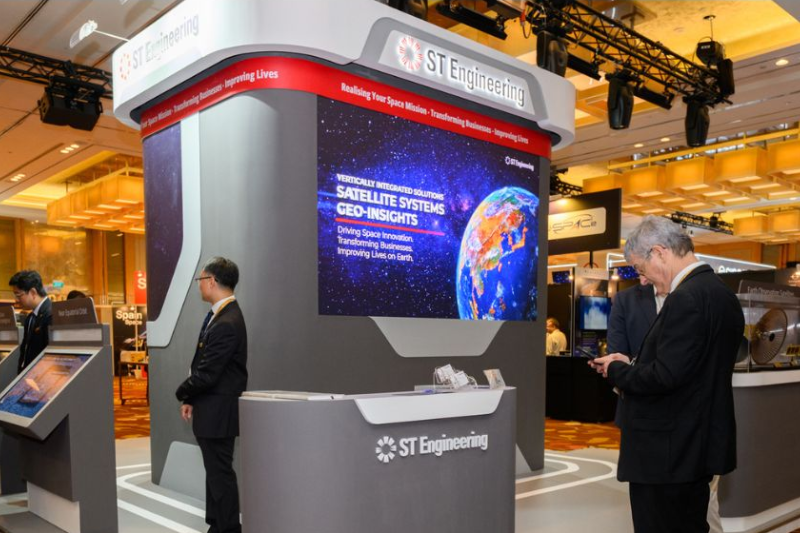
ST Engineering Ltd (SGX: S63), or STE — Earnings Momentum Leader
Singapore’s primary defence contractor has been trading near fresh highs at around S$10.90 per share, driven by renewed focus on defence spending amid the recent conflict in the Middle East.
The group’s top line has been increasing at a solid compound annual growth rate (CAGR) of 11.5% over the past five years.
While profits and cash flows have been flat during this period, STE’s latest financial year ending 31 December 2025 (FY2025) offers a glimpse of increasing profitability.
For FY2025, the group reported revenue growth of 9% year on year (YoY) while base operating performance (BOP) net profit surged 21% YoY, bolstered by improved margins and lower net finance costs.
Consequently, the recent rally in STE’s shares appears well-supported by this fundamental inflection in earnings.
DBS Group Holdings (SGX: D05), or DBS — Dividend Re-Rating Story
The compression of net interest margins experienced by the bank has not stopped DBS from paying good, increasing dividends to patient shareholders.
The bank declared total dividends of S$3.06 per share for FY2025, comprising S$2.46 in ordinary dividends and S$0.60 in capital return dividends, a 38% increase YoY, and representing a solid yield of 5.6%.
This guidance by DBS continues its strong, growing dividend-paying track record over the past five years.
More impressively, DBS can increase its dividend payments without straining its financial position; balance sheet metrics such as non-performing loan ratio and common equity tier 1 ratio remain healthy at 1.0% and 15% (fully phased-in basis) respectively , as of 31 December 2025.
These consistent, increasing dividend payments by DBS provide support for its share price, which has been hovering at one-year highs of around S$55 per share.
Singapore Telecommunications Limited (SGX: Z74), or Singtel — Structural Growth Beneficiary
Rounding things off, we have Singtel.
No longer the boring company that just focuses on telecommunications, Singtel has been making inroads into the burgeoning field of AI.
For the third quarter ended 31 December 2025 (3QFY2026), Singtel’s underlying net profit grew 9.5% YoY to S$744 million, bolstered by a 15.4% increase in contributions from regional associates Airtel and AIS.
Despite a competitive 9.7% decline in Singapore’s operating profit, the group’s overall EBIT rose 5.3% as strong double-digit growth from NCS (32%) and Optus (27%) more than offset domestic headwinds.
The group recently unveiled its new data centre in Tuas, allowing Singtel to capture the growing enterprise demand for AI, and potentially accelerate the group’s earnings growth.
2026 growth catalysts for Singtel include more data centres coming online in Malaysia, Indonesia, and Thailand.
Additionally, the full rollout of the TPG regional sharing deal with Optus (Singtel’s Australia subsidiary) could provide an uplift in earnings to the group.
The key takeaway here is that companies that have shown they can capitalise on secular growth trends are often rewarded by the market with shares trading near multi-year highs.
What Could Derail the Rally
While the three stalwarts are trading near one-year highs due to robust fundamentals, such rallies are never bulletproof.
Potential headwinds include failing to meet earnings, broader market corrections triggered by shifting macroeconomic conditions (such as the recent US-Iran hostilities), or even a cyclical slowdown within specific industries could stall this earnings growth.
Get Smart: Strength Is a Signal, not a Shortcut
Simply relying on a 52-week high as proof of a company’s health is folly.
While a rising share price is a useful signal, it is never a substitute for due diligence.
Investors must still put in the work to ensure fundamentals are robust.
Moreover, maintaining a diversified portfolio across industries and staying disciplined with fundamental analysis remain your best defences against market volatility.
If you want to retire with a constant stream of dividends, these 5 stocks might be all you need. We’ve found 5 SG stocks that have kept paying (and growing) through inflation, rate hikes, and recessions. See what they are with our latest free report for SGX dividend investors. Click here to get instant access.
Follow us on Facebook, Instagram and Telegram for the latest investing news and analyses!
Disclosure: Wilson H. does not own shares in any of the companies mentioned.