An extra payout feels like a bonus.
But a real estate investment trusts (REIT) can only pay it once from the same sale.
Three SGX-listed REITs plan to hand unitholders a slice of their recent asset sales.
Each one sold property to fund it.
So the more useful question is what the remaining portfolio can earn once those assets are gone.
| REIT | Extra payout | Funded by | Timing | Underlying trend (period) |
|---|---|---|---|---|
|
Keppel REIT (SGX: K71U) |
S$15 million in three tranches, plus up to S$25 million for unit buybacks | Sale of KR Ginza II and T Tower | From 2H2027 | Distributable income from operations +24.4% (9M2026) |
|
OUE REIT (SGX: TS0U) |
S$20 million special distribution | Sale of Crowne Plaza Changi Airport | Expected from FY2027, over two years | NPI +4.6% (3Q2026, single quarter) |
|
First REIT (SGX: AW9U) |
Special distribution, amount not yet disclosed | Divestment of 11 Indonesian assets | Declared over 4Q2026 and 1Q2027 | DPU -12.7% (9M2026) |
The three report over different periods, so compare direction, not size.
Can Keppel REIT keep growing its income after its asset sales?
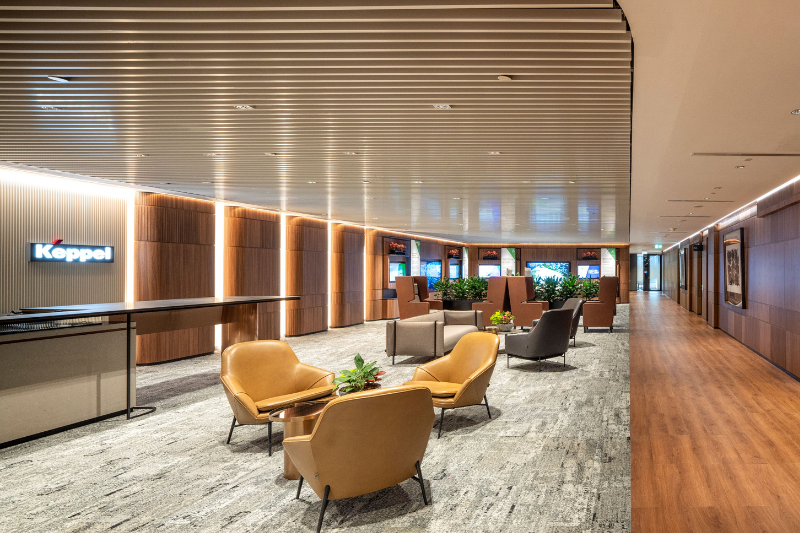
Keppel REIT (SGX: K71U) owns 13 assets in a portfolio built around prime offices in Singapore’s central business district (CBD), with more properties in Australia and one in Seoul, South Korea.
After selling KR Ginza II in Tokyo and agreeing to sell T Tower in Seoul, the REIT will return S$15 million of divestment proceeds to unitholders in three half-yearly tranches from 2H2027: S$7 million, then S$5 million and S$3 million.
Up to S$25 million more may go to unit buybacks, subject to market conditions.
The ordinary income underneath is growing.
For the first nine months of 2026 (9M2026), distributable income from operations rose 24.4% year on year (YoY) to S$179.9 million.
That excludes a separate S$15.0 million Anniversary Distribution.
Rental reversion came in at +12.0%, with committed occupancy at 96.0%.
Most of that growth was earned.
Keppel REIT’s share of joint venture results rose 33.3% to S$124.2 million on an additional one-third interest in MBFC Tower 3, higher rentals and lower borrowing costs.
Top Ryde City Shopping Centre in Sydney lifted property income and net property income (NPI).
On the flip side, Seoul’s NPI fell 7.3% on lower occupancy and a stronger Singapore dollar, and the asset sales take income out of the portfolio.
Keppel REIT did not report a distribution per unit (DPU) for 9M2026, so you cannot yet see the growth per unit.
The REIT has proposed buying a 51.0% stake in Keppel South Central, with pro forma DPU accretion of 2.01%.
Part of that deal’s income is a S$2.23 million monthly guaranteed amount from Keppel Ltd (SGX: BN4) for up to five years.
Aggregate leverage stood at 40.5%.
Will OUE REIT’s income hold up without Crowne Plaza?
OUE REIT (SGX: TS0U) owns office, hospitality and retail assets in Singapore and Sydney.
Its S$20 million special distribution comes from selling Crowne Plaza Changi Airport for net proceeds of S$498.5 million.
The payout is expected to start in FY2027 and be paid evenly over the first two years after the sale completes.
For the third quarter of 2026 (3Q2026), a single quarter, net property income (NPI) rose 4.6% YoY to S$59.6 million.
OUE REIT did not disclose a DPU for the quarter.
Hotels did most of the work.
Hospitality revenue and NPI both rose 12.6% YoY as revenue per available room rose 8.2% to S$302.
Finance costs also fell 12.4% YoY to S$18.9 million.
Here’s the thing: the hospitality segment covers just two hotels, Hilton Singapore Orchard and Crowne Plaza Changi Airport.
The hotel being sold helped deliver this quarter’s growth.
Commercial revenue fell 2.8% YoY on tenant transitions at OUE Downtown Office.
The manager expects occupancy in the commercial segment to moderate over the next 12 to 15 months.
The sale helps the balance sheet.
Pro forma aggregate leverage falls from 42.1% to 37.1%.
Can First REIT’s long leases make up for a smaller portfolio?
First REIT (SGX: AW9U) is Singapore’s first healthcare REIT.
It now owns 23 properties across Indonesia, Japan and Singapore.
On 20 October 2026, it completed the divestment of eight hospitals to Siloam and three non-hospital assets for about S$471.5 million.
A special distribution will be declared over 4Q2026 and 1Q2027, though the REIT has not yet disclosed the amount.
The ordinary payout is shrinking.
9M2026 DPU fell 12.7% YoY to S$0.0144.
The results were impacted by the significant depreciation of the rupiah and yen against the Singapore dollar and by the loss of income from the divested Indonesian properties.
The leases themselves are long.
Occupancy was 100%, with a weighted average lease expiry (WALE) of 11.7 years.
In local currency, Indonesian rental and other income rose 2.8%.
The portfolio could shrink further.
Siloam has granted a put option over the remaining six hospitals for IDR 3.9 trillion (around S$294.8 million).
The manager expects the rupiah and yen to remain under pressure.
Gearing offers some comfort at 15.6% on a pro forma basis.
Get Smart: Sort the payout before you count it
A special distribution tells you a REIT sold something, but it does not tell you what the rest of the portfolio can pay.
Split what a REIT pays you into two piles: one comes from the sale, the other comes from the assets that remain.
Only the second pile repeats.
When the special payouts run out, ask which of these REITs will still be paying you more than it does today.
If you want to retire with a constant stream of dividends, these 5 stocks might be all you need. We’ve found 5 SG stocks that have kept paying (and growing) through inflation, rate hikes, and recessions. See what they are with our latest free report for SGX dividend investors. Click here to get instant access.
Follow us on Facebook, Instagram, Telegram and YouTube for the latest investing news and analyses!
Disclosure: The Smart Investor does not own shares/units of any companies/REITs mentioned.